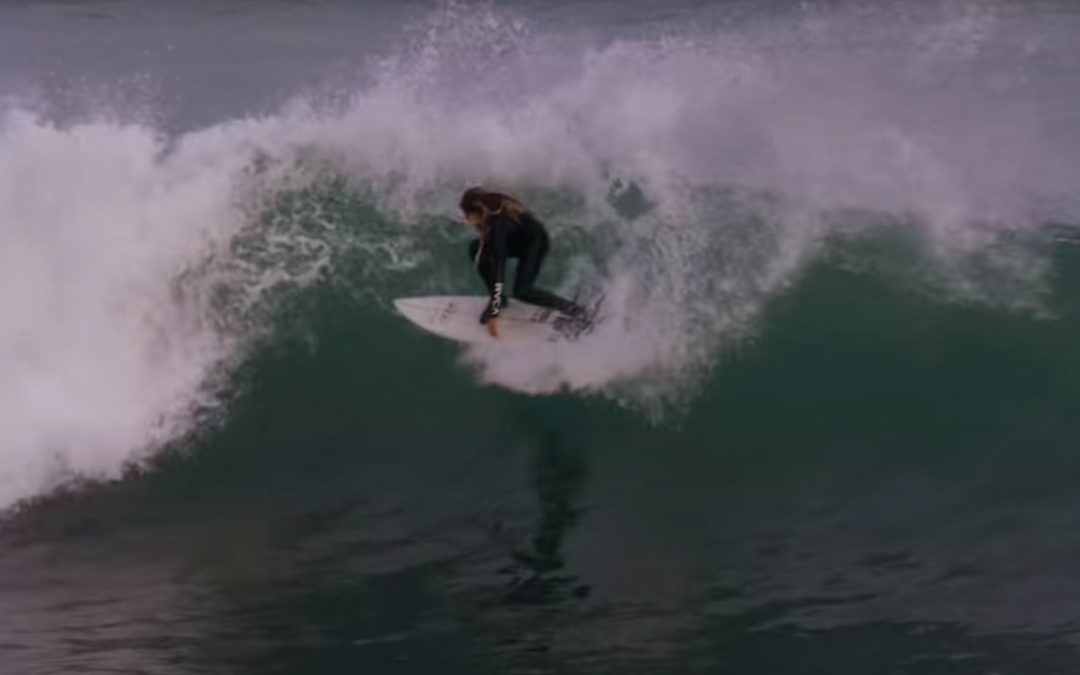
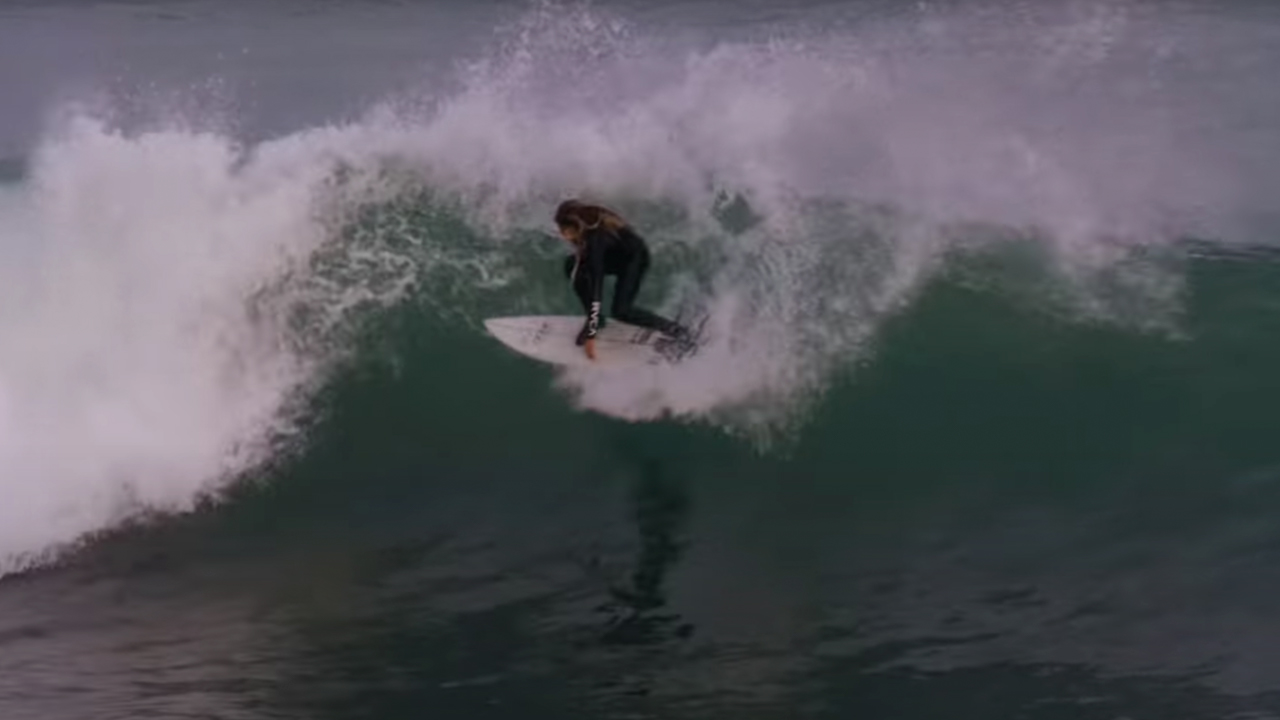
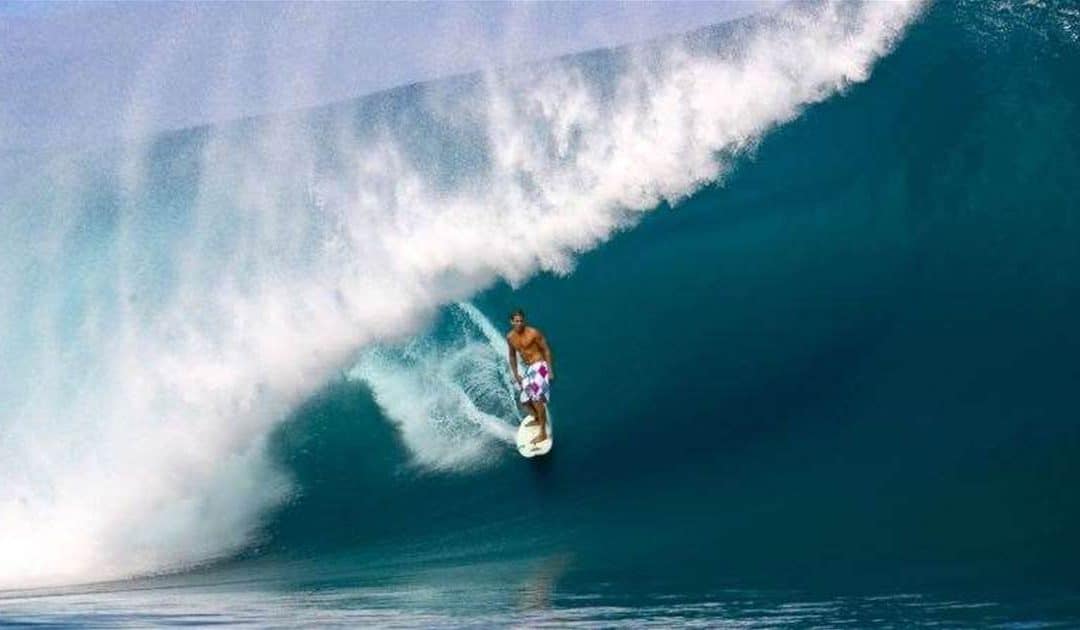
Oscar Langbourne, 16 is smooth as silk in the water, and old surfing soul in young form. Balanced, relaxed he glides through the aqua playgrounds of NZ. Pure joy to watch him string together endless lines with ease. Craig Anderson watch your back, there’s a new kid in town.
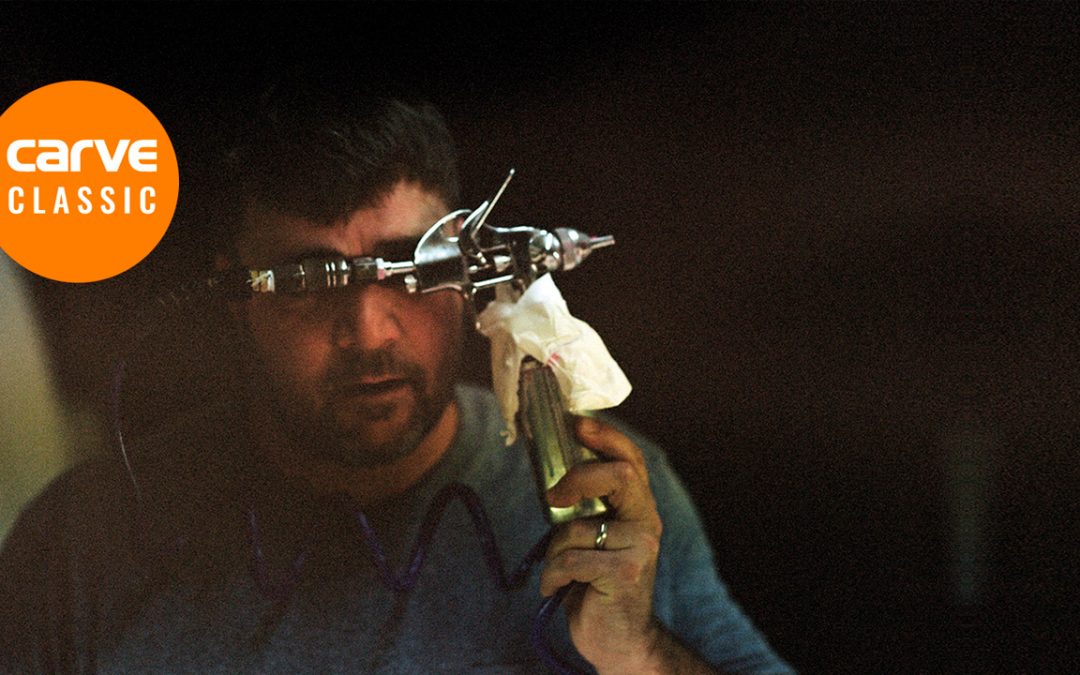
Join us as we delve into the Carve Classic archives for some all time trips and interviews, we caught up with Thomas Campbell, filmmaker, photographer, book publisher, musician and artist. Originally featured in issue 186.
Thomas Campbell is a filmmaker, photographer, book publisher, musician and artist. He’s also a board builder, skater, surfer and now has his own line of boardies. Vissla have just used some of his vibrant airbrush art from a quiver of Travis Reynolds surfboards. The weird thing about Thomas is, no one seems to ask him about the thing he loves most dearly, surfing. Steve England caught up with him to find out more.
How did you find surfing? I remember I was living in Dana Point, and I started off riding borrowed surfboards from two guys I saw down the beach. I'd skateboard down the beach on my way to work and I would just ask if I could borrow the longboard. I worked right in the sports fishing place cleaning the boats, so on the way down I'd stop at the beach see if they’d let me have go. These were the late ‘70s but I was drawn to the really much longer boards these guys had. Everyone else was kind of really in the mould of the short boarders, but my friends and I would just ride anything. So when the main beach blew out and we couldn’t shortboard we’d go down to the point and go longboarding. The waves were really uncrowded back then because they weren't really considered good shortboard waves, and longboarding wasn’t really that popular. So we had lots of waves to ourselves. We were just shortboarding, longboarding, skim boarding or skateboarding, we're just doing whatever there was to have fun. We’d all hang out together. We would ride anything but we were all really drawn to these big old heavy boards, at a time when no one else really bothered with them.
Have you got a most favourite surfboard ever, a little magic stick, that you've owned? Yes I was in Morocco in about ‘93. I went to the same school as Vince De la Pena and he had an Al Merrick gun and I bought it off him. It wasn't ideal for me, it was more a Pipe shape, a bit more for Hawaiian waves. Anyway I took it to Morocco, but while I was there I met a South African guy who had a Peter Daniels 7'3”. It was actually shaped for Tom Curren when he went on The Search in Mozambique, but I don't think he got a chance to ride it because it didn't get big enough. Merricks were like the crown jewel of surfboards at that time so I suckered him in and we traded boards. His Peter Daniels was one of the best boards I have ever ridden. It was so responsive, it was crazy, and we had a run of perfect waves. Five days of 20 foot and may be a little bit bigger. At that time nobody really surfed really big waves down there. So I got these five days of perfect big surf. I saw one other guy the whole time I was there, another surfer, but I never spoke to him. The waves were so good I only saw him in the water from a distance or when he was on land getting in or out of the waves. The surf was that good and big we never crossed paths even though we were sharing the same waves in the same sessions. I never spoke to him because we were never near each other. Those sessions are definitely the highlight of my surfing life. The wave was like a chip in, so you could ride a board that big. I was getting in on like a six foot wave on top of a way bigger wave and then there were these big long walls. The memories are still resonating all this time later. It was a different time, a really wonderful time.
Have you ever had a really ugly surfboard that has gone really well? In high school my friend David Laws had this big 10’4" red longboard in the corner of his garage with no fin. It was just beat up, a weird shape, probably a backyard shape. So I was like, “Hey, what's that? Can I have it or buy it?" Andy gave it to me and I stuck a fin in it and it was amazing. It was so good I rode it for years. It's in the end of the Seedling…I loved it.. Anyway later when I met Joel Tudor in about ‘97 I was still riding that board - I had it from about ‘85-‘86 - and he just laughed. Then he let me try his boards which were far superior. I didn't really know, I was just riding a surfboard I loved. Until I met him I was never really involved in the longboard world. It didn't seem very interesting to me. Longboarding and high-performance longboarding never seemed interesting to me. Like a longboard magazine was on the newsstand in the new store and I'd be like “Why would I want to read that?". My friends and I were just riding old logs, and if we wanted to shred waves we would shortboard.
Have you still got that board or is it gone? I think I burnt it. I think it's in the surfboard burning in Sprout. It might have been in that pile of shitty surfboards. But that's a pretty heinous thing to do, burning surfboards is a mortal sin.
It does show bit of a darkside. It does that but also in an environmental way it's not good. They burn one in the Innermost Limits of Pure Fun in daylight, and it ... it's not good.
Any other any boards you ever sold that you wished you'd kept forever? The Peter Daniels was the one. But I had no money at all. I think I sold my board and my tent to buy food. It was creased in the middle on one of those five amazing days and I fixed it, but I just had to sell. I just had no money. But that was a really good board. You could really lay down a bottom turn on those waves. I could lay down my bottom turn and be dragging my forearm and hand in the wave laying out flat, I'd never been up to do that like that since.
Have you been on the road much when you had no money at all? I had nothing forever. I mean I was just out there. I went to Morocco a lot and travelled everywhere but I didn't have money. I'd have to sell everything almost always while I was there. I just get there and surf until my money ran out. Then I'd have to phone my mum to wire out the last 60 bucks that were in my bank account... "What, you are in Africa and you need $60?" "Yeah that's fine."
Do you think that experience made you appreciate everything more than later generations for whom travel is now easier through improved infrastructure and paths more beaten? I don't think you can make a generalisation about what people take from travel and what the kids are doing now. I think some may be real privileged, but I think is a lot of kids are struggling. I think you learn on the road and become really self-sufficient and you have to adapt. I didn't speak French or Arabic really… I went to 55-56 countries around that time and I did a lot on a shoestring... but everyone is different. I don't really like to draw lines across everything. Every person is different and has different drives. My horoscope says "you'll be the person that goes off the cliff and people will follow you". But I didn't really travel with people. I just wanted to go away with nothing and move and travel as I felt fit. Some people are not very comfortable living with nothing, living without money. I could move with what ever was happening, but I felt some people might been uncomfortable with a living at a lower level, and then there may be tension, they'd be scared or whatever. It was hard. It was six years on the road hitchhiking across Europe, America, Africa and all over. It's not for everyone but that was my thing, and I think I've learnt a lot. Everyone has a different edges and boundaries. I don't wanna be one of those people who say "do what I do," because that's pretty insensitive to the diversity of human experience.
What inspired you to hit the road? Initially I think it's because I came from a very large family. I have five sisters. And we weren't particularly well off. So we didn't go anywhere. My parents couldn't afford to take us anywhere, and I think that they just didn't wanna do it either. I don't know what the scenario was. We just didn't go anywhere. The furthest we went with the family was like four hours away. Also where I grew up was quite rural. There wasn't that much there at all and people were pretty down to earth. I liked it that way. But when I was in my mid-teens all the land movers came in and they started developing the area. It became built up and this pervasive 90210 kind of culture started growing. And I was like “Yuck! This is not what I'm used to used to. This is not what I like. I am fu**king out of here.” I wanted to go somewhere I really liked it, where it was more mellow and people were more connected. So I moved to Santa Cruz, which at the time was ideal, and I really liked it and I used it as a base… I was doing shitty jobs and was also working for a skate magazine when I was like 17 and eventually got to travel working for them. I just wanted to explore different cultures to get an idea about what I wanted my life to be. Because the more places I've visited the more I saw how different people lived and the different levels of happiness or enjoyment in their lives, or sadness, so I could look at life with that perspective. I want to see the juxtaposition to the 90210 culture so I could create my own life going forward.
I read that there's soundtrack in somebody's head that brings back memories from special times, do you have one? I spent almost a year in Morocco. In total I've been there 11 times or something. One time I went to the mountains. I'd been there a few months surfing, and I sold my boards so I could go to the mountains to paint. I swindled this hotel to let me stay in a room if I painted them a mural. I bullshitted them that I was a really famous artist, which wasn’t true at all, but they let me stay in the room for a month. I painted them a mural. Anyway I stayed in the room painting, and I got friendly with this English guy who turned up. He would come and hang out with me whilst painting and he let me borrow this tape. One side was Alice Coltrane “Journey in Satchidananda", on the other was African Head Charge. I just super duper fell in love with this tape. Alice Coltrane tracks were just so were my head and my heart was at that time and I loved it so much. It was pretty transformative. When I was leaving the guy came back and said I had got to give that tape back. I said “Know what dude, I'm sorry, but you can not have that tape.." I tried to give him a nice sized piece of art for it, but he was pretty pissed off. I guess my art didn't have a lot of pull at that time, anyway I kept the tape. Alice Coltrane tracks are still just as impactful today, I was just into it so much at that time of my life, that period her music making was so extraordinary beautiful.
What's interesting in the surfing world right now to you? Being in the water. There is nothing that new or that interesting to me right now, specifically in design or not having fins in your foamy board or whatever. I think the main thing is enjoying yourself and have a good time.
Are you still as stoked now as you were back when first started? Yeah, I don't know if I'm stoked as I ever was, but I still love surfing. I just came back from Mexico with my family, my wife and I got some very good waves with her father and stepmother and it was great. I would say that I've been in to design of surfboards for so long, and designing different things with different people, and getting my boards really dialled that I'm a bit lost when I don't have my own boards. But we had fun, surfing and travelling.
Ok so as an educated observer of surfing, name your favourite surfer under the following categories.
Power Dane Reynolds. He's the gnarliest ever as far as putting everything into every f**king turn, every f**king time. Everything, and always. If he can’t put everything on the line he doesn't do it. I've seen it in person and it is true. It is crazy. He's definitely, definitely one of my favourite surfers ever. He's really exciting
Flow Can I give two? Tudor definitely longboarding and other things, and then I'll probably say Curren. One thing I think about Curren is that I think he was into reality. I think why he is so popular is that people can look at all Curren’s surfing and they can say "I know I can't do that but I'm going to try.” It is the most appealing and accessible kind of surfing that you could try. You won't look like that and you wouldn't do that, but you could try to do it. But with Kelly and forward of Kelly, you look at them and say "I can't do that and I'm probably not going to try" Unless you the 5% of the one percent of competitive high-level surfers, then it may be realistic, but not for other people. I'm huge Tom fan though.
Self-expression Knost. Alex Knost. He's really free and really expressive. And one of my favourite surfers of all time. He's really free at every aspect of his life. He's probably one of the most confident people I've ever met, but not in a cocky way. He's confident and present. Whatever he's doing there's not a lot of self-doubt, so he's really close to the moment, and moving with it. And he’s very spontaneous, organic and creative, whether making music, making surfboards surfing or arts, skateboarding, whatever he is doing creatively. It's pretty wild. I know a lot of creative people but I don't know any like him. I think Kelly is also interesting. Alex is a performer but Kelly is so intelligent that he has manifested himself into what he thinks is going to be the most exciting surfer for people to watch. So he's really a performer. While the rest of people are just surfing he's on such a higher level, especially during his competitive peak performance time period. Like when he is surfing Chopes, every other person surfing that contest is paddling as hard as they can to get into the wave perfectly to do what they want to do. But not Kelly. Kelly is not paddling hard enough on purpose almost all the time because he knows when he drops out of the wave, through the air and sticks that crazy drop and dramatically pulls in and gets a crazy tube and comes out... he knows is going to get a 10. So he's performing. He's not just doing anything he has to do to get through the heat. And you know what he has thought of all of that. I think is so much more to his game and why he won all of those titles, and it's not purely just surfing.
Spontaneity Alex, Kelly and Rasta because you just never know what they going to do next, and that's what I like. Personally my favourite surfers are the ones you don't know what's going to happen because they're just moving with what's happening and that creates opportunities.
Timeless I guess I say Phil Edwards and Mickey Dora. When I look at the footage I think they are kind of like the cornerstones of style. At least in my life, in my knowledge as far back as it goes. Because before then there's not much documentation. I always liked that style of Henson, Fry, and Farrelly. I just really like Phil Edwards upright style. It is very unique and in a moment with the equipment.
Watch the classic surf film Sprout below and check out Campbell online here.
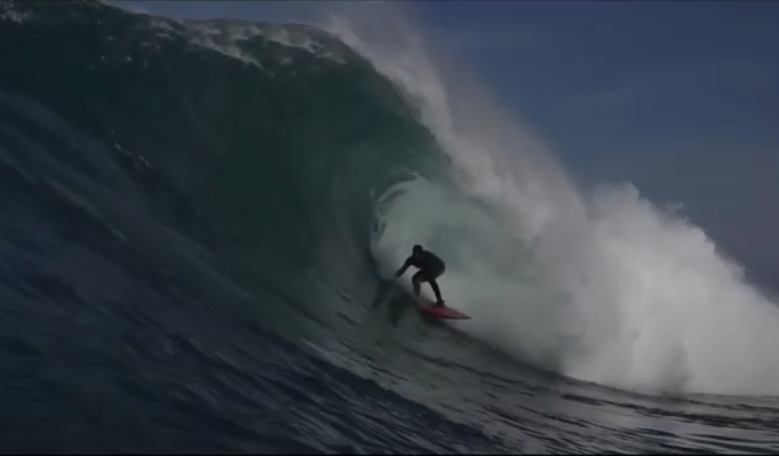
I’ve been gathering footage for the last three or four years – all my best waves from around home in the West of Ireland – and I got to the point where I felt comfortable that I had enough for a good clip. The Doolin Surf Film Festival was coming up, which is a really cool event, and I wanted to screen the film there. I also wanted to help out the filmmaker Joao, a younger guy who is super talented. So, between the two of us, because we’re both on the same wavelength, this was what we came up with.
Framed is a very apt name for this film, because you’re also a picture framer. How did you get into that?
I was always interested in woodwork. I made furniture when I was younger, and I’ve worked as a carpenter. I just love to work with wood.
I have a big interest in art and framing is almost an artform in itself. It’s beautiful to see how the frame can contrast with the painting.
I have a little workspace at home, plus a workshop ten minutes from my house. My workspace is actually in my boardroom at the back of my house, so I’ll have to move my boards outside soon to make more space for my tools.
Over the years you’ve always tipped the work / life balance scale towards surfing. Has that been a conscious decision?
I’ve always worked to surf. Surfing’s been such a big, positive part of my life and getting in the sea on a daily basis, or whenever I can, and when the waves are good, has always been so important to me.
So I’ve always juggled work to make that happen, and, in the past, that might have meant doing three to four months of solid building work, back home in Cornwall, so that I could then focus on surfing again for a while. Now I can just do a few days of picture framing at home and then go surfing when it’s good. Patagonia has also enabled me to go on trips and kept me warm with suits, so I make it work.
You’re from Cornwall, but you live in Lahinch [West Coast of Ireland]. What was it like transitioning between those two surf scenes?
When I moved to Lahinch it was always a struggle trying to make things happen with work, so I’d go back and forth a bit. Then Moy Hill Farm came up and many of my friends from Cornwall moved over, so the scene grew.
It can be a hard existence here in winter, and this winter was a particularly cold and bleak one with months of bad waves, so it’s not always easy. It can feel a bit too much at times, but there are some great moments in amongst it, and there are some really interesting people living here because it’s a healthy place to be, close to the sea with a lot of positive things going on as well.
Could you tell us about Hometree?
One of the positive things happening here is Hometree, a tree planting initiative, spearheaded by surfer Matt Smith. They’re on a mission to reforest as many areas of Ireland as possible, but with only native species of tree. The last Saturday in every month, they get people together to plant trees. Some of them are donated and some are reared in their own nursery. They invite everyone along on social media, we have a cup of tea, we do some planting and we all eat together afterwards. They’re connecting likeminded people every time too, which is always a good thing.
After a decade of bitter rival status, Kelly Slater and Andy Irons come together to surf off their differences! To get two seemingly mortal enemies to agree to sequester themselves on a tiny island with a half dozen camera men, a Hollywood interviewer capable of conjuring up tears during any interview, and an in-the-know magazine staff waiting with bated breath seemed like a ridiculous notion. The end result was a ten day purge of feelings, emotional baggage, dispelling rumors, talking it out, and a burying of the hatchet once and for all. Oh, and we forgot to mention that the waves were insane!
For all you surfers that are whinging about not being able to surf at the moment, here are some alternatives that you should definitely try in the safety of your own home. Stay safe🤙🏽, comedy gold.
You may be aware that the world is in a bit of a tailspin at the moment. Surf travel is, for the first time, not really possible. For a little while anyway.
So while we all hunker down and wait for the Corona storm to blow over you can plot your next mission to celebrate the world getting back to normal. Whenever that is. It will all come back, you’ll be stroking into green walls in Morocco, exploring mysto breaks in PNG and peeking over clifftops at the world’s end in Galicia before you know it. The whole world is just on pause for a bit, but it won't last forever so get dreaming.
If you wish to find out the UK government advice for travel in light of the Coronavirus click here.
Vanimo Surf Lodge, Papua New Guinea
Vanimo Surf Lodge, a hidden gem in the Land of the Unexpected - Papua New Guinea. Vanimo is located two degrees below the equator on the north shore of mainland Papua New Guinea just a few hours north of Australia. Swells reach the north shore from monsoons in the Philippines and large NE Pacific Ocean storm swells and this combination results in constant swells and epic waves. Lodge numbers are restricted to a maximum 16 to ensure no crowds. Many breaks are a short stroll from the beachfront lodges.
When is the best time of year to travel to your camp? Surf season officially runs from November to April – but it’s not uncommon to score waves during the fringe season months of May and October. Typically, regardless of which direction the wind is blowing at least half, the breaks are offshore. The majority of breaks are over a limestone and seaweed bottom so no coral cuts to worry about and there are beach breaks as well. Is there much of a local surf scene? Yes, there are only handful of guys and girls that surf and they have special pink nose surfboards especially painted for the girls exclusive use. They love having a laugh and chat with the guests in the water.
Surf Maroc is Morocco's leading surf and yoga company, which opened in 2003 with the beach chic guesthouse, Taghazout Villa. Our recently renovated oceanfront villa is one of Morocco’s best-known and loved surf accommodations due to its laidback, social vibe. With stunning ocean-views, backdoor access to the beach, firepit, cosy communal spaces and a family-like atmosphere, it’s the perfect home from home every surfer to sleep, surf and play. Taghazout Villa’s panoramic Atlantic views overlook some of Morocco’s best spots which are only a short walk away, allowing us to provide high-quality surf coaching and guiding services. What to expect at Surf Maroc? If you stay with us, expect amazing waves, delicious food, great weather (all year round), beautiful accommodation, good people, and good vibes. Our doors are open for everyone, whether you are a beginner or pro, singleton or family, guy or girl, young or old. How do you cater to group getaways? We take the stress out of organising group holidays for you and can help you coordinate every aspect of your stay. From guest teacher yoga retreats at Villa Mandala, university trips at the Taghazout Villa to surf film crews, fashion shoots and weddings at the Amouage we’ve hosted them all. You’re in safe hands at Surf Maroc, our bookings team, hosts, surf guides, and management are the best in the business.
Thanks to their long-time expertise, the Caminos are able to guarantee top-notch surf-courses! Their motivated surf-coaches are internationally trained and well experienced. There are classes for all levels available, from newbies to elite. Camino's catering queen constitutes a fundamental member of the surfcamp and looks after the physical well-being of the guests through fully-fledged yummy surf food.
Tell us about the Galicia camp? Galicia, located in the uttermost northwest of Spain, was considered the end of the world – Finisterre – until the discovery of the Americas. The Camino Surfcamp Galicia is situated on a small, well-kept campsite and offers different accommodation options. There’s a small supermarket, a restaurant, and a pizzeria right next to the Surfcamp as well as two more supermarkets and several cafés and restaurants in walking distance. When you’re not surfing, what can you do? If you still got some power left after the surf-sessions, you might burn off your excess energy with table tennis, Indo boarding, skateboarding, or you get yourself on one of our mountain bikes to explore the fascinating hinterland of Valdoviño. Also, you can let your mind wander while you relax in one of the hammocks or get connected to the outside world on the camp computer with internet connection.