With thousands of miles of coastline and dozens of fun breaks it’s a wonder why India is still overlooked as a surf destination. Allow Sam Bleakley to introduce you…
By Sam Bleakley from The Longboard Travel Guide
With a population of 1.2 billion, India is the second most populous nation on the planet. It boats 4,700 miles of coastline, pretty much every type of landscape under the sun and culturally-speaking, it has to be one of the most kaleidoscopic places on the planet. Holy cows, Hindu deities, Buddhism, Jainism, Christianity, Islam, Sikhism and industrial post-modernism all have voices here – transient life and the permanently sacred tangle in a symbol war that multiplies on the eye. Pomp and poverty intermingle, sweat and thirst are inevitable, strict religious codes meet free will and stunning scenery, while elephants hold up the traffic. In Hindi, tomorrow and yesterday are the same, ‘cul’; and so are hello and goodbye, ‘namaste’. This tells you everything you need to know about travel – stay in the moment. And surf travel is a great way to experience the present of India.
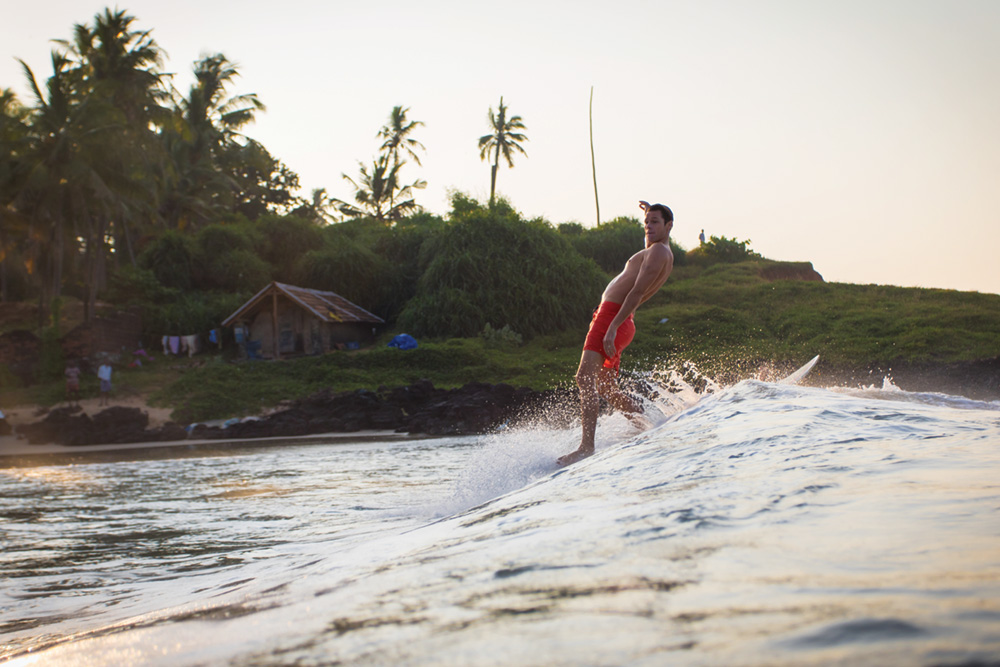
I recently spent a month working at a surf and yoga retreat called Soul & Surf in Kerala, running longboard workshops on a quiver of Firewire boards. While the waves were not the biggest, the swell periods were long, providing a lot of power and some impressive shorebreaks. Both the east and west coasts of this vast sub-continent receive consistent swell from the Indian Ocean, as do two well-placed archipelagos: the Andaman Islands and the Lakshadweep Islands. The local surf culture is vibrant and growing fast, with clubs, grassroots surf brands, young rippers and the Surfing Federation of India (SFI) organising surf instructor courses through the ISA (International Surfing Association).
Sam Styling. Photo Peter Chamberlain
www.dtlphotography.com
Indian surfers have a lot to celebrate. Turns out that even the word ‘surf’ has a link to India: over time, the mixing of dialects and languages through trade with India gave rise to a unique ‘pidgin’ language. The Portuguese coined the word ‘surf’ in the late 1600s, from the Sanskrit ‘suffe’ meaning ‘the coastline’. This intermingling that cultures and traders shared along the Indian coastline led to a common ground in the form of the beach – where cultural habits had to be re-invented in the name of exchange.
It also turns out that an engraving by John Hassell (copied from a sketch by Charles Gold – who served with the Royal Artillery and was stationed at Madras on India’s southeast coast in the late 1700s) entitled ‘Cattamarans’ and printed in London in 1800 (the original stored at the Australian National Maritime Museum) is currently the earliest known image of stand-up wave riding! One Indian fisherman rides a three-log catamaran, parallel stance, holding a paddle. Two men are further out on a second wave. A ‘masula’, a local surf boat with a crew of six, is heading over the third wave, transporting freight for the ships of the East India Company awaiting off-shore. Although the earliest illustration of a surfboard being paddled was sketched in Hawaii, it was not until the 1830s that illustrations of stand-up rides began to appear from the Pacific. ‘Catamaran’ was the anglicized version of ‘kaIfu-mar-am’, meaning ‘tied logs’, widespread on the Tamil coast of south India and still in use in the surf zone for fishing today.
A good selection of India’s best breaks can be found along the southwest-facing shores of the states of Karnataka and Kerala, as well as Tamil Nadu on the southern tip. Most of the spots on the southwest-facing coast are beach breaks, best during the dry season (November to April) when you can usually score clean dawn patrols. Mahé, Varkala and Kovalam (Lighthouse Beach) are three of the better bets on this stretch. The southwest monsoon (May to October) brings bigger swells and southwest winds; a good time to head to the opposite coast, where you’ll find more beach breaks and a decent right point at Manapad.
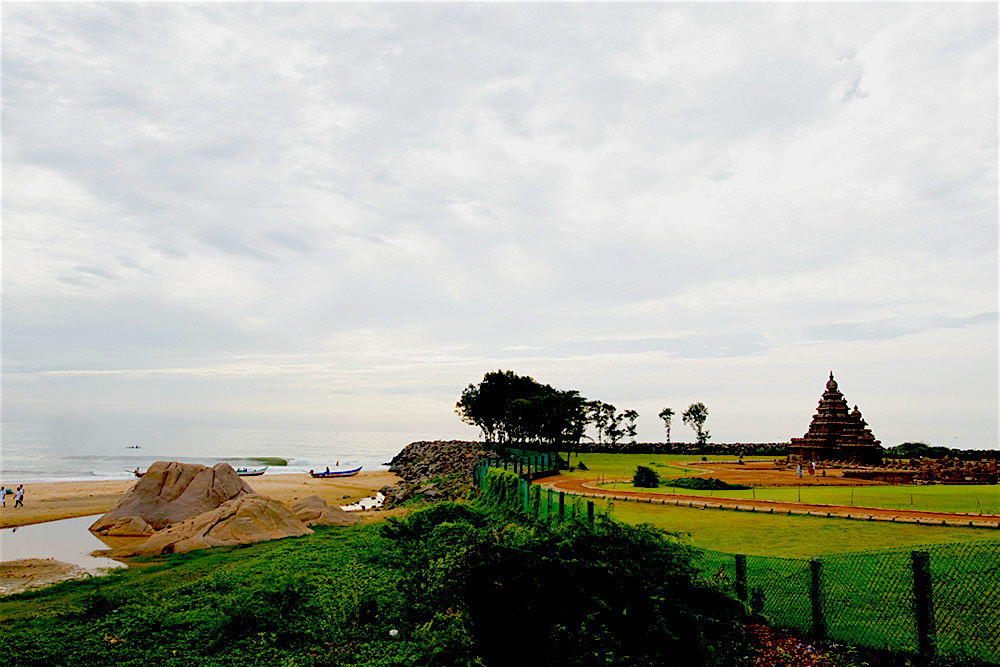
The huge landmass of Sri Lanka prevents many southwest swells reaching far up the east coast, but southeast swells are regular during the monsoon season, periodically lighting up the region of northeast Tamil Nadu and Andra Pradesh. July and August are usually the best months. About 50 miles south of the city of Chennai, Mahabalipuram Shore Temple is a sand-bottom right point which peels for 100 yards alongside a 1,400-year-old Vishnu temple. On a solid swell, Mahabalipuram offers powerful, sand-sucking tubes at low tide, and softer waves at high. Beach cottages are available to rent and there’s a friendly nascent local scene. Just north of the industrial city of Visakhapatnam in Andhra Pradesh, on a clean southeast swell, Lawson’s Bay and Mangamari offer very long right points, generally ridden only by local fishermen returning to shore in their wooden boats, loaded with tuna.
The Lakshadweep Islands, 250 miles off the southwest coast of the mainland, are a string of coral atolls which are part of the same undersea mountain range as the Maldives. They’re some of the most exotic and beautiful islands you’ll ever see, with flawless white beaches, swaying palms and giant turtles wallowing just a few yards offshore. The Lakshadweeps have yet to be fully explored by surfers and many new spots are sure to be found, although permits are required for travel here.
India’s other offshore territory is the Andaman Islands situated on the far side of the Bay of Bengal, northwest of Indonesia. In 1998 photographer John Callahan became the first to document a surf trip here with Sam George, Chris Malloy and Jack Johnson, following a gruelling 70 hour dive-boat charter from Thailand, riddled with visa hassles. The trip appears in the film Thicker Than Water (1999). Callahan has since made two more projects in the Andaman and the Nicobar Islands (strictly off-limits to any non-Indian passport holders). “I’m probably the only human on earth, Indian nationals included, who has been from the top of North Andaman Island to Indira Point at the southern tip of Great Nicobar Island,” he says. Today you can fly direct to the Andamans from India, as tourism has taken a foothold. A small number of charter boats offer trips to Little Andaman Island, home to a number of quality Indo-style reefs. The best of these is Kumari Point, a speedy righthand reef-point which will peel for 200 yards on a big south swell, with sizzling tube sections. But it’s a fickle spot, fully dependent on early season southwest monsoon swells (April or May).
Namaste.
Breathtaking landscapes, remote and desolate places, the highest waves, the most spectacular jumps and a story of surfing to the ends of the world. A photographic homage to surfing in extreme conditions, made by an international surfer and his team. High Tide, A Surf Odyssey follows the surfers in their epic journeys and achievements in the most diverse land- and seascapes. This book portrays the ultimate battle between the elements and mankind: the water and the waves against the board and man.
Searching for wild, remote destinations and offbeat landscapes, Chris Burkard portrays the humble placement of the human in contrast to nature. At the age of 28, Burkard has established himself as a known name in the surf and outdoor industries.
‘High Tide, A Surf Odyssey’ is available at the Carve Shop,SHOP HERE.
Boardmasters promises to deliver five days of exhilarating surf action at Newquay’s iconic Fistral Beach. Fans and festival goers alike are expected to descend on the UK’s surf capital to check out and support both the British pro surfers and the travelling international surfing professionals.
The highly anticipated Boardmasters QS1000 and LQS1000 will run from Wednesday 10th until Sunday 14th August 2016 and the action will kick off with the Boardmasters Men’s QS1000. Boardmasters will offer Britain’s best professional surfers, such as Ben Skinner, Luke Dillon, Adam Griffith, Lucy Campbell and Peony Knight the chance to compete at an international level whilst in home waters. We cannot wait to see who will lift the coveted Boardmasters title this year and their portion of the $30,500 prize purse.
There’s two lots of pro surfer signings with the Boardmasters ambassadors including Tom Curren, Lee-Ann Curren, Ben Skinner, Lucy Campbell, Laura Crane, Adam Griffiths and Luke Dillon on Friday 12th between 1-2pm (depending on heat schedules). On Saturday 13th the Fourth Team rock up for a signing with Tom Lowe, Tom Bulter, Alan Stokes and more, so get your pens and posters ready!
The most talked about highlight of the Boardmasters week (after the surfing of course) is the popular Beach Sessions. These are intimate evening gigs in the Beach Bar at Fistral Beach. On Wednesday 10th we’re going to be entertained by the likes of Tom Curren, DJ Format & Abdominal and Ady Suleiman, while on Thursday 11th there’s Pat Smith, Betty The Shark and a very special guest! So don’t miss out, be safe and get your tickets now.
Chilling out in the Beach Bar, watching the surf, cold glass of Rattler in hand, listening to music. Life doesn’t get much better. Every day at the Beach Bar we have a host of acts to get you in the mood for the night ahead so make sure you check them out. Oh and it’s totally FREE!
From the Beach Bar you can check out the Surf Village, there’s loads to see. Watch the Pro Skate and BMX competitions for the best in extreme sports, mooch around the Cornish Market where you can sample the local delights, as well as Surf Art, photography and film sessions. If watching the surf action from the sidelines has tempted you to try it out yourself, ride the waves with a Surf Lesson from a local surf school.
Skateboarding is the son of surfing and since the Dog Town era, skating and surfing have always gone hand in hand. Skateboarding has introduced a whole new generation of concrete surfers to the fun and excitement of concrete waves. Naturally, the skate competition held at Fistral Beach has been a very popular event and a serious crowd pleaser. The skateboarders absolutely shred the mini ramp and have been pushing their airs, grabs and grinds faster, longer and higher every year.
Whether you’re a skate newbie, a budding skate grom, an old school ripper or just a bonafide skate fan, the Fistral Beach skate competition is the place for you.
The Boardmasters music festival is held at Watergate and the line up is even bigger this year. On Friday it’ll be Catfish and the Bottlemen, followed drum n bass legends Chase & Status closing the show, Saturday will see Kaiser Chiefs get crowds rocking, and an electric set from Deamau5 and finally on Sunday, the incredible Primal Scream will take to the stage followed by James Bay who will bring Boardmasters 2016 to an epic close.
There’s load of other stages depending on your choice of music our fave Wolf Alice at the Land of Saints stage will wow the stage in the headline Friday slot, but also expect to get down to Example or Correspondents. Mosh to Dinosaur Pile Up or The Big Moon. Skank to Roots Manuva or Mouse Outfit. Find out more HERE
If you need a fix after the headliners finish, then the series of official After parties are for you. From Wednesday 10 – Sunday 14 August 2016, Boardmasters ‘After Dark’ will bring banging DJ sets and live performances to the Beach Bar on Fistral Beach and Sailors in Newquay town until the sun comes up.
‘IF it’s good enough for mosquitoes and grizzly bears then why not sharks?’
Nepalm and Tear gas perhaps? No, a fella in Oz reckons tea tree oil and Tiger balm may be the ultimate shark repellent.
South Oz surfer Neil Campbell’s has dedicated the past 12 months to developing a pungent surf wax to prevent surfers from smelling “like shark food”.
He said the idea stemmed from his childhood fear of going into the ocean and being attacked by a shark.
“I used either Tiger Balm or tea tree oil as part of this instinctive private idea that I wouldn’t smell like shark food – that idea appears to have lingered and I’ve made it grow up,” Campbell said.
“I had it in my head after I had an encounter with a big bronze whaler or a bull shark off Long Reef in Sydney near sunset and I just swore to myself that I’d never be so stupid to be out there without a strategy again.
“So from the moment I got here I got stuck in to how to make an organic wax and how to make the smell I had in mind come out.”
The natural ingredients in Chillax Surf Wax include eucalyptus, chilli, cloves, cayenne pepper, neem, tea tree oil, citronella, coconut and beeswax.
“The essential idea is that you’ll smell different from shark food but more to the point there are a number of combinations of these natural smells and spices that are used as deterrents, specifically for grizzly bears, dogs, leaches, brown snakes and of course mosquitoes and flies,” Campbell said.
“It’s not just willy-nilly, all of them have a track record in some way or another.”
Citronella and neem are well known for their ability to deter mosquitoes.
Studies in North America have found capsicum sprays can be effective at deterring free-roaming grizzly bears.
As an experiment I asked the girls in the office if any after shave repelled women. They just looked blank and said “It’s a bonus if they even shower…” Anyway… Campbell says.
“It’s roughly the same formula that you would use to repel a grizzly bear from a campsite,”
“He’s a predator and he’s interested in blood and he’s olfactory.” (hunts by smell – I googled it!)
So far he has given samples of the wax away to the surf community in South Australia, New South Wales and Victoria and had even sent blocks to the United States.
Campbell said he hoped to incorporate necromones – putrefied shark tissue extractions that can produce repellent responses in sharks – into the product in the next six months.
“I think I’m on the right track with this simple strategy of effectively masking yourself with something that’s very unpleasant to him,” he said.
“And it’s actually not a bad surf wax as well.
“For the time being we claim this is a deterrent, a defensive strategy for throwing the shark off our scent but we hope to move to a product with a more aggressive strategy of defence with necromones and that would be next.”
Dr Charlie Huveneers leads the Southern Shark Ecology Group research lab at Flinders University and has liaised with Campbell about his product.
He said no independent scientific studies had yet been carried out to test whether the Chillax Surf Wax deterred or repelled sharks.
However, he said the introduction of chemicals that could act as alarm signals, such as necromones, into the product could make it more effective.
“Anecdotal observations have shown that sharks avoid areas containing decomposing shark tissue,” Dr Huveneers said.
“Such chemical signals produced following death and decomposition of sharks are often referred as necromones. Recent studies have shown that necromones can stop the feeding behaviour of reef sharks suggesting that it has a behavioural effect on sharks.
“Whether the incorporation of necromones within other products such as a surf wax will significantly reduce the risk of a shark bite, however, remains to be tested.”
Dr Huveneers was one of the first people to test the effectiveness of shark repellents and deterrents including the electronic Shark Shield.
He said shark deterrents should be independently and scientifically tested prior to becoming commercially available.
“Having untested shark deterrents commercially available might create a false sense of security and lead people to exposing themselves to riskier situations than they normally would.”
Campbell said he hoped to independently test his product with scientists, including Dr Huveneers, in the coming months.
“I have no doubt that what we’re going to find is going to be exciting because the small amount of study I have done into sharks has revealed how much they seem to be motivated by scent,” he said.
In the meantime, Campbell continues to cook up the wax in his Maslin Beach laundry with the goal of having the product in surf shops by the coming Australian summer.
“I’m going to do a road trip with the car loaded up with as much wax as I can and go and do the New South Wales coast and as much of the coast in between as I can manage,” he said.
“I think it’s with that cottage venture first, then I want to approach independents and similarly for the more major brands and I’m expecting to get contracts in time.”
Campbell said 180 gram blocks would be priced at sell $20 while the smaller 85 gram blocks would sell for $12 – about twice the price of regular surf wax. However, he said the price would likely fall as production increased.
“It’s not just about surfing, this company wants to go on to have solutions for the swimmers and the scuba divers and the spear fishermen and the abalone divers – we want to look after everybody in the water.”
C-Skins Wetsuits has announced it has signed WSL Longboarder Adam ‘Bearman’ Griffiths to it’s team.
Adam has been surfing for most of his life. His ocean loving parents and the endless summers spent at the beach perfecting his style and technique definitely paid off; he started surfing competitively at just 12 years of age and has now been competing on an international level for eight years.
In the past few years Adam has achieved some of the top accolades the sport has to offer; including 3rd in Europe in 2015 and 13th on the ASP World Longboard tour and locally the English Champ in 2014 and 2015. These successes have only driven his determination for the future. This year he is focusing on the WSL World championships in December, of which he has already qualified.
When Adam isn’t competing he is constantly travelling, chasing waves around the cold waters of Europe and this year won’t be any different, with plans for surf trips and video shoots in Ireland and Scotland he will no doubt be pretty busy.
It’s Adam connection to Newquay and his local surf breaks that has contributed to his attraction to ride for C-Skins, of the brand he comments
“I really like the fact that C-Skins home is here in Europe, I have watched them go from strength to strength over the past few years and I love that C-Skins just make wetsuits and I can see their passion for detail when I look at the wetsuits; when it comes to the winter, I want to be as warm as possible – it has to be a HotWired with built in hood, so toasty but still feels so flexible”
When Adam is not chasing waves around the globe he owns and runs Newquay Surfing School, based on Great Western Beach, Newquay.
C-Skins started with a simple idea……..build a better wetsuit so you could stay out in the water longer. Our job is to keep you warmer for longer through developing and bringing you the latest in wetsuit technology.
Mick Fanning returns J’Bay and gets his first wave there since the infamous shark attack last year. How would you feel? Mick talks about surfing with sharks, and how he has got on with his surfing.
Fanning became the subject of international headlines during last year’s event where he was attacked on live television by what is believed to be a 12-to-15-foot Great White Shark.
Mick will return to the event this season after becoming the subject of international headlines during last year’s event. The attack took place during the Final heat of the event as Fanning was waiting for his opening wave. Both Fanning and fellow Finalist Julian Wilson (AUS) survived the ordeal, with the event ultimately called off, and went on to compete throughout the remainder of the year.
Following a season that involved the shark attack, a world runner-up finish and the tragic passing of his brother, Fanning is taking a personal year in 2016, surfing in only select events. However, the Australian icon has committed to returning to Jeffreys Bay, an event he has won three times (2002, 2006, 2014).
“When I decided I was only going to do a few events this season, J-Bay was always on the cards,” Fanning said. “Even if I decided I didn’t want to surf in the J-Bay Open, I was always going to go back. I’ve had so many great memories there that to leave J-Bay on the note from last year just didn’t seem right. I want to go back and right the wrongs and move forward.”
The WSL has enhanced its surveillance and response capabilities for this season’s event with additional water patrol in the lineup and is augmenting with emerging sonar technologies to increase information available to event officials.
“I trust the WSL and the measures they’ve put in place,” Fanning said. “It is, however, one of those things where it is the ocean and, ultimately, there is not a lot anyone can do. I’m thinking positive and looking forward to coming back. The first surf is going to be a little bit tricky to get through my head. I’ve surfed lots of different places and have seen sharks since then and haven’t felt too concerned. It’s all part of surfing. We’re not going to go out and put a cage around J-Bay. We want to surf the wave and keeping everyone safe is a collective thing between the WSL and the surfers.”
Much speculation has occurred regarding whether the three-time WSL Champion will return to full-time competition at the end of the season. As of the J-Bay Open, Fanning remains undecided about plans for this year and beyond.
“2016 has been really fun to have some time off and do different things,” Fanning said. “It’s been really fulfilling for me personally to go to places where I haven’t been able to before. I’ve made an effort to distance myself from the tour. As far as 2017 goes, I couldn’t tell you right now – whether I’ll be back or not full time. I probably couldn’t tell you what’s going to happen in a month. I don’t know. I’m enjoying the freedom of doing different things and having no schedule right now.”
Fanning is currently seeded into the opening heat of Round 1.
The J-Bay Open has a competitive window from July 6 – 17, 2016 and will be webcast LIVE on WorldSurfLeague.com as well as the WSL app.
J-BAY OPEN ROUND 1 MATCH-UPS:
Heat 1: Mick Fanning (AUS), Conner Coffin (USA), Alejo Muniz (BRA)
Heat 2: Italo Ferreira (BRA), Miguel Pupo (BRA), Ryan Callinan (AUS)
Heat 3: John John Florence (HAW), Kanoa Igarashi (USA), Keanu Asing (HAW)
Heat 4: Adriano de Souza (BRA), Josh Kerr (AUS), Kai Otton (AUS)
Heat 5: Gabriel Medina (BRA), Dusty Payne (HAW), Alex Ribeiro (BRA)
Heat 6: Matt Wilkinson (AUS), Davey Cathels (AUS), Steven Sawyer (ZAF)
Heat 7: Filipe Toledo (BRA), Kelly Slater (USA), Matt Banting (AUS)
Heat 8: Adrian Buchan (AUS), Kolohe Andino (USA), Jadson Andre (BRA)
Heat 9: Jordy Smith (ZAF), Wiggolly Dantas (BRA), Adam Melling (AUS)
Heat 10: Caio Ibelli (BRA), Joel Parkinson (AUS), Jeremy Flores (FRA)
Heat 11: Julian Wilson (AUS), Nat Young (USA), Jack Freestone (USA)
Heat 12: Sebastian Zietz (HAW), Michel Bourez (PYF), Stuart Kennedy (AUS