A rather misleading article is currently doing the rounds on social media re Kim Prathers research at the Scripps institute.
Kim has issued this statement vie her Facebook page
” Original Post (update to post at bottom):
Hope everyone is laying low and staying healthy. Warning: this is a long post that addresses many questions and conversations I have had over the past week on topics that are very important to many right now.
We are all experiencing and adapting to unprecedented times right now. My week was made even crazier by being re-taught the meaning of “out of context”. For those who read it, the LA Times article with subsequent twists made by additional media outlets was a major disappointment — and caused some people extra angst which is not needed right now.
For the record, the story was supposed to focus on the fact that aerosols can go further than 6 ft especially if you are on a crowded beach which was continuing to happen in our area. This realization of aerosol transport came out in several articles over a 2 day period (see bottom of post). The issue is WHO has been basing their 6 ft guidance on research done in the 1930’s before instruments could detect tiny aerosol particles. It has since been shown in the published literature that people can exhale small aerosol particles that do not settle out within 6 ft–they can float around for hours. Note these are emitted into the air without coughing. With coughs, much bigger droplets are expelled that do settle out quickly.
Right now, there are people that are infected and do not have any symptoms. So, if they are surfing or running along the beach, they could be exhaling tiny infectious aerosol particles. Even indoors, when talking or singing, an infected person will be expelling out these tiny particles that float around. This week the National Academy sent a letter to the White House advising them that it is likely this virus is getting into the air in aerosols and thus one should factor this into social distancing considerations. This is the place where masks can help as they have been shown to filter out this and other viruses effectively. So wearing masks should have a large effect as we move forward. I was very relieved to see this added to the guidelines put in place that started last night. If you look at countries that have worn masks when they are sick traditionally (Taiwan, Japan..), their number of cases was much smaller-in other words, their curves were much flatter. Most of their residents wore masks almost immediately. They also instituted other helpful measures very quickly.
So how far a distance is enough when outdoors? The good news is outdoors the air gets diluted quickly. The best analogy is to think of a smoker walking in front of you–if you want to avoid the exhaled smoke plume (virus aerosols will follow the same path), you carve a pretty big path. The same applies here. No one knows the infectious dose for this virus–we will not know it for a while. So, it is best to error on the side of caution — and much better to be safe than sorry. It is important to get out and exercise. I still take walks but I keep my distance as much as possible.
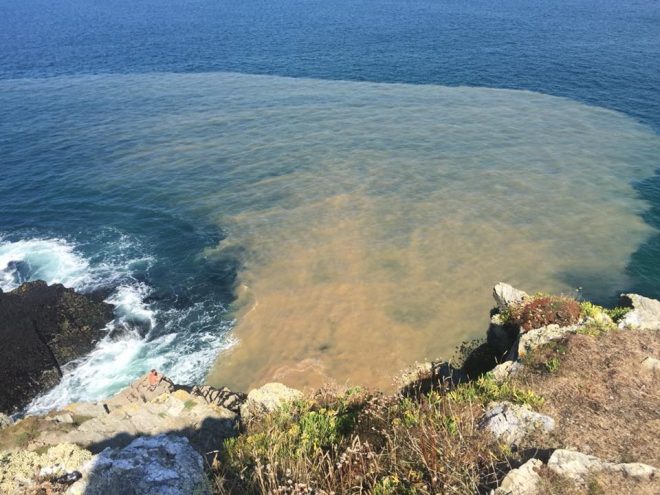
Now, what about the other part of the article where I said I would not go into the ocean if you paid me? That was totally taken out of context and when I first read the opening lines in the article, I cringed and contacted the writer right away. The way it is written it sounds like this is what I wanted to “yell” at people. No, my concern about cyclists, runners, surfers had to do with the air possibly traveling further than 6 ft. In another part of the conversation, we discussed all of the pollution run-off and sewage that get into the ocean especially after the rains we have had. It is well documented that our oceans become polluted at times–many here in SD are quite polluted now. The point I was trying to make was I would not go in the ocean (here in SD) where it is polluted right now nor would I go to the crowded beaches. As I suspected would happen that quote about not going in the ocean has now been used for many headlines around the world and interpreted to mean I would not go in any ocean right now.
We discussed the research my group is doing on how much human-made pollution that gets into the ocean gets launched into the atmosphere and the potential health effects. I made it clear this is a research project and it will be a long time before we know the answers. I made it very clear that SARS-CoV-2 has not been detected in the ocean or atmosphere by anyone. Much research needs to be done to understand this virus and how/if it travels through the environment. It is also a virus that has a fragile “envelope” that if disrupted by heat, salt, or water would likely kill the virus–that is very good news. I told her all of this but it was not included in the article, unfortunately.
The ocean is loaded with many harmless natural viruses and bacteria that play a vital role in the health of our ecosystem. We are addressing how human pollution is changing this ecosystem. It is a research area we are extremely excited about but it is not one that should ever be used to invoke fear in people especially at this time. Sadly, I never saw this coming. As soon as I saw the article, I called the reporter and pointed out how slanted and out of context it was (especially the beginning which was out of context and alarming)–but it was too late. She said she was receiving many positive comments and could not change it.
In the end, a number of surfers took offense to this article suggesting they be cautious in polluted water. I received some really nasty notes. The positive side is that a number of top surfers reached out and asked me for clarification — I explained what happened. They immediately realized that I was only trying to help people during this pandemic and were extremely supportive and apologized for the more negative surfers. I will be doing a webinar for some of the organizations soon to discuss our current understanding of the aerosol transport pathway of this virus.
This week, I went through a period where I wondered if I should continue to talk with reporters about this topic. I have done hundreds of interviews over my career and have never had anything like this happen before. I feel it is important for scientists to help the public understand what is going on-especially during this period of alternative facts. In the end, I decided it is important to continue to talk with a select subset of reporters to help the messages get out there that will save lives. I am doing interviews with a group of known writers, requesting to see the article before it is published (to check for scientific accuracy), and getting agreement on topics in advance. These are things they teach you in any science communication course. I am kicking myself for letting my guard down and talking so openly about a wide range of topics from early research efforts to more well documented literature. It is always better to focus on a key message or two especially during a global pandemic! In the end, we all are human and make mistakes especially under this tremendous unprecedented period of stress.
I am keeping the conversation focused on the most useful messages right now which are: stay home, save lives. Keep your distance. Six feet might not be enough if you are near someone who is infected. Of course, keep exercising and enjoying the outdoors as mental and physical health are so critical especially right now–just do it where there are not a ton of people. And, in the end, if there is a breeze, do what you would do to avoid the directly exhaled smoke.
Stay safe everyone. We will get through this together.
https://www.cnn.com/…/aerosol-coronavirus-spread…/index.html
https://www.bostonherald.com/…/coronavirus-how-to-stay-saf…/
https://www.bostonglobe.com/…/six-foot-rule-protect-agains…/
Update:
I just heard that the reporter who wrote the article also feels bad now that she has learned that this story has alarmed so many people. She says this was not her intention and she was using language to humanize me and show how much I care about my community. In the end, many have commented that this made me look like a hysterical woman yelling out the window at people to not go in the ocean! This was not the case, I can assure you.
She feels that it was a good story with great public interest, and has received mostly positive feedback. Her goal was to make people think about the important ocean-atmosphere connections and that there are still so many unanswered questions; since there is so much not known, it is better to be safe than sorry.
Lesson here for all is that in the middle of a global pandemic, we are all doing the best we can trying to deliver important messages to help people. Now more than ever, we should all try and give people the benefit of the doubt as much as possible.
Also, one thing that was mentioned but not cited is the recent article published in Nature (the day before the news article was published) showing this virus does not appear to be infectious in stool. This is good news. I am sure many more studies will be done on this and other aspects of this virus.”
>>>>>>>>>>>>
With all the rain and CSO discharges that were occurring at the tie of the outbreak China this question was on our minds. We had our suspicions but the crew at SAS have been on the ball getting more info. They have just released this.
“As we go into a lockdown scenario, many of you will be looking to the Ocean for your daily dose of exercise and wellbeing. As a charity that was founded on campaigning to stop us being made sick from entering the sea, your health is one of our top most concerns. So, we have been doing some research about the potential impacts of the COVID-19 outbreak on water quality, and if there are any additional risks we face by entering the water.
Whilst we don’t believe there is great cause for additional concern, we hope that you find this information useful in order to stay fit and healthy during this global pandemic. Remember, we all currently need to stay at home, stay safe and help protect the NHS. Please play your part.
What is COVID-19?
Coronavirus (COVID-19) is a newly identified respiratory illness emerging in China, December 2019. The virus can be spread through person-to-person contact (within 6 feet proximity for a duration of 10 minutes or more) via respiratory droplets[1]. Given the new status of COVID-19, the transmission risk from an infected person’s faeces and through sewage systems is not yet known, but a better understanding can be achieved looking at other coronaviruses such as severe acute respiratory syndrome (SARS) and Middle East respiratory syndrome (MERS)[2].
Can I catch COVID-19 if I enter the sea?
COVID-19 has been detected in the faeces of infected patients. However, the amount that is shed, how long it is shed, and whether it is infectious in the stool itself is not yet known. However, given COVID-19 is likely to behave like other coronaviruses such as SARS and MERS, our understanding of these viruses suggests that the risk is low. So far, and there have been no reports of faecal-oral transmission of COVID-19[3].
The new status of the virus means transmission pathways are not yet fully understood. Whilst there is currently no evidence of COVID-19 transmission through sewage systems, standard municipal wastewater system practices are thought to be sufficient to inactivate COVID-19. However, past coronaviruses have been found to persist in untreated sewage so where there is incomplete wastewater disinfection or CSO (combined sewer overflow) discharges there is some risk of transmission[4]. We can look at other coronaviruses to help us assess this risk. SARS was detected in untreated sewage for up to 2-14 days during the 2003 outbreak. However, the fragility of this coronavirus in the open environment ensures transmission risk remained low[5]. It is likely that COVID-19 will have similar vulnerabilities in the environment.
Nonetheless, high water and sanitation hygiene standards should be upheld, especially handwashing with soap and water to prevent the spread of COVID-19. Throughout the entire sanitation value chain, the safe management of human faeces should still be considered such as ensuring access to clean and functioning toilets and the safe containment, treatment and disposal of sewage[6].
Can I still do water sports in the sea to stay fit and healthy?
In order for us to protect ourselves and reduce the pressure on our health services over the coming months, we must follow government advice and stay at home. If you do choose to enter the water, overall, the available evidence indicates that there could be a minor elevated risk from untreated sewage. We would strongly advise that you download and check information provided by our Safer Seas Service, the UK’s only real time water quality information service, through which the majority of water companies issue CSO discharge notifications. The app will point you towards beaches with no recent pollution incidents.
Hugo Tagholm, our Chief Executive says:
“Firstly, it’s important to stress that during the coming weeks it is vital that people stay home to protect the NHS from being overwhelmed during the Covid-19 pandemic. This pandemic shows just how important year-round water quality information is, and further justifies our ongoing campaign to tackle combined sewer overflows that pollute our beaches and bathing waters. Make sure you stay informed for your favourite beach by downloading the Safer Seas Service.”
We are working behind the scenes to ensure those water companies that do not currently issue sewage discharge notification outside the bathing season to provide a critical public health service to all water users. At SAS home based HQ’s we will continue to campaign hard to tackle CSO discharges, secure year-round live information on sewage pollution, and challenge water companies to reinvest more of their profits in protecting surf spots and bathing waters. We want to end sewage discharge into UK bathing waters by 2030 and have #OceanOptimism.
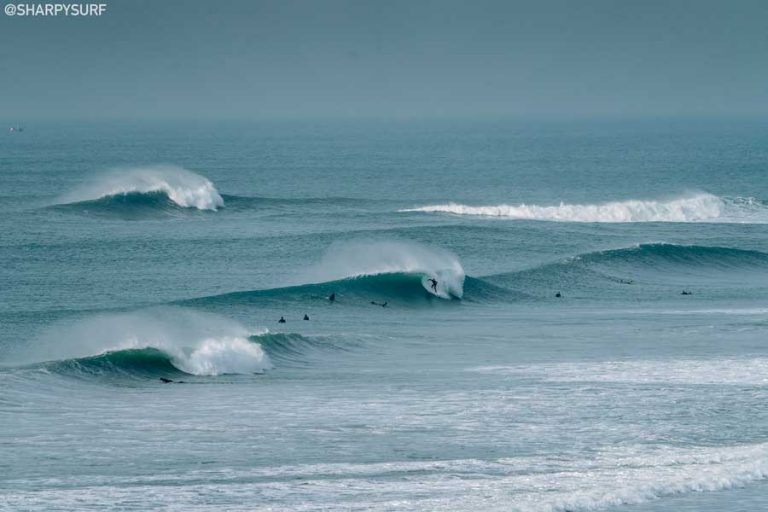
So a few days ago we issued what we thought was some fair advice and predicted the closure beach car parks if government advice wasn’t adhered to.
The post got smashed but obviously a lot of people disagreed and decided to drive miles under the ‘exercise’ excuse. Now beach car parks are being shut around the UK and everyone is falling out over who should and shouldn’t surf.
The National Trust are now closing all beach car parks and blocking access. Police are checking cars in Penzance for ‘non essential’ travel, Swansea council has shut Langland, Port Eynon and Bracelet Bay. Bantham car park is shut as is Putsborough. It is the same right around the coast with more stricter rules coming. Surfing England and Surfing Wales have both revised their advice to “Do not surf”…
I don’t have a definitive list of UK beaches shutting so please add any under the comments.
This isn’t isolated to the UK. The same happened all over Europe – France, Spain, Portugal, Italy – so we had fair warning. Currently Ireland is free but will suffer the same fate if people don’t respect a few fair rules. The USA is following suit with California shutting beaches.
In the next week we are going to see unprecedented amounts of deaths and the overwhelming of the NHS. At this point there is no end on the horizon and things will only worse in terms of deaths and restrictions. Maybe then will hit home and people will take travel restriction seriously. We are in this together whether we like or not. Please try to be sensible.
A few basic rules are below. They may have been superseded by the SE and WSF advice.
Basic rules
So the big question with swell on the horizon in the UK and lreland in the middle of an outbreak what should we do?
As you have seen if we do not self regulate fast a lock down is coming. Maybe even tonight. It is already being called for after pretty nuts scenes in parks and on beaches over the weekend. We will keep this simple and try and propose a plan for us all combining advice from Government, local councils, Surfing England and with an eye on what has happened abroad – surfers being arrested.
Standard advice is no non-essential travel and keep 2 metres apart, wash your hands and keep clean. No going to crowded areas.
The virus is spreading in two ways firstly travel – carriers spreading it it from area to area, and secondly once in an area – person to person.
So what does this mean for the surf and surfing in the UK and what is the advice?
Non-essential travel
The current government advice is that no one should go on holiday or self isolate in at risk areas. So no long road trips. If no one takes any notice and surfers hit the coast en masse from other areas and it gets crowded over the next few days then total lock downs will come.
Given the community to community spread we also suggest if you do not live within a specific coastal surfing community, do not travel there. Particularly anywhere in Cornwall which will be hit very hard due to a small hospital and limited resources, but also West Wales and Scotland.
Going further if it gets worse this it will mean missing waves for a long time so if you have drive into another village or town to surf, don’t go. It is tough and it is a bit locals only, but the alternative is lock down so we have to self regulate.
Personal space
The 2 metre rule. This just hasn’t been adhered to on beaches. This is the main cause of infection. You have to keep your distance to stop this affecting others.
Safety
There has been a suggestion that no one should surf due to any sustained injuries causing chaos in the NHS. Surfing is in general has a pretty low injury rate, so at the moment I am not sure if we need to go that far, but you should not push your limits. If experienced surfers can keep an eye out and go into preventative mode it shouldn’t be too much of a problem.
(People may have different ideas here and we respect that. Keep it friendly)
So if you live on or very near a quiet local beach, can keep the 2 metre distance on the way and are experienced enough to keep out of trouble a surf probably is OK at this point. If not, please stay away.
In water virus transmission
There is no data at the moment so we can only go off the research of similar coronavirus.
Advice at the moment is that corona virus transmission through salt water is low. Although other corona have been shown to survive in raw sewage.
Most sewage these days is treated to secondary and UV standard which would kill the virus, however If you suspect a CSO has been discharging please be aware. Water companies should turn on their notifications really so we can all stay informed in strange times.
Surfing England Advice
The Prime Minister made an urgent call to action last night and introduced new rules on staying at home and away from others, as well as new powers to enforce those rules.
See www.gov.uk for the full breakdown.
The message is clear. Don’t go surfing.
None of us should be travelling other than for the essential reasons listed in the government’s advice. There may be a lucky few who can walk out their door and jump into the sea, but for the vast majority of us who need to travel to the beach, it should now be considered off limits.
This is a tough call to make, but one we should all respect as we collectively fight the spread of Covid 19.
Welsh Surfing Federation
In light of the pandemic that is globally affecting us all, our coastal communities are asking for a simple favour.
PLEASE do not come down to surf our beaches no matter how good the surf is. Residents of areas all over Wales are fearful that you are coming into the communities, possibly spreading the virus without realising all for the sake of you definitely falling off your first wave.
The government has implemented only necessary travel, closed beach car parks and stressed social distancing for a reason. It’s not just to be awkward when the weather is banging, it’s because the hospitals are full and people are dying.
So let’s put this simply:
If you can’t walk there, don’t surf there.
As schools break up the council, tourism and health authorities ask for visitors to postpone trips and come back later in the year.
“Cornwall prides itself on being an open and welcoming place, but during these unprecedented times we ask that anyone planning a trip to Cornwall consider deferring their visit and avoid all but essential travel.
Visit Cornwall believes that a holiday or short break should be deemed as non-essential travel. This would avoid the confusion that currently exists and mean that customers’ personal travel insurance should reimburse visitors who choose to cancel rather than postpone their holiday.
“As the restrictions put in place to prevent the spread of Coronavirus begin to be implemented across the country we are aware of the huge impact this is having on the tourism and hospitality sector in Cornwall. We are already seeing businesses close and redundancies made.
“However, we are also aware that additional visitors to Cornwall at this time will potentially put extra pressure on public services, including the NHS.
“Visit Cornwall has been considering the scenarios for several weeks, but it is now clearer how this will impact on the UK and Cornwall significantly in the next three to six months.
“Our advice is for visitors to plan to come to Cornwall later in the year when more of our facilities are open for business, trading normally, and when visitors will get the high-quality experience they associate with coming to Cornwall.
“We urge anyone considering travelling to Cornwall in the coming days and weeks to think carefully about the implications of being removed from your normal social network during the coronavirus period, the risk of not being able to travel back home as planned, to be aware that supermarkets are experiencing the same pressures here as elsewhere, and consider the added pressure on public services in a rural area which this travel may cause.
“We urge people to delay their visit to Cornwall to a later stage. This will also reassure our communities that we are doing everything possible to contain the spread of Coronavirus over the next few weeks.
“Welcoming visitors back to Cornwall will be key to our economic recovery.”