The sea never switches off, and when things go bad, they go bad quickly. That is why you will see lifeguards at the waters edge, and why they warn you when they are leaving the beach. Lifesavers know the signs, the tides, the currents, when things look a little odd… They can even judge you on your seamanship as you walk down the beach just on how and what you are carrying.
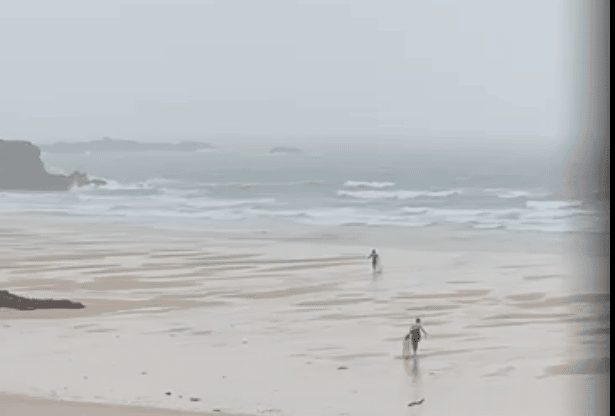
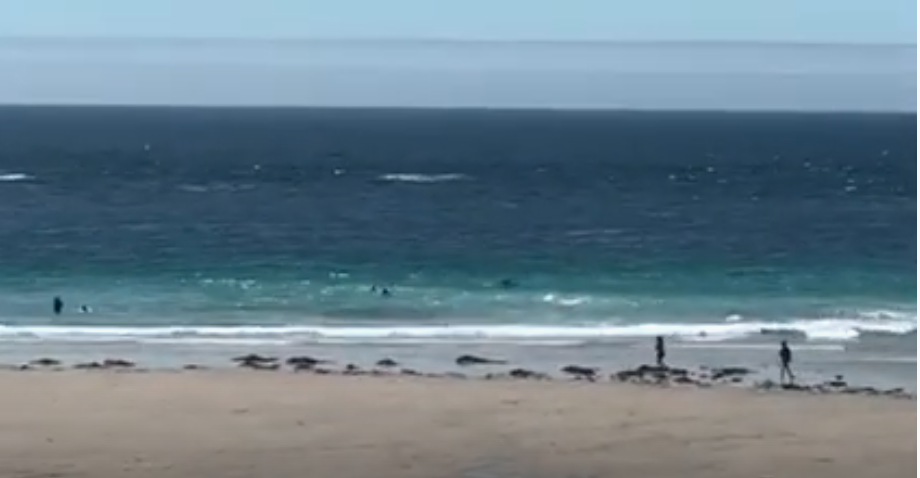
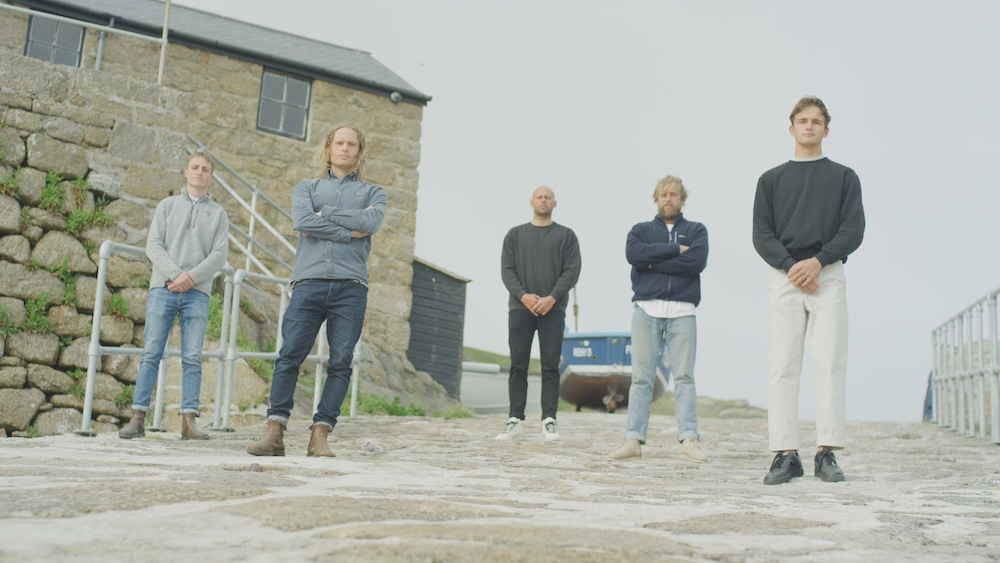
The surfers of St Ives were very quick to set up a volunteer lifeguard rota to oversee Porthmeor and their interventions and advice kept the beach very safe for most of their service. However in the final minutes of their final night on duty before the professional guards were due to start the next day their worth was truly proved. The quick actions of Anthony Stewart, Matthew Burrell and Alfie Brown saved the lives of four swimmers who got into difficulties. The swimmers got caught in a strong rip current and heavy surf.
“Five kids went in, four were rescued. One casualty was extremely lucky as she was going under when the lifeguards got there, she was lucky,” said St Ives Beach patrol’s Harris Rothchild.
“The video does a pretty good job of explaining what went down and without the fast actions of Anthony Stewart, Matthew Burrell and Alfie Brown there certainly would have been a very different outcome. Also thanks to Nick Pumphrey, Kaz Philips and Travis Bullbeck for their assistance.”
We sent some Offshore Pilsners courtesy of Sharps so they can have well deserved beer after work in the summer sun. Great work crew!
If you want to help fund equipment for lifesaving communities you can donate here.
When things go bad the first thing an experienced life saver will look for is back up. Who can help, what is the plan A, what is plan B. But what if you shout and there is no one? And what if there are multiple people in trouble. What if you have decided who you can save and who you may have to leave? This is what happened to Gary Walters.
Flash rips, you may have heard of them? Then the tide turns, or sets come in and the waters has no where to go, then it breaks the sand bank and funnels out with great force. They can be deadly.
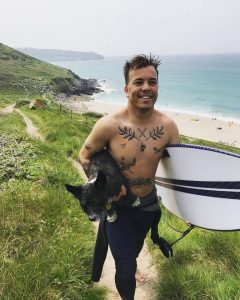
Local surfer and Porthtowan Surf Life Saving Club member Gary Walters was in the sea at Porthtowan on a voluntary patrol when he noticed a man drifting out to sea in a rip. He went over to help but quickly realised there was a mother and five year old child in danger too. Plus three other youths drifting out to sea. A flash rip had started and was dragging six people out to the sandbank.
As the mother started to panic Gary looked around for help, but there was no one on the beach. He was faced with a dilemma – who would he save?
“I just started shouting to the lads, ‘If you don’t start swimming for your lives now, you will all drown!’ says Gary
“I had hold on to the man and was shouting at the mother to grab her child and put her feet down on the sand. It was then that I realised there was no one else coming to help, and it could come down having to chose who to save and who to let go. It was horrendous. I just kept shouting at them all, “Fight for your lives!”.
“It took about 12 minutes to get everyone in. I was really close to a tragedy. Thankfully no one was hurt but since that day I still think back to what could have happened. What if I wasn’t there, then the incident could have ended in multiple drownings. What if things had gone wrong and I had to make a choice as to who to save, and who to let fend for themselves. And how would;d I have felt is someone drowned as a consequence. It would have stayed with me for the rest of my life.
“Thankfully it turned out ok but it was close.
Gary is member of the Porthtowan Surf lifesaving Club and a born and bred local.
We sent Porthtowan SLSC some Offshore Pilsners courtesy of Sharps so they can have well deserved beer after work in the summer sun.
If you want to help fund equipment for lifesaving communities you can donate here.
99% of lifeguarding is preventative – experienced water man and women setting safe bathing areas, keeping craft away from swimmers, offering advice just keeping an eye out for everyone. In a weird contradiction a beach with very good lifeguards very low incident figures, yet accountants judge dangerous beaches on incidents that have happened… Figure that one out…
When incidents do happen they happen quickly and they are life threatening. The Atlantic does not take any prisoners. The worst kind involved children. They are having fun one minute and swept off their feet the next. Panic sets in. Any incident with under 18s is harrowing, but things can get much worse as parents instinctively try to help. Many many tragedies occur when parents drown entering dangerous waters to help their kids. It is devastating. Sennen Voluntary patrol saved four children and prevented such a sad occurance days after they set up. This is their story.
“We realised very quickly after the tragic events of the May Bank Holiday that we couldn’t wait around or rely on others to keep our community safe at the beach.’ says Pete Gael. “A group message and a joint commitment was all it took.”
Harry Hoare, Mike Lay and Pete Gael decided to provide a voluntary surf patrol on their local beach of Sennen for the rest of the week and the weekends thereafter.
They soon discovered the breadth of community support for their voluntary actions and desire for a professional lifeguard service to be reinstated on the area’s beaches. The local surf schools/surf club donated rescue equipment. Friends, surfers and unemployed lifeguards turned up to join the patrols. The beach cafe provided everyone with food.
There were a number of incidents and rescues in that first week. Including the dramatic rescue captured on camera of four local children stuck in a rip current.
“Drowning happens quickly and it happens quietly, in this instance as the volunteer patrol was packing up.’ Says Pete Gael, “We all felt it afterwards – the volunteering our time and skills was immediately justified.
“What started as a reactionary measure to stop more people drowning on the coast turned into something more powerful. A celebration of lifesaving and surf culture. Despite being forced into unemployment and feeling undervalued – we demonstrated our commitment and skills to the community. In doing so we reclaimed our beach and a made a powerful statement about community action. Up and down Cornwall, others made similar commitments to their local beaches, serving to amplify the call for comprehensive lifeguard provision for our coastal communities.”
On 26 June a father died at Porthcurno beach around the corner from Sennen. “He went into the water with his young son and sadly didn’t come out alive.” said a spokesman.
The beach would usually have been lifeguarded, but the deployment was postponed. It was a tragedy that had been predicted and could have been prevented.
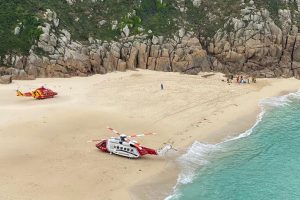
Cornwall Air Ambulance and Coastguard Search and Rescue helicopter at Porthcurno (Image: Lynn Batten)
We sent the Sennen Volunteer crew some Offshore Pilsners courtesy of Sharps so they can have well deserved beer after work in the summer sun.
If you want to help fund equipment for lifesaving communities you can donate here.
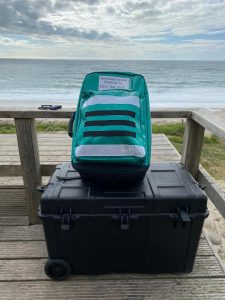
West Cornwall stand out and ex lifeguard Bert Wright realised very quickly the lack of professional lifeguards would spell trouble at his isolated local beach of Gwenver, Cornwall in May 2020. Taking the lead he set up a community action to raise funds to install a key coded first aid box, that experienced local surfers can access in case of emergency to help others.
“As a surfer, ex lifeguard and father, I feel it is imperative that we have essential First Aid equipment available at Gwynver beach for surf and beach accidents,” says Bert.
“We came up with a plan to provide the necessary equipment needed in case of emergencies, should anyone ever need it.
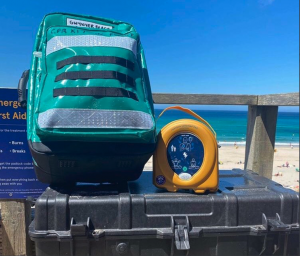
“We got the beach owners permission to install a waterproof, code accessible box located on the beach, filled with vital equipment that could potentially save lives. Gwynver is a popular local surf spot, and I felt it couldn’t be left without First Aid equipment.”
Bert launched a Gofundme campaign which smashed its initial £200 target for first aid equipment and went on to provide funding for the box for two more years enabling surfers to access equipment needed to save lives.
As Bert says, “If it saves one life, it’s worth it”.
The box was used in a serious accident on 24 June where a patient was treated by local surfers before being handed over to the care of the Coastguard.
Bert then got extra help and added a defibrillator to the box.
With some of the most experienced surfers/lifeguards in the country, a first and box and de-fib the locals at Gwenver are a self contained unit capable of responding to almost any emergency.
A good job well done.
We sent Bert some Offshore Pilsners courtesy of Sharps so he can have well deserved beer after work in the summer sun. Great work Joe.
If you want to help fund equipment for lifesaving communities like Bert did you can donate here.
Rescuer Joe Bracegirdle, Trebarwith Strand, Cornwall 25 May
This is the first of a series of rescue stories we are going to recount to raise awareness of sea safety and the actions of volunteer lifesavers in May 2020 when 100s of volunteers put in 1,000s of hours to keep the public safe as good weather, large tide and swell coincided with the relaxation of lockdown to produce a perfect storm on the south wests beaches that had no RNLI lifeguard cover.
We have chosen this rescue first for several reasons.
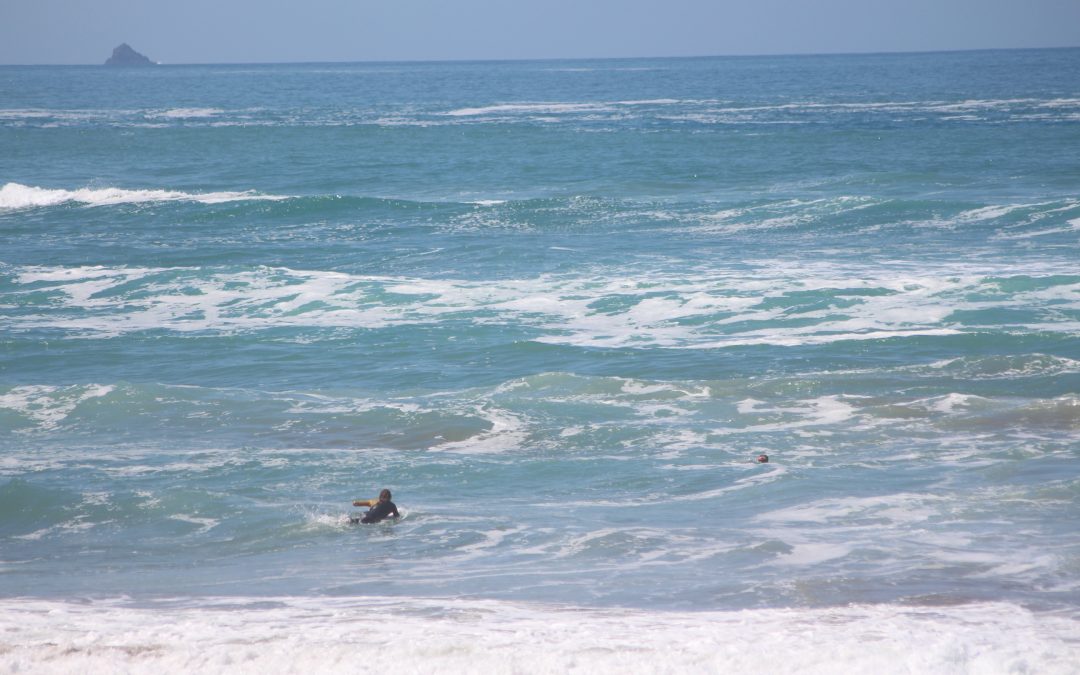
The photo shows clearly what a rescue of a casualty looks like. A swimmer swept out to sea in large surf is in obvious distress. Joe paddling quickly to his aid. Without his intervention this clearly is not ending well.
Secondly Joe is a Cornish surfer and was one of many RNLI lifeguards who were laid off early in the season due to management decisions on COVID. But instead of giving up he chose to unofficially lifeguard on two of his usual surf beaches to keep the public safe. It is this outstanding attitude that the RNLI core values are based; ‘with courage nothing is impossible’.
Thirdly his attitude when recounting the events is one of modesty and commitment to helping others. A trait seen right through the lifesaving community. Saving life through intervention or rescue is a day to day occurrence. No one does it for any other reason than they just want to help.
“I think the whole of the surfing community in Cornwall and the south west could see what was coming that Bank Holiday – a weekend of solid surf and sunshine with no lifeguard service was always going to be quite full on.’ says Joe,
“Knowing it was going to be really busy, everyone took it upon themselves to be out there on the beaches keeping an eye Out. A lot of rescues were made and undoubtably many lives were saved all around the coast.
“I spent some of the week down at Whitsands letting people know they were walking into a rip and the rest up at Trebarwith where a fair few rescues went down by the guys out in the water. Everywhere was really busy and rippy as hell. We’ve had similar days since that weekend and been as busy as we ever get rescue wise so its a relief to be back on duty now.
“On the day of my rescue my girlfriend and I were hanging out at the beach. I was just about to go out for a surf when I saw a guy dive straight into a pretty horrible rip. He went straight out to sea. I jumped in and paddled out as fast I could as it wasn’t going to end well for him. When I got to him he was pretty shaken up, but I managed to get him in through the shorebreak ok.
“Just before that a friend pulled in a learner surfer who had drifted right out and there were numerous other rescues throughout the day by surfers and the local surf lifesaving crew.”
We sent Joe some Offshore Pilsners courtesy of Sharps so he can have well deserved beer after work in the summer sun. Great work Joe.
If you want to help fund equipment for lifesaving communities you can donate here.