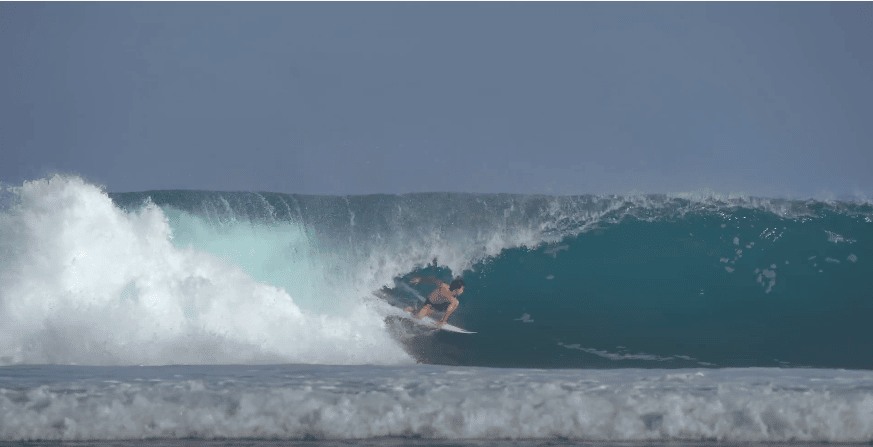
Surfing super long shallow lefts Mason and Sheldon
Mason Ho and Sheldon Paishon continue their Indonesian adventure. Fresh out of quarantine they head to a long left hand barrel hoping to catch the wave of a lifetime.
filming: Rory Pringle

Mason Ho and Sheldon Paishon continue their Indonesian adventure. Fresh out of quarantine they head to a long left hand barrel hoping to catch the wave of a lifetime.
filming: Rory Pringle
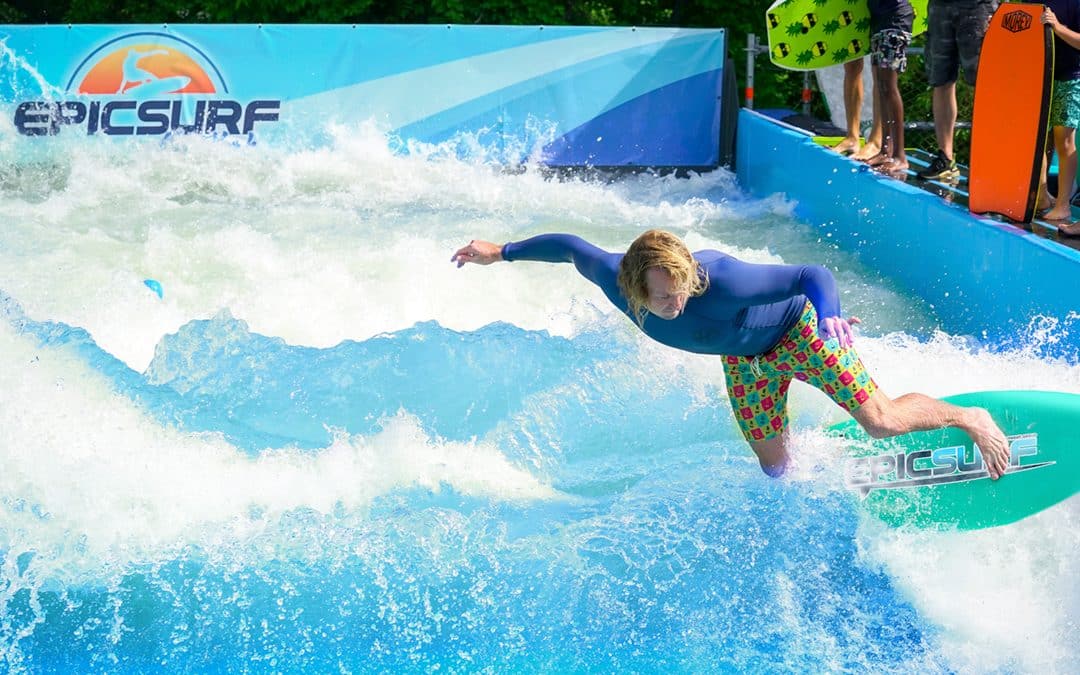
Aquatic Development Group (ADG) is proud to announce the launch of their new ‘EpicSurf’ stationary surf wave which was introduced to the market during a virtual Tradeshow Summit that took place on June 24, 2021 and was hosted by Surf Park Central. The event brought together leaders from around the world within the surf industry to discuss the latest developments in the market and introduce new and advancing technologies on all things surf.
EpicSurf, engineered and manufactured at ADG’s headquarters in Upstate New York, is a true deep-water stationary surf wave that is designed to appeal to both the expert and novice surfer alike.
Differentiating it from other stationary waves on the market, the EpicSurf produces a real wave of water with a depth that can be adjusted from between 3’ – 5’ for a more authentic surfing experience versus on a stationary ride that produces only a thin sheet of water that is pushed over a formed surface.
And with a compact footprint that works as well in a city setting as in a surf park, it is helping make the sport of surfing more accessible to everyone, everywhere.
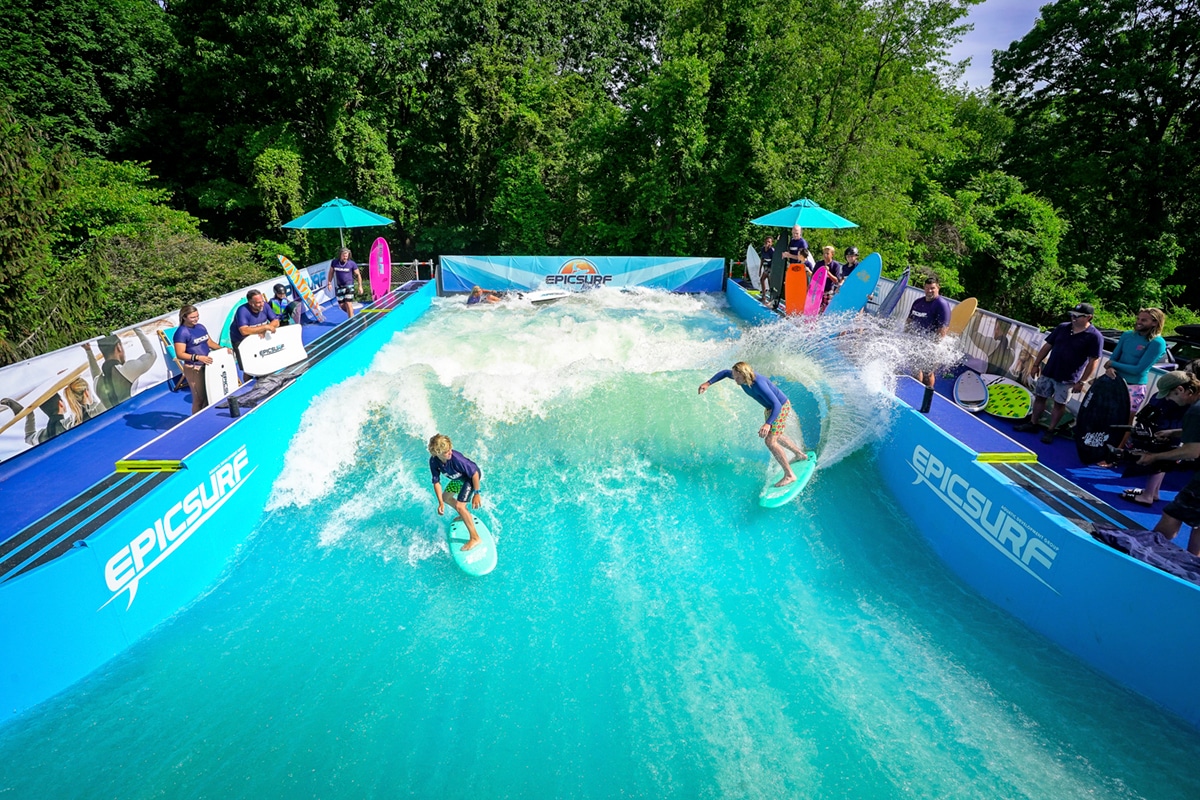
“There are other manufacturers out there who are approaching stationary surf waves with thinner films of water but at ADG we wanted to go all in and create a wave that gives riders a truer surf experience,” says Jim Dunn, President of ADG. “EpicSurf is an opportunity for experienced surfers to get on and use real ocean boards and have lots of room to carve and perfect their skills, but at the same time it also offers a platform for beginners, giving them the chance to learn and advance, growing the sport for everyone.”
"This is the perfect wave for surf lessons,” notes Phil Jackson, Executive Director of Surf Dreams Foundation who brought a group of youth surfers with him to visit the EpicSurf and try out the ride. “The EpicSurf wave is a real game changer for the surf industry. The kids couldn’t get enough of it."
“The wave is amazing, we surfed every board under the sun and just had the best day of our lives,” said Ben Gravy, Professional Surfer, “This wave truly is what they call it... EPIC.”
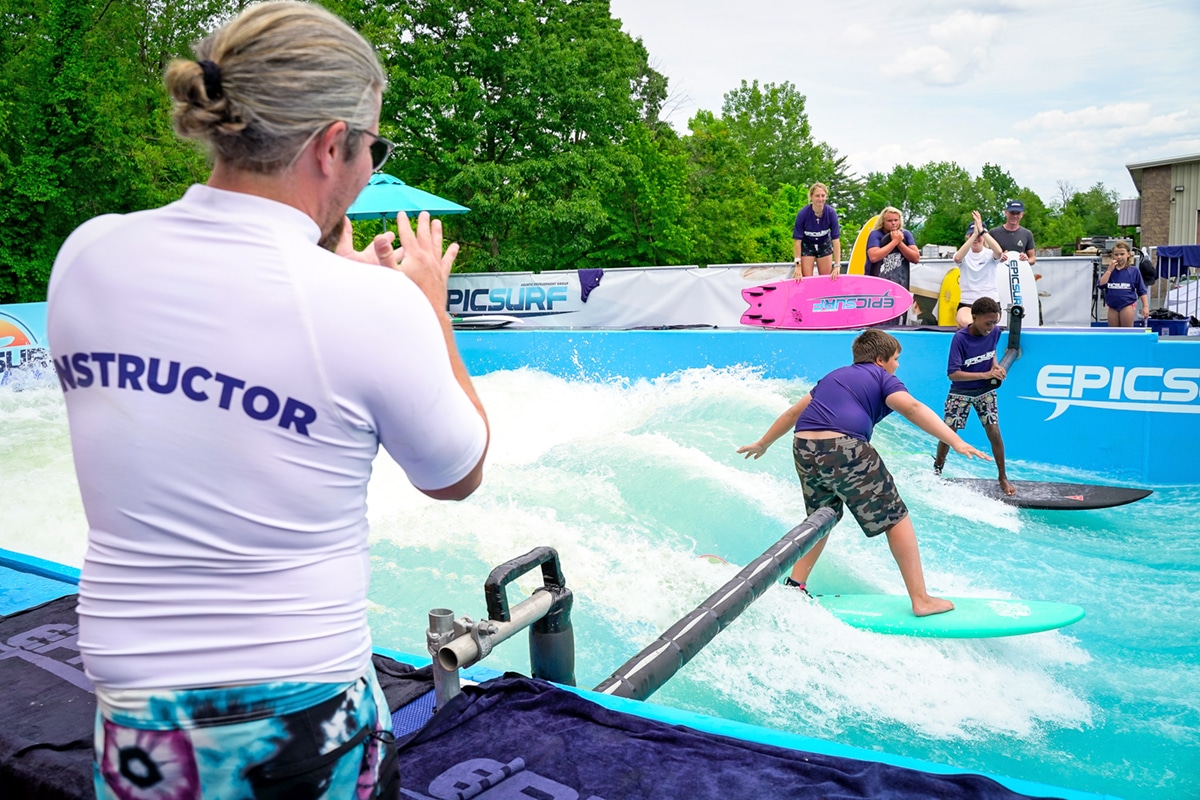
ADG’s EpicSurf offers a unique Rapid Wave Adjustability system by means of a remote access control system that allows the operator to quickly and easily tune the wave, which means each and every rider, whether expert or beginner, can get an instantly customizable ride experience matched perfectly to their skill level. Dual training bar options are also available for beginners helping to ease them onto the wave and enhance learn-to-surf programming opportunities.
And the non-stop action of the EpicSurf wave means that the waves keep rolling so surfers never have to wait to catch that perfect swell.
“I caught about 150 waves in about 7 hours of surfing EpicSurf today, and I feel like I have progressed so much”, said Cooper Jewel, an ESA Junior Surfer who surfed EpicSurf earlier this month. “That’s more waves than I catch in a year of surfing in the ocean!”
The EpicSurf wave surface can be designed and built starting from a width of 30-feet and can expand up from there in increments of 8’ depending on your specific site plan or business model needs.
EpicSurf marks the latest development in wave design and engineering from ADG, a company long known for its innovation, creativity, and superior wave system products.
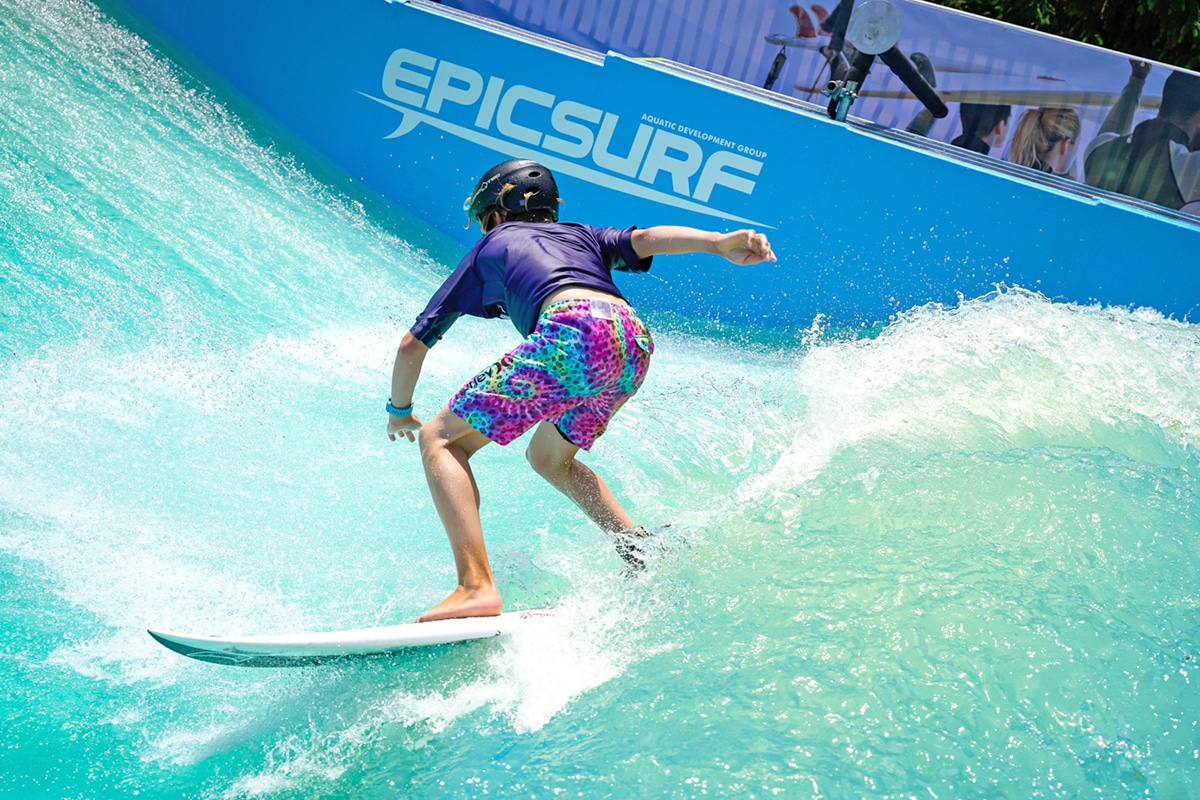
“EpicSurf is not the first deep-water surf ride to hit the market,” notes Dunn, “but it is the first to be designed and manufactured in North America and backed by a company that has been making, installing and servicing waves for more than 50 years.”
ADG is well known in the industry as North America’s most respected designer and builder of water parks, with more than 100 design-build projects to their credit. They are also the leading manufacturer when it comes to wave systems having been one of the first companies to produce successful hydraulic and pneumatic surfing waves back in the 1970’s and 80’s. Their WaveTek® branded waves have been installed in more than 500+ projects around the world including wave pools in resorts and water parks, as well as in aquariums, water rescue training facilities, fountains, and even motion pictures.
ADG is also the team responsible for the development, manufacturing, and installation of more than 125 FlowRiders across North America. ADG joined Surf Park Central in January of this year.
For more information on EpicSurf visit: epic.surf

Vantage Points episode 3 is a short film by Andrew Kaineder showcasing Russell Bierke’s latest and craziest waves. It’s a mix of hi-fi cinematography, low-fi lifestyle and photographic stills while being backed by a suspenseful and moody original psych-rock score. Andrew used abstract imagery and mixed media of nature and landscapes to help break up the edit. It’s a perfect balance, showcasing Russell’s unique big wave skillset and the hard charging he’s known for.
Russell Bierke
Russ Bierke is a surfer's surfer, quietly spoken, but someone who lets his actions do the talking. With an ability to remain calm in serious situations and a surfing maturity well beyond his years, it is no surprise that Russ has stepped into the world's big wave riding elite.
Andrew Kaineder
Australian film director Andrew Kaineder focuses on telling genuine human stories. The simplicity of his work is in the beauty, strong cinematography, honest performances and unique audio scores. He has created many award-winning documentaries and narrative films within the surf world, claiming prestigious awards like the AUS surf film of the year. Andrew is passionate about being authentic and aims to push the boundaries. His recent work includes: An Introduction, Flow State, Beyond the Noise and Derek Hynd TV Series.

Long time Carve contributor Lewis Arnold is looking for your backing to produce a book that will show case the surfing communities of the North Sea.
“Think of an “exhibition in print”,” says Lewis ” with your support, GLASS can be a progressive, fully-independent, limited-edition photobook created to show that surf-related photography, art and writing are valid artistic disciplines.
“There are hundreds of surfing communities across the North Sea zone, pollinated by surf culture, whilst also influenced by big city culture. Whether it’s writing, film, zines, festivals or art, places like Amsterdam, Stockholm and Edinburgh are producing original and stimulating work that often has no natural home in a surf media skewed towards blue seas, blue seas and boards shorts.
“I don’t want to make a lightweight, throwaway zine or mag and the longevity of the book is hugely important. so and the content will be curated to be timeless and hopefully the book can be cherished and shared for a long time.”
You can back the Glass Kick-starter here
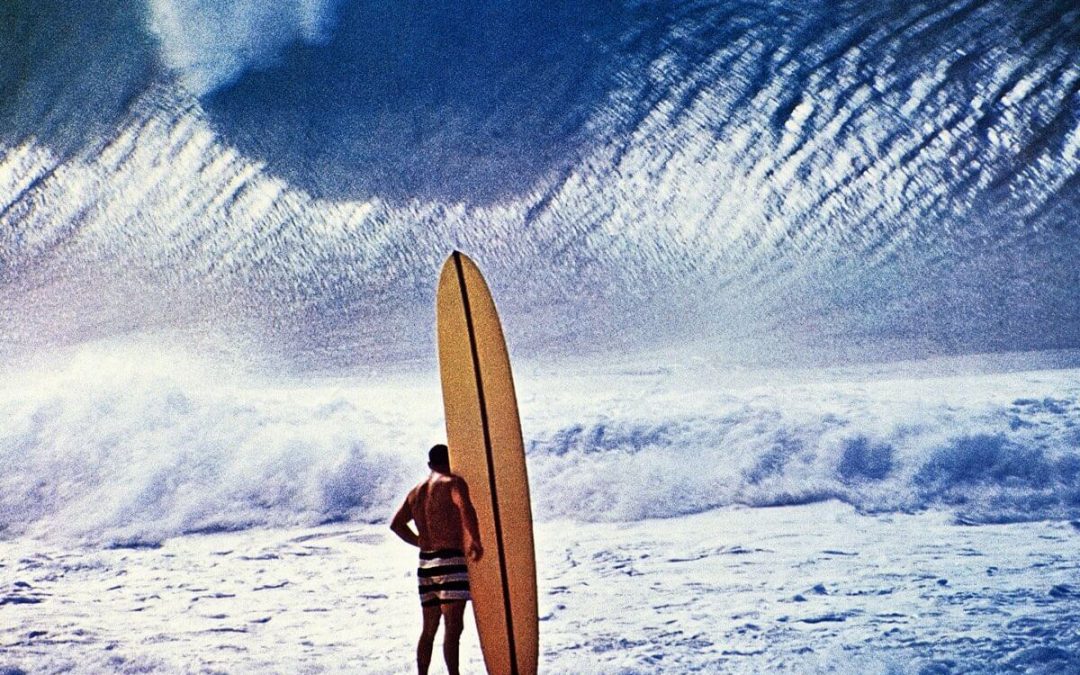
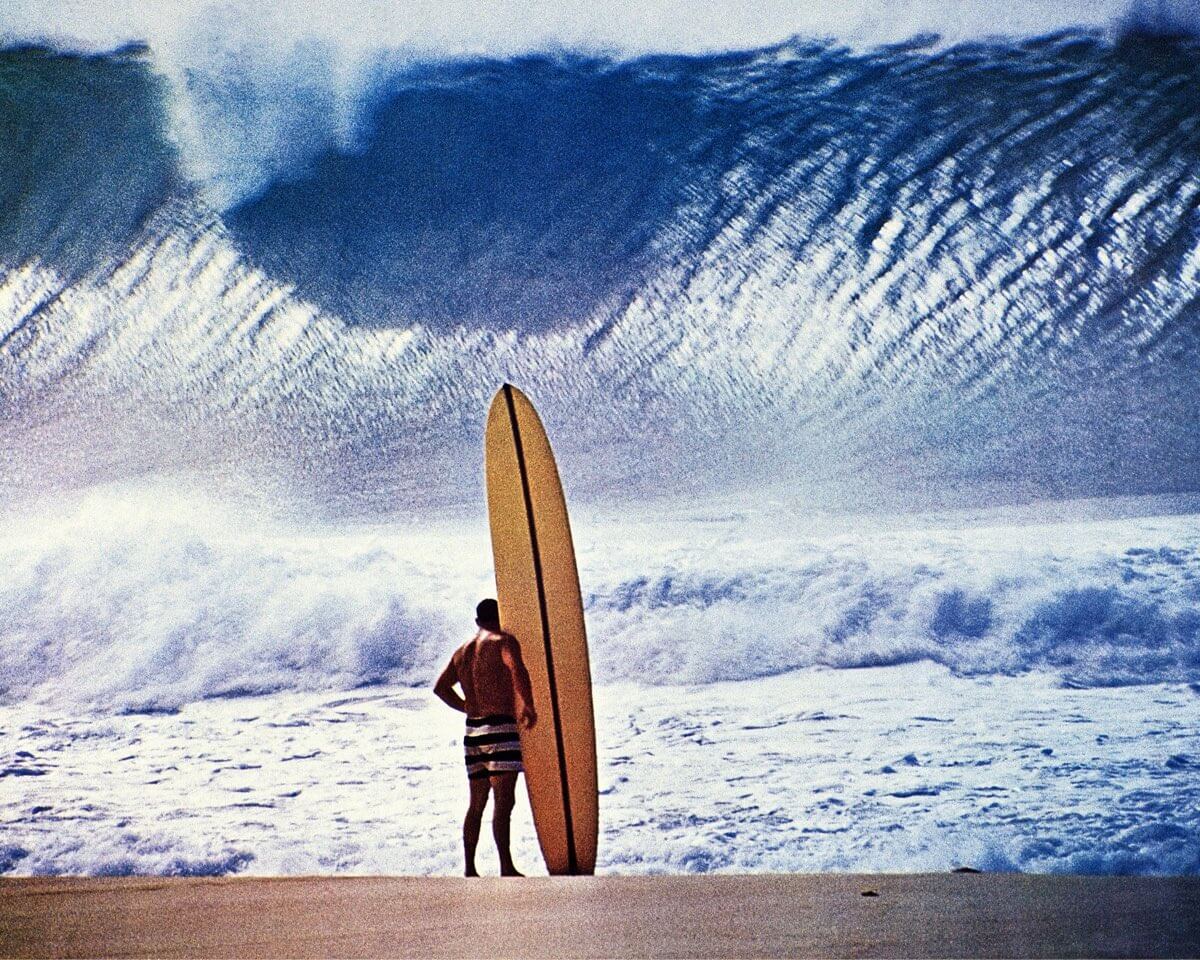
Greg Noll (aka Da Bull) at Pipeline, 1964. Photo by John Severson
“It is with a heavy heart the Noll family announces the death of our patriarch, Greg Noll.
Greg died of natural causes on Monday June 28th, at the age of 84.
We invite all of our friends and family to celebrate his life by sharing this post and your stories, pictures and experiences through your preferred platform.
Aloha
The Noll Family”
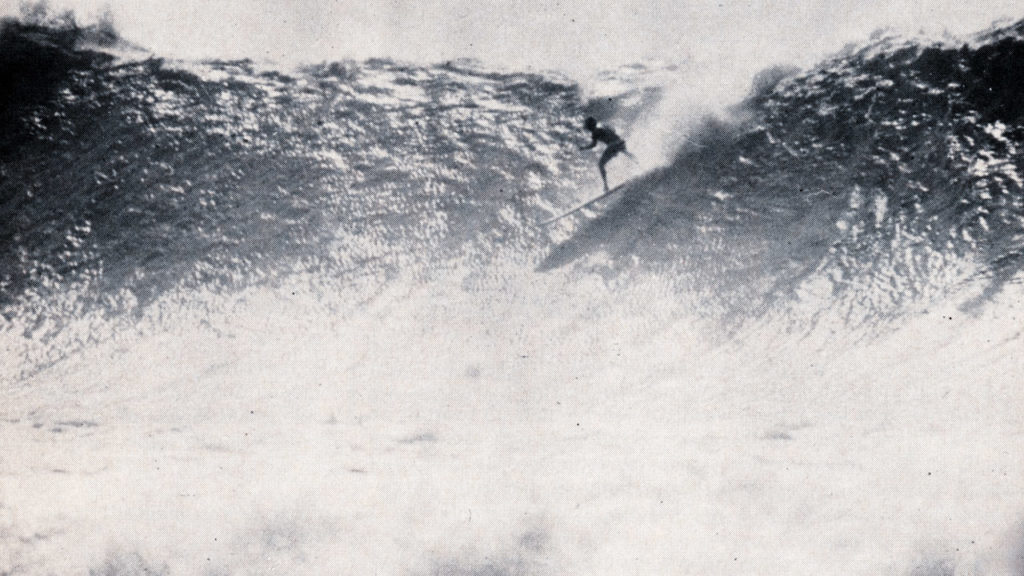
Da Bull huge Makaha, 1969.
A simple post on Facebook for a surfing icon.
When you think of the most enduring big wave surfing images it’s hard to flick past those of the Da Bull. Riding huge Pipe or charging Waimea and Makaha they are stuff of legend. All achieved in his legendary Jailbird trunks. The small excerpt probably captures his surfing as well as any.
“The wave I caught at Outside Pipeline that day walled up twenty-five-feet high about half a mile in front of me. It broke to the left, so I was riding with my back to the wave, goofyfoot, and it was a god-awful uneasy feeling. Instead of getting smaller as I rode it, the sonofabitch grew on me. It got bigger and bigger, and I started going faster and faster, until I was absolutely locked into it. I felt like I was on a spaceship racing into a void. At first, I could hear my board chattering across the face of the wave in a constant rhythm. As my speed increased, the chattering noise became less frequent. Suddenly there was no noise. For about fifteen or twenty feet, I was airborne. Then I literally was blown off my board.
— Greg Noll, Da Bull: life over the edge
So many stories to celebrate.
RIP Da Bull
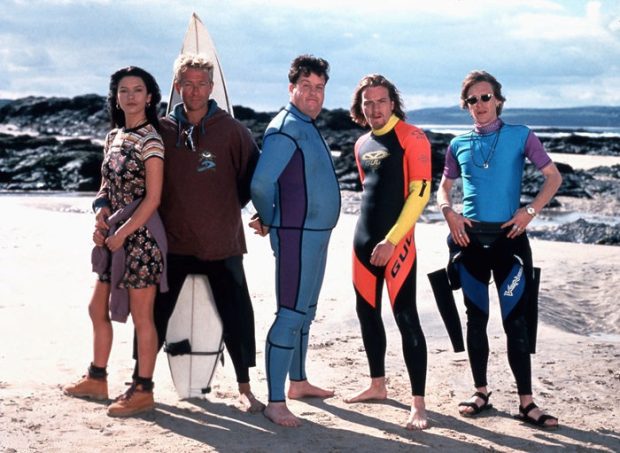
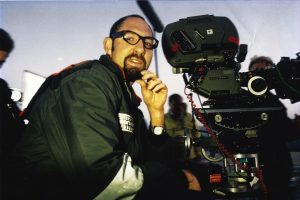
Carl at work throwing ‘steel’. Also writes and directs..
Steve England, Terry’s stunt double and consultant on Blue Juice, catches up with it’s writer and Director Carl Prechezer to talk about the films origins and how he managed to finish the project when the cast and crew forgot they were supposed to be working…
Back in the mists of 1993 two Italian gentleman wandered down the road towards Trevanaunce Cove, St Agnes where I was waiting. Somehow my mate Rob Small had convinced two London film makers to come down to meet us and check out the scene which in those days revolved round chasing waves and the pub.
We were worlds apart in attire and culture, yet after quick ‘induction’ in the Driftwood Spars we were best mates and our part in ‘Blue Juice’ as ‘consultants’ and ‘stunt men’ had been set on it’s course.
I can’t tell you how much fun we had making it. But from scouting locations, to story telling, through to meeting the actors and filming, we had a blast. In fact at one stage during critical filming we probably too much fun, and I still feel bad for Carl who somehow miraculously kept the show on the road with a film crew determined to turn the whole thing into a film festival with the emphasis on ‘festival’.
I think I can speak for everyone involved in the film in anyway, from runners to Director Carl, from extras in the rave scene to our good mate Sean Pertwee (JC) in saying we are beyond stoked that the film still resonates with people 25 years later.
With our friends at Wavelength setting up three nights showing Blue Juice at drive-in screening over looking Watergate, it was probably a good time to call up director Carl Prechezer. I’d never actually asked him why he wanted to make a film about surfers, or apologised for running amok and taking his lead actor (Sean) out at ten foot La Santa after three months surfing experience… So here goes…
(Get your tickets here)
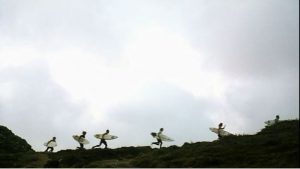
In 1993 west Cornwall life was about three things; surfing, the pub and raves in quarries…
So first off I still have no idea how this all came about? What on earth possessed you to try and make a film with surfers in 1993?
It started with a love story.
I’d made a short The Cutter (C4) and a one hour Dirtysomething BBC and was looking for a feature film idea when an old friend fell in love with a girl from Newquay and couldn’t stop talking about the surf/scene. So I convinced FimFour to let me and my then writing partner go surfing. The research budget paid for a week’s camping overlooking Sennen and some surf lessons. On the way back we stopped at a surf comp in Newquay, met you and Rob Small, ended up at the Driftwood and never looked back.
At the time, surfing wasn’t a mass sport / pastime as it is now. No mass surf brands on the high street, no Jamie’s at Watergate (was there even a café?) and movie-wise the legacy was Big Wednesday, Endless Summer, Crystal Voyager. Point Break had only been out for a couple of years. What was happening locally felt fresh, different; a real antidote to what was happening in London and other big cities. Initially it was much more of a local story and a hardcore surf movie, but when FilmFour committed we added the clash of JC’s friends (the lead character) and it became more of a classic movie story, like an early version of The Hangover.
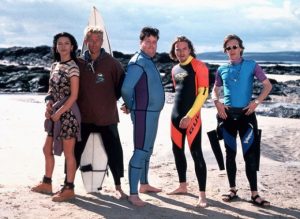
The regulars at many Cornish waterholes in 1994. Imagine if this lot walked into a bar now….
Why do you think then film still resonate after all this time? I mean the love is still there.
Three things: classic characters, a warm heart and a great soundtrack.
As a filmmaker I’d love to think it’s all about a great character. J.C is a classic – the guy hanging onto the past, his iconic ride at The Boneyard and the adoration of his crew. In contrast Chloe’s already one-step ahead, a strong woman who’s already on a different path. It’s a ticking time bomb. Enter his mates from London and ka-boom! You could be 18, 35, 45, 55, 75, pick the age, the moment is universal.
It’s also a film about friendship; knowing when to escape and when to appreciate what you have. It can also teach you a lot about boundaries and when to say no to trifle, even if it is being served up by Catherine Zeta Jones.
I also think the film has a genuine warm, almost naïve quality, which I think people feel. It reminds people of a time, which is very different and at the same time, very similar to where we are now where we are all asking, “is this all there is? Or is there something else, out there on the horizon waiting to go off?” It’s a terrible cliché, but you get what I mean.
And I mean the soundtrack: Primal Scream, Edwin Starr, T-Rex and more. Great tracks…
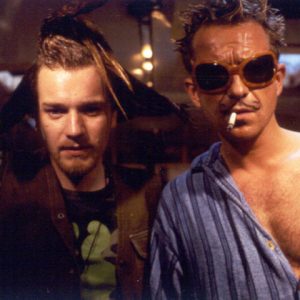
Ewan and Sean, standard quiet Tuesday night.
In some ways I think lockdown has returned a lot of the feeling of those times in the 90’s to surfing. Everyone was saying it down the beach – they were loving the simplicity and re finding the love… Also raves are back… Do you think we lost touch somewhere in the noughties and it has taken a pandemic to refocus our minds?
The noughties were like the 80’s. After the 90’s a lot of people seemed to stop searching. It was all about the house extension, the perfect kitchen and the lifestyle a low interest rate could buy. Not many people “did a Terry”. I mean hell, I got sucked in. It was only when I jumped to Brighton in the mid noughties and my folks moved back to Devon that I reconnected – saved by Croyde, Saunton and Putsborough. Maybe it happens to everyone as they get older – J.C again!
Maybe it does take something like the past few months to remind people about what matters and how good it feels to reconnect with the simple important elements. We’ll only know next year when all those new SUP’s are either gathering dust or sweeping up the ocean.
But seriously I do hope we don’t fall backwards and keep appreciating what we have – it breaks my heart after the amazing work by the SAS to see the beaches again covered in plastic.
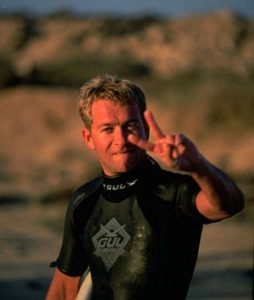
Sean Pertwee was part of the “Brit pack” of young talented actors such as Jude Law, Johnny Lee Miller, but in Cornwall he was one of the boys. One night he had to be saved from the hardcore Cornish fishermen in a bar few non locals got out of unscathed because they wanted to keep him as drinking partner.
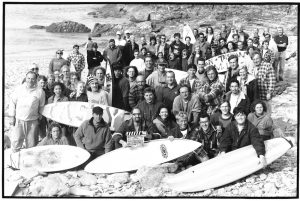
Cast and crew
When I look back, to be honest, I feel like a lot of us in the crew, owe you an apology for having too good a time when we were supposed to be working… we had best time! How did you keep it together and manage to get a film out amongst the chaos?
You know, I have a lot of respect for my producer and mentor Simon Relph. Sadly he passed a few years ago but I remember him hosting evenings and entertaining the crew. The guy was a legend and never stopped smiling. He saved my arse, more than once.
But I always wanted an upbeat feeling on set. I remember reading about Kasden filming the Big Chill putting all the cast in a house together to become friends, which is what we did on Blue Juice, and I think it worked. Sometimes too much! The scene at the train station, after Terry runs away was a challenge, I don’t think anyone had slept in three days.
Having said that, it was a tough shoot. We had bad weather when we needed good weather, unpredictable swells the second we jumped in the water and all sorts of other things going wrong, which probably explains why I had such a tough time and didn’t laugh as much as everyone else. But hell, it was worth it.
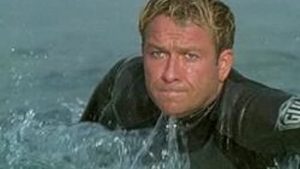
Sean actually learned to surf during the filming, to the point where I felt comfortable paddling him out at a Santa right.
Also I never asked… were you really mad when I took Sean (Pertwee) out at ten foot La Santa despite him only having learned to surf that summer?
Oh man, La Santa was something else. Even in the shallows the volume of water is unbelievable. Catch something small on the inside and you’ve still got to paddle back out over the reef. You made it look so easy when you paddled out and then when Sean jumped in after you, my heart was in my mouth; but fair play, he surfed and made it look convincing.
There was more footage but some bloke in the background was pumping his arms triumphantly because his pupil was doing so well, I wonder who that was!
But you know what, it makes you realise what a triumph the Canaries shoot was – there we were, a micro crew, shooting at the Point, with no water comms, no boats, no jet skis just you, Rob and Gabe Davies as stunt surf coordinators. It was about as low-fi as you could get and I must have been crazy to promise the producers I could bring home a European Big wave finale, which almost didn’t happen, remember?
We only had a couple of chances left to shoot you with doubling for Terry with some waves at Lobos and THE big wave. We’d tried to shoot a few close ups and cover shots, but nothing was doing. Then I remember we were just about to pack up one evening when the cloud cover shot across the sky like someone had flicked a switch. The sea went calm and then, coming in from the horizon… pure corduroy and when the first wave jacked up I was screaming “Get in, get in” like a lunatic.
But like I said, we had no ski, no tow in, so the hardest thing for the surfers was paddling into the offshore waves, which was whipping up and making it near impossible to surf. Couple of attempts to drop in came to nothing and then…boom! Wave on. I was in shock, it was as much as I could do to check the camera was rolling but that wasn’t the wave in the movie, the wave in the movie was number three and after that, it was over. That was our window, that was our movie, 23 seconds of glory! If you’d looked into the sky you’d probably have seen the big one giving us a shaka before pulling the plug.
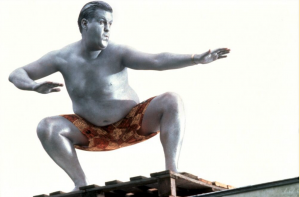
A lot of the funnier episodes are based on real life events.
How difficult was it to get the water scene back then before Go Pros and the like?
Even though we were all young, no one was going to be that crazy….except our infamous Australian cameraman all the way from Byron Bay. Mark was a legend and a lunatic. Originally we went after US crews, people who’d worked on Point Break but they were all in LA or the Islands and were way too expensive. Then someone, may have been you, suggested George Greenough.
He’d developed these experimental cameras which didn’t have like the water housings, the camera was the housing. However George didn’t want to do the job, because he didn’t believe Europe had big waves so he asked his assistant Mark and he said, “hell, why not?”.
I remember calling Mark in Oz and asking him, obsessively diligent, “So how will you shoot those classic in water shots?” He took a long pull on whatever he was smoking and said, “man, I’m going to drop into the pit, roll the camera and ride that monster to the end of the road.” I told the producer he was qualified.
On the day, when La Santa was out of control we hopped over to Lobos which gave us a more controllable wave. It’s machine, so we used Lobos for the film’s opening shots.
Lucky really, because back in the UK, when we tried to shoot in the water, it was a disaster. I remember on the first day getting washed away by a rip at Gwithian. Then there was the boat-to-boat works which were abandoned due to unpredictable swells, the list goes on. So thank God for the Canaries.
In short: the biggest problem was we had no comms and no backup, the kit was heavy, cumbersome and we didn’t have the budget for a Point Break style safety net. But it just shows what grit and determination and Australian suicide camerawork can achieve!
And you are still surfing ?
If I said loads, I’d be lying. Brighton’s always getting blown out, but every now and again, you can see me sweeping the sea at the Hot Pipes shouting, “coming through!” Only joking! I love North Devon, as it’s where my folks lived and especially Puts. Work has also been super kind and I’ve taken a Red Paddle to SA and thrown myself into the water at Muzenberg. I’ve also just discovered a micro-wave on a reef in Sicily. So no, not loads, but still totally obsessed.
Did the film reach your expectations?
Despite the pain, 100%.
It reached an audience and did well, so as a filmmaker, you’ve got to pat yourself on the back. And like I said, we pulled it off with non of the contemporary short cuts and kit we now take for granted.
My only wish, looking back, is that I’s had as much fun as everyone else and been a bit more chilled. But hey, either you’re working or you’re surfing. On a few times in life the two shall meet…
The weird thing is, I grew up close to the ocean, in Sicily and the UK, but never really connected with it until I made Blue Juice. In recent years I’ve been lucky enough to shoot over and underwater, so it’s like I’ve come full circle and ended up where I feel most at home. And it’s not just work. The ocean is a real healer and if it’s in your soul, it’s always there.
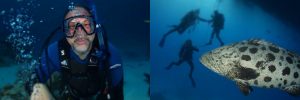
It’s like I found my soul making that film. You know the real joy and importance for me is the love of surfing, paddle boarding and diving. And now I live by the sea, trip around the world and still chase the ocean… I think that is what really matters. And that probably wouldn’t have happened if it wasn’t for Blue Juice.
Blue Juice is screening at two drive-in cinema events over looking Watergate Bay his summer 22 July and 19 August. Get your tickets here