Epic Conditions Deliver Exciting Competition for Day Five of the 2025 Surf City El Salvador ISA World Longboard Championship

Epic Conditions Deliver Exciting Competition for Day Five of the 2025 Surf City El Salvador ISA World Longboard Championship

Two-time Silver Medalist Rachael Tilly (USA) earns event-high women’s numbers in quest for first gold

Led by 2010 World Champion Rodrigo Sphaier (BRA), Brazil holds strong in the Main Round to carry team advantage

Long, committed nose-rides deliver top men’s scores to former medalists Rogelio Esquievel Jr. (PHI) and Taka Inoue (JPN)

Skindog through to round 4

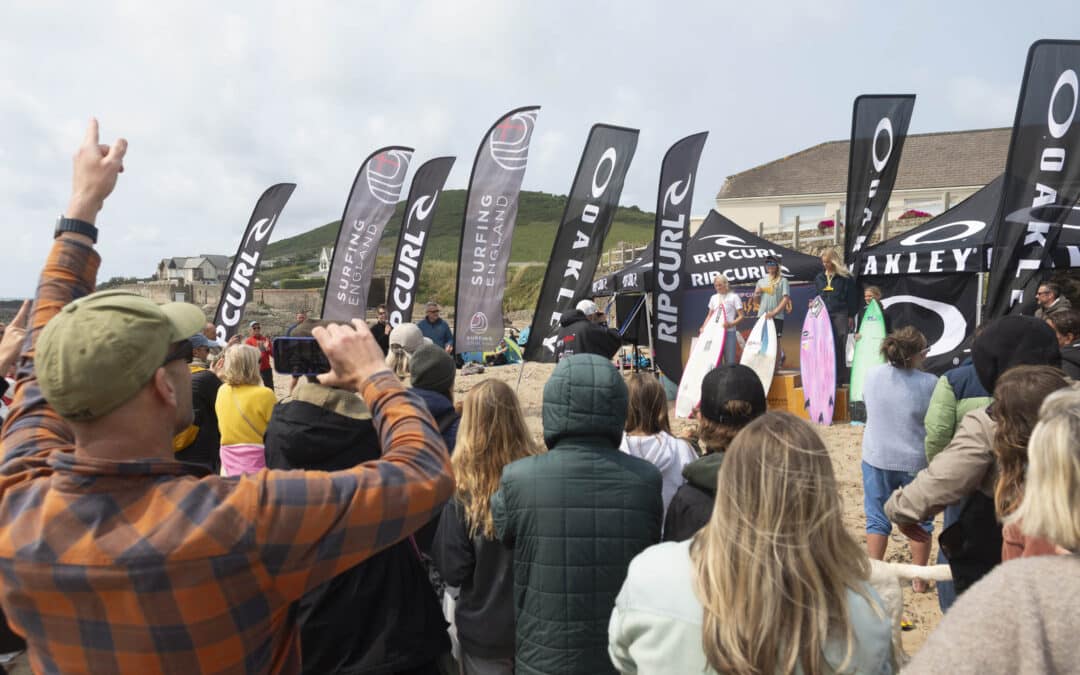
El Sunzal continued to deliver on day five of the Surf City El Salvador ISA World Longboard Championship (WLC). The long, right point was lit up with clean four-to-six-foot waves for men’s and women’s Main Round 3 to be completed, along with multiple repechage rounds.

Brazil remained the only nation with all four surfers in the Main Round, giving their team a strong advantage heading towards team medals, though five other teams remain at the top of the leaderboard with full teams intact; France, USA, Philippines, Peru, and Argentina.

Many surfers spoke of today’s conditions being amongst the best they’ve ever had in competition, including Rachael Tilly (USA), who earned both the highest heat total (16.33) and equal highest single wave score (8.50) of the event for the women. The two-time silver medalist and reigning WSL World Longboard Champion put on a masterclass in flow, drawing classic lines the entire way through the nearly minute-long waves as she connected stylish nose-rides with powerful carves.

“I’m just so stoked to have been able to surf in conditions like this, it’s so beautiful,” Tilly said. “I was just trying to stay really calm and really enjoy myself out there. It was my goal to get at least an 8, or just like, I wanted to get in the excellent range for this one, have one of my waves be that. So yeah, I’m really happy with that.”

Also earning an excellent 8.50 was Mara Lopez (PHI). The 14-year-old yet again showed confidence in defeating competitors with far more experience, holding poise through long nose-rides on the large outside sections. Lopez progressed ahead of Luana Soares (BRA), the pair sending Hiroka Yoshikawa (JPN) to the repechage.

Soares is competing as a part of Team Brazil for the second consecutive year, alongside Kate Brandi (BRA), who joins the team for the first time, and competitive longboarding veterans Jefson Silva (BRA) and Rodrigo Sphaier (BRA). Sphaier is competing in his fourth ISA event and has a team medal from each of his previous appearances; silver from 2023 and copper from 2010 and 2024. The 2010 World Champion is as determined as ever to back-up his gold medal, both for himself and for his nation.

“It’s been 15 years since my first gold,” Sphaier said. “I’ve been working very hard and I’m very focused on bringing the next gold to Brazil. I’m going to be strategic and stay focused and be ready for whatever comes to me.”

Defending Gold Medalist Kai Sallas (HAW) barely needed half of his 20-minute heat to catch two waves that he was happy with, before coming in and watching the remainder from the comfort of a chair in the shade. Having posted an early 7.00, the two-time ISA World Champion and 2023 WSL World Longboard Champion had enough confidence in his second scoring wave that despite Matías Maturano (ARG) and Rafael Cortez (CHI) posting rides higher in the 7-point range, the Hawaiian returned to shore with a full eight minutes left on the clock to await the number that landed as an 8.40, securing the heat win.

“I’m just here to have fun, go do some good hang-tens in the next couple days, and just surf the way I want to surf,” Sallas said. “So if I don’t feel like paddling back out, I’m going to come in. My second wave just felt good, and it’s hot, and the paddles are really long. Not that I thought that I had the heat or anything, I just thought that I probably couldn’t have bettered those two waves.”

Maturano progressed behind Sallas, with Cortez and teammate José Manuel Boza (CHI) both relegated to the repechage. Two South American teammates also met in the following heat, when Ignacio Pignataro (URU) and Julian Schweizer (URU) faced Ben Skinner(ENG) and Johnny Van Hohenstain (HAW). In a hotly contested heat, the two Uruguayans were also sent to repechage together. In the final heats of the day, Pignataro and Manuel Boza were eliminated, while Schweizer and Cortez powered on.


2023 Copper Medalist Rogelio Esquievel Jr. (PHI) repeated his day-topping performance from the previous round, collecting two solid 8-point rides for an excellent 17.20 heat total. The 28-year-old’s critical backhand nose-rides continued to set the standard, his single wave scores topped only by Taka Inoue (JPN). Inoue, the 2024 Silver Medalist, earned a 9.33 for an exceptionally long nose-ride, backed up by multiple sweeping turns through the inside.

Equievel’s teammate Crisanto Villanueva (PHI) snuck through a stacked heat in the last second. Surfing against not one, but two World Champions, Rodridgo Sphaier (BRA) and Benoit ‘Piccolo’ Clemente (PER), Villanueva took off on a wave with less than 15 seconds on the clock, needing a 4.18 to advance and send Clemente to the repechage. After an extended wait on the beach, the score landed as a 4.50, igniting an explosion of joy from the Philippines team. Now, Villanueva and Esquievel will face each other in Main Round 4, along with Jon Garmendia (ESP) and multiple-time medalist Edouard Delpero (FRA).

Six surfers were eliminated in Women’s Repechage Round 3 today, including both women representing Puerto Rico and South Korea. Sive Jarrard (ASA), Liv Stokes (CAN) and Margarita Conde (COL) earned the best numbers of the round, with the majority of heats going down the wire.

The same was true for men’s repechage, which completed rounds 2 and 3, along with the first four heats of Round 4, cutting their numbers by 34. Two surfers, Tom Breen (IRL) and Clinton Guest (AUS), managed to progress through all three rounds today to keep their campaigns alive heading into Repechage Round 5. Steven Newton (USA) and Surfiel Gil(ARG) also progressed from Round 2 through Round 5, having surfed their Round 2 heats yesterday afternoon, while an additional three surfers from Round 2, Nicolas Garcia(ESP), Agustin Cedeño (PAN), Yonatan Amir (ISR), and Francisco Freitas (POR) will appear in the first two heats tomorrow, hoping to do the same.


Billabong Bloodlines youth development program hits Peniche

Billabong Bloodlines youth development program hits Peniche

Billabong Bloodlines youth development program has groomed the next generation of surfing talent around the world – in and out of the water – guided by our elite coaching staff and legends of the sport. Earlier this year, 23 athletes from our young European crew head over to Peniche, Portugal to learn from some of the best on a weekend-long training camp. Our legend coach team, Didier Piter, Dani Garcia and Tomas Fernandes guided our young team through a two-day surf training. Progression, power turns, heat drills. All of it.

Latest news from the ISA World longboard titles

Latest news from the ISA World longboard titles

14-year-old Mara Lopez (PHI) earns highest women’s numbers in event debut, Philippines teammate Rogelio Esquievel Jr. (PHI) tops men’s scores

Brazil, France, Japan, Philippines, and Uruguay retain full teams intact in Main Round

Englands Ben Skinner is through to round three.

Surf City El Salvador – April 27th, 2025

Solid four-to-six-foot waves, with marching eight-foot sets, poured into El Sunzal for day three of the Surf City El Salvador ISA World Longboard Championship (WLC). The morning began with powerful, long-period swell providing large open faces for the world’s best longboarders to draw clean lines in showcasing their skills on the nose and rail. The final four heats of women’s Main Round 1 were completed, along with men’s and women’s Main Round 2.

Team Philippines had a great day of competition, kicked off by Mara Lopez (PHI) with a 15.43 two-wave total, the highest of the day for the women, collected in the very first heat. In her WLC debut, the 14-year-old committed to long, critical nose-rides on waves at least three-times over her head. Lopez’s style and poise in the powerful swell was notable and was rewarded accordingly.

Meanwhile, a hyper-critical, extended hang-ten from Rogelio Esquievel Jr (PHI) received one of the highest scores of the event, an 8.83. Combined with a 7.50, the 2023 Copper Medalist posted an excellent 16.33 heat total, the highest of the day for the men.

“I already had two 7’s, so I decided to push more and to try to get some excellent,” Esquievel Jr. said. “It came out an 8.83, so I’m so happy. [I’m going to] stay focused, watch some heats, and learn about the scoring, and watch the waves, where the sets [come] and which one is the best. And yeah, just have fun with the team and support the next few heats.”

Daisy Valdez (PHI) and Crisanto Villanueva (PHI) also progressed in their heats, to keep the entire four-person Philippines team intact in the Main Round. France, Brazil, Japan, and Uruguay remain the only other nations to move forward with full teams, giving all five nations a distinct advantage in the hunt for the team gold medal.

Many of the top numbers for women’s Main Round 2 went to the four former medalists in the draw, Maria Fernanda Reyes (PER), Alice Le Moigne (FRA), Natsumi Taoka (JPN), and Rachael Tilly (USA). Taoka claimed the highest heat total, 14.16, Le Moigne the highest single wave score, 7.83.

A handful of surfers breached their dominance, including Tully White (AUS), Hiroka Yoshikawa (JPN), Luana Soares (BRA) and Lia Diaz (CRC). Diaz was having fun in the chaotic afternoon conditions, finding opportunities for clean footwork and committed nose-rides on her way to collecting a 13.00 heat total.

“The waves are really fun, so I just had a blast,” Diaz said. “I was just going out there and trying to have fun and be relaxed. It looks so tricky, but if you actually time it right you can have a blast.”

Multiple hang-tens tight in the pocket provided Jefson Silva (BRA) with a 15.66 heat total that included the day’s first excellent score, an 8.33. Silva took the win in a hotly contested heat that saw Lucas Garrido Lecca (PER) also progress ahead of Dongkyun Kim (KOR) and David Schiaffino (CAN).

“I’m very happy and so stoked to be in the next round and to make a good score in my heat,” Silva said. “When I listened to the first score, 8.33, I thought to myself, ‘Okay, let’s go, now I have to get another one.’ When the waves come, I just want to improve myself and do something good, make some turns and fives and tens. I’m here to help my country, to represent my country, all the team, we are together and super strong.”

Silva and Rodrigo Sphaier (BRA) were teammates in 2010, when Sphaier claimed the gold medal. Sphaier also advanced today, but in second place behind Edouard Delpero (FRA), who earned the highest single wave score for the second day in a row, a 9.00. The pair defeated local Salvadoran Amado Alvarado (ESA) and Francisco Freitas (POR), who were relegated to the repechage.

Rafael Cortez (CHI), Dorian Torres (CRC), Johnny Van Hohenstein (HAW), and Roland Lefeuvre (FRA) also mastered the conditions to earn heat wins with solid scores.

Gyfa Now Playing

Gyfa Now Playing

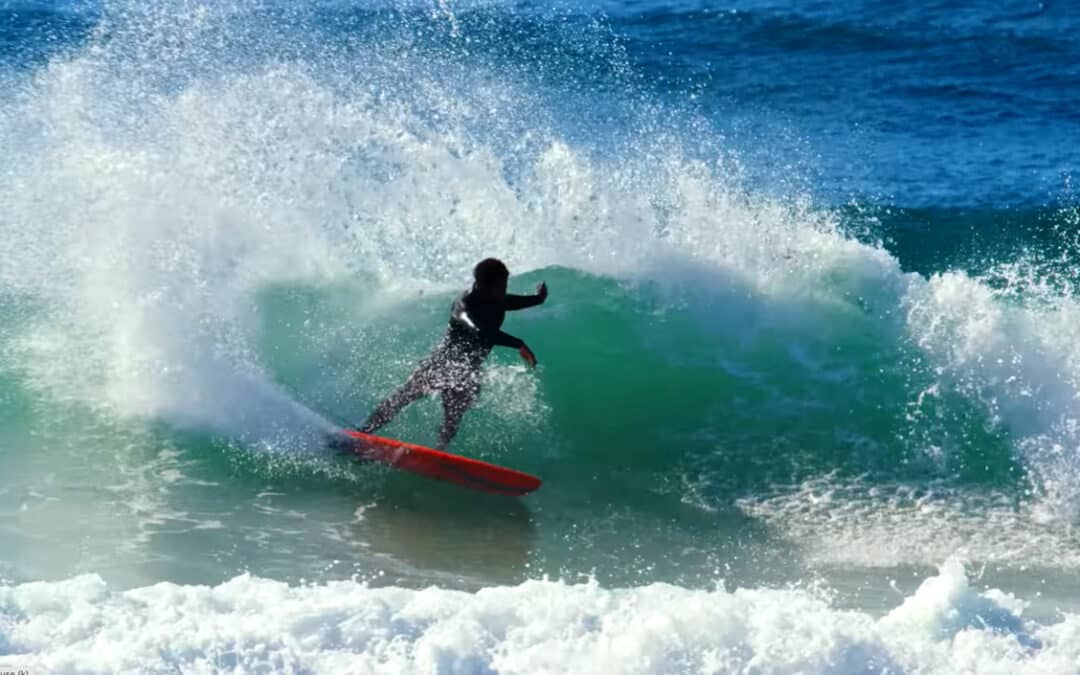
Will Bailey, Joss Ash, Malakai Hagley, Jobe Harriss and Liam Murray-Strout thread there way through what has been an epic Spring so far. Hit play to watch North Cornwall on fire with some of its finest sliders.

Film and edit: @offshoresphoto

The Cigarette Surfboard Interview  & Jack Johnson.

The Cigarette Surfboard Interview & Jack Johnson.

Jack met The Ciggy Board Boys aka @thecigarettesurfboard at the International Marine Debris Conference in San Diego in 2018. Jack had heard of the project but when they mentioned they were working on a few more boards, he didn’t hesitate to invite them out to Hawai’i... fast forward a year, and those words became a reality. Thousands of Cigarette Butts picked up off the beaches of California have turned into a few functional Cigarette Surfboards. An awesome conversation with Jack highlights the role we play as surfers (and non-surfers) to be better stewards of the sea.

Check out the Interview we did withThe Ciggy Board Boys last year below.

Interview and photos by Steve England

Taylor Lane and Ben Judkins are from California. They hit the headlines last year after they spent the summer picking butts from the beach, parking lots and local paths to make a surfboard for the Surfrider x Vissla “Creators & Innovators Upcycle Contest” using 10,000 cigarette butts.
The board and subsequent publicity has led to a new journey and the pair are now creating an environmental surf film. The film questions the mentality of littering cigarette butts, how this largely represents our single-use plastic culture and its effects on the ocean via the ‘flick’, the action used to dispose of butts out of windows and onto beaches. In July they visited the UK, Steve England went to find out more.

So guys what are you doing in Cornwall?
Ben: We’re here meeting people, filming and exploring Europe to find out what communities, companies and NGOs are doing to fight ocean plastic pollution. We came to Cornwall because we know there's an interesting surf culture here with organisations like Surfers Against Sewage and companies like Finisterre who are really trying to address ocean pollution through community activism as well as material science and other developments.

Why cigarette butts?
Taylor: We built this surfboard for a Surfrider competition that challenged people to make surf craft out of upcycled materials. We chose fag butts because they’re the most littered item in the world and the most consistently found piece of trash on beaches around the world; there are 5.6 trillion littered every year. Even if they are flicked away from the ocean, they still find their way to the ocean.

How long do they take to decompose?
Ben: Because they’re made out of plastic cellulose acetate they practically never decompose. It’s a filament fibre that breaks down into microfibres and as they do so they leech out all the toxic chemicals they are supposed to filter out when people smoke them.

So this motivated you to use cigarette butts?
Taylor: Yes. What we did was upcycle foam blocks from Marco foam, joined them together, cut the shape, then on the side we lay out a piece of fibreglass, placed the butts on it and we have a press to make them into the layer. Then we are left with the sheets which we place on the recessed foam and then double two ounce glass top and bottom. Because the cigarette butts are plastic fibres, the resin and fibreglass absorbs them and the butts becomes part of the fibreglass. They are now actually structural rather than before just being in there. We think this makes them stronger than most boards, certainly little bit heavier, but with the retro trend and shapes that we're replicating that doesn't matter too much. Who knows they maybe lighter than some people are used to.

So this board surfs but primarily you are using it as an instrument to engage people in conversations about the environment?
Taylor: With my design background I like to emphasise functional arts. I think what this piece does not only helps people reflect on what’s happening in the environment, as all of the cigarettes were picked off the beach in Los Angeles, but pushes us to think how we can make things that also work. I think it’s important that it’s also functional and takes it back to surfing, so hopefully some good surfers can do some fun stuff on it.

Has it opened up any doors to people in high-powered positions who can direct change?
Ben: We took the cigarette surfboard into the state capital in California onWorld Oceans Day where we were invited to speak. We went around with a lot of other ocean conservationists and lobbied some of the politicians, Congress people and Senators that might not have been fully aligned with what we were doing. But once they saw the board in person it just clicked. They were like, “ We hate seeing cigarette butts on the beach and on the streets. This is obviously serious problem so maybe I will vote a certain way on the next bill.”
There are two bills currently in California that are being proposed to be put onto the ballot. One of them bans the sale of single use plastic filters used in cigarettes and the other bans smoking on beaches. So we really saw that day the power of the board itself being this visceral, moving piece to sway opinions.

Taylor: I think what this project has pitched us forward on a journey. We made the board for the contest, then a local newspaper published the story and all of a sudden we’ve “gone viral”. So we started to be invited to lots of community events and government offices. And what we found out through going to these events is that the change starts at individual and community level. When we go to meet politicians, those people are there because people in their communities voted for them. And those politicians want those people to remain happy. So it’s kind of come full circle to us in that even though this problem is so daunting and vast and we really want to push industry and politics to be the change. Those people are only going to take action if certain communities start standing up and demanding change.

So over here right now there's a huge movement against single-use plastics. Are you experiencing that in the US?
Ben: Yes, and I think that goes back to the first question of what we’re doing here. We noticed the UK is a prominent leader in addressing this. I mean we still go to the grocery store and see all the stuff in plastic, but also know you guys seem quite serious about what you doing here. I think that message is resonating in the States as well. I mean the state of Hawaii takes the brunt of this being stuck out in the Pacific and just filtering plastics. It's insane but really what makes this problem that we can tackle is that we can see plastic. When we get in to climate change you can't see the gas that causes it, you can’t see carbon dioxide, so it’s an arguable point, but the plastic on the ground isn’t. So I think addressing and solving this problem first is more attainable. And it's why towns, cities, nations and governments are looking at this and saying this is not only something we need to do but can do. Because it affects people and industries from tourism to fishing to the health in the community.


Taylor: Plastic pollution is a global issue with no borders and that’s what we find important with this film. To represent what is happening around the world in terms of action, in terms of solutions and the impact it has on communities around the world.
And I think another thing is us as humans reconnecting with place we live on, with the earth, and learning what is ‘away’, when we throw things ‘away’. Where is ‘away’? Because it's not just the trash bin, it's not just the recycling bin. There is a whole series of events that takes the plastic to it’s final resting place whether that's a landfill, or to a recycling centre or back into the sea. So we really need to reconnect with the earth and find a more harmonious balance between the way we give and take the planet’s resources and the ocean. And that's where it comes back to surfing too. As surfers we have this obligation to be leaders as custodians of the sea and do our part, seeing as we are on the frontline. We see plastics and pollution in our waters every time we go out for a surf no matter where we are in the world. It's on the tideline, washing up on beaches or in the lineups. So we feel we have a huge responsibility as surfers to find creative solutions to address the problems and to be active and engaged in return for what we take from the sea.

So for me the whole plastic thing is on a roll now but it is just the tip of a huge problem which is going to have to lead to a change in social behaviour, corporate behaviour and politics with nations acting together, economies acting together and to a reform of our view of capitalism. When you are speaking to the politicians are they getting bigger story or are they still focusing on the plastic?

Taylor:
We haven’t had a huge experience with face-to-face politicians but we both come from the world of non-profits and standing up for social and environmental things. But you've got to start somewhere and it's like clean your room before you clean your house. Plastics are something we can see and something we can do something about so this is really our emphasis in getting communities engaged. If you look at the smoking bans that happened in the States, they didn’t start at state level or at federal level, they started in small communities who said ‘ We aren't going to have this here’. I think when you look at these environmental crisis if we really all spent our time focusing on one subject at the time we would be to tackle them better. The saying goes “keep the people divided to rule” keep them fighting with themselves and we can still stay on the top. Revolutions and reforms take a long time but if we can band together and tackle one thing at a time building momentum and political power through community we can effect change.


Ben: You mentioned capitalism and ultimately we need to shift from our global economic structure and not focus on exploiting resources, but rather managing them. I think that's a huge issue. With any capitalist system it is all about profit and it says that scarce resources are something to exploit and extract and continue to take and not really give back or planning the long term outcomes. It definitely also has to do with behavioural change. The mentality and mindset of 'the flick’ is symbolic of the out of sight, out of mind mentality and ideology. We are hurting ourselves in the long run.


Taylor: From a design perspective we look at problems differently, we have to see the opportunities. When you look at the charts that say there are going to be three billion more people in the next 50 years and we are projected to consume so much more, you just think where the hell is all that shit that we make going to go? It's already washing up in the remotest places on earth. But when you look at the redesign of not only our economic structure, and the new material sciences you can see huge opportunities to create more circular economies, and not just be caught in this linear ‘ create, consume, throwaway’ path. We can create better materials reuse and reduce. These terms have been thrown around for so long but now it is coming full circle and we have to do it.
I mean the earth will go on and on. It's been here for a long time. Humans have just been a blip on the timeline living on it. So ultimately it's a question of society. Do we want to continue to sustain human life on the planet and evolve our thinking, or not? We've evolved as human beings but now it's time to elevate and practice how we evolve humanity on the planet. If we cease to do that, then the earth will go on and humans will eventually fade out.

Ben: I think surfers and being in the ocean, seeing this issue plastic pollution first hand, you can’t not get it. You see you see it every time you go out in the surf. So I do think the surf community and industry has a big obligation and opportunity to do more. The way we feel should be backed by more action in preserving the ocean and protecting the waves and places we love. There is a lot of really good stuff going on trying to shift to better practices but there's a lot more to be done.


Taylor: Bringing it back to surfing we talked to Tony Butt and his analogy was when you look at the evolution of humans 99% of the time up until now we’ve been hunter gatherers, so surfing this is completely cerebral experience where you have to do come back into your hunter-gatherer skills and that is the connection we have and share more than people who aren’t surfers. We understand tides, the winds, the direction of the swell and all these intervals, all the science and not only that but everything you know comes down to this finite moment, a few seconds you get to express yourself and be in balance with nature. And it's a really unexplainable feeling. What we’re doing to the ocean is not a good feeling, to see plastics and chemicals and all these other things washing up in the places we called home. Society loves outcasts, and surfers are outcasts, so we have an opportunity to share our way of thinking and influence society for good, not just to have surfing be another exploited sport where we’re solely looking for self pleasure. We have that level of giving back. Surfing demands a standard of respect and unwritten rules of the lineup. The fundamentals of surfing actually go hand-in-hand with the environmental movement. Because we all know you have to respect what is to be feared, which is nature. And if you don't respect the ocean, soon or later it's going to give you a big right hook.