
Interview by Joel Gray

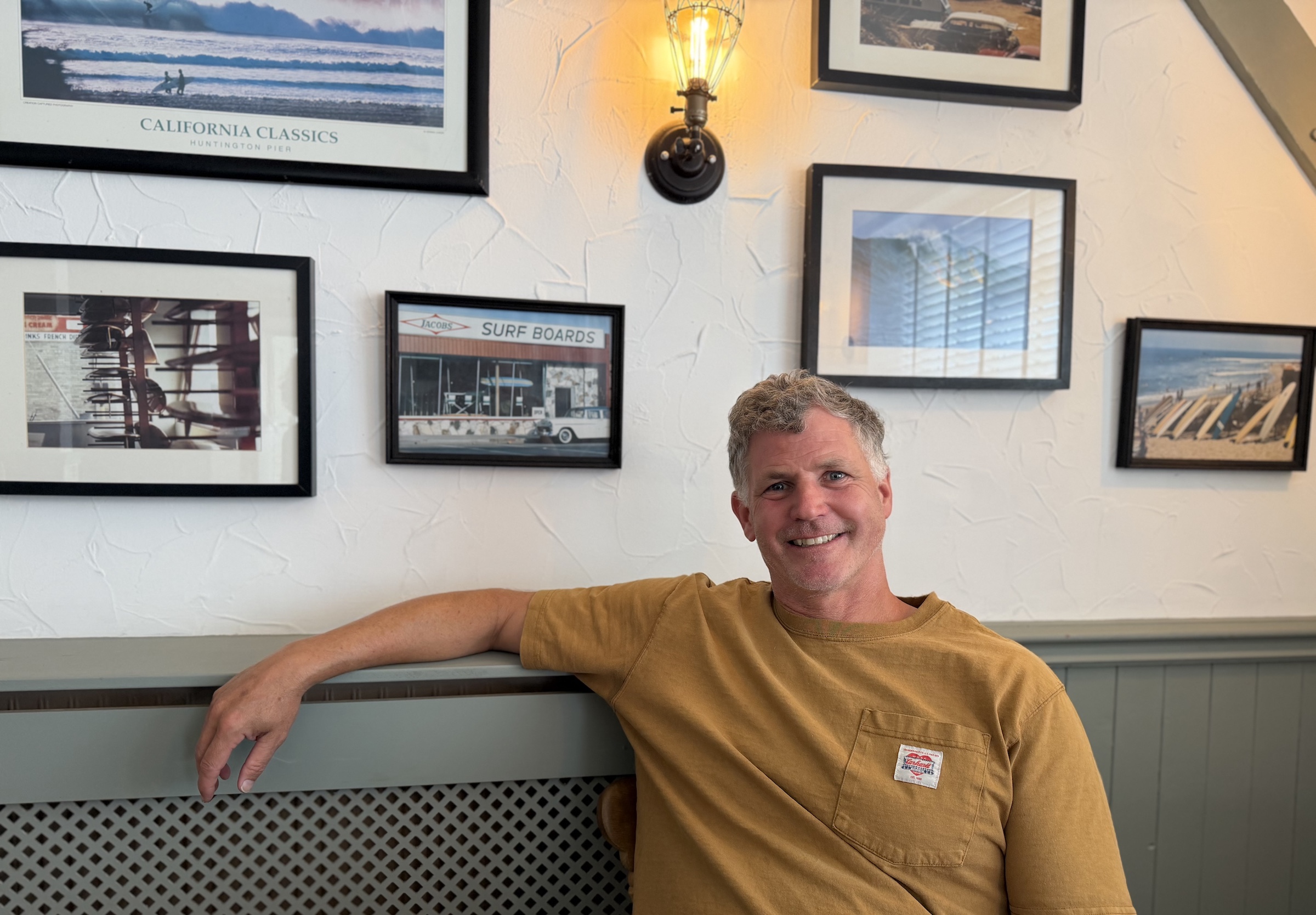
Pauly Jefferies has been on Cornish beaches since he was a kid picking up litter at a Foster's surf event with his dad. Decades later, he's the man running the show at Boardmasters, working with the WSL to turn a stretch of Fistral into a world class competition arena. This year brings the event's biggest change yet, an upgrade to QS4000 status, pulling in a stronger international field and raising the stakes for every surfer chasing a route onto the Challenger Series. We caught up with Pauly to find out what goes into building the event from the ground up, what a typical competition day actually looks like behind the scenes, and who he's got his eye on beyond the hometown favourite.
Pauly, what is your current role at Boardmasters this year, and what was your pathway up to that?
My current role at this year's Boardmasters, and over the last three or four years, is as contest director. I work with the WSL to facilitate and deliver a top level surf event. I have to set up the infrastructure, work on the timings of the event, and the safety communications. It's a fairly comprehensive list that requires a small team behind the scenes all year round to put this in place.
Over the years, I've worked in surfing since about 1983, where I started with my dad as a litter picker at the Foster's surf event. From there, I worked with Dave Reed for many years and learned my skills, mainly as a judge. I travelled the world with the world teams and the European teams, so I got a lot of experience as I travelled, and then naturally progressed into taking over and working mainly for Surfing England as their event director over many years. That's how I got involved.
Thoughts on what the upgrade to QS4000 means?
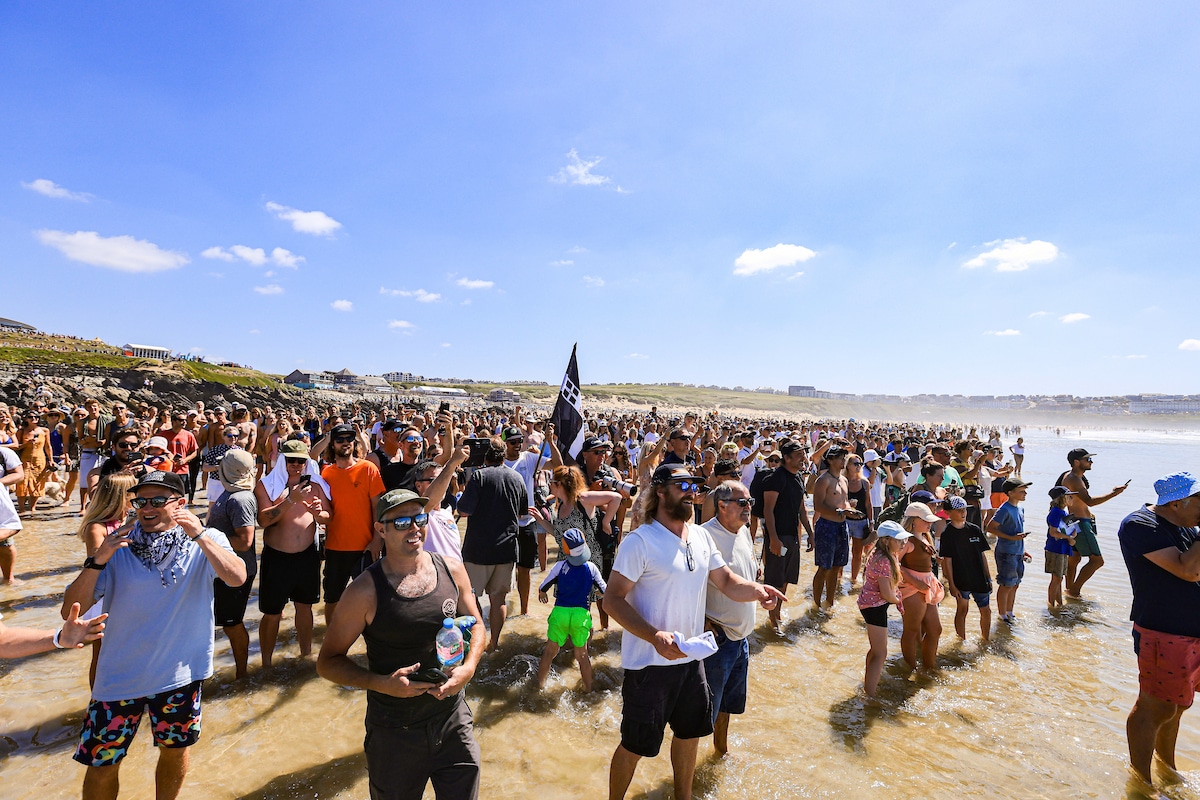
This year's upgrade to a QS4000 is fairly significant. It's a huge opportunity to both spectators and surfers alike. With only a few events in Europe offering 4000 points and above, it's crucial for the athletes to chase these points down to progress into the Challenger Series and then the dream of making it onto the WCT. So points, any points of that amount, are worth an awful lot. It's a win-win. If you're a competitor at this year's event at 4000, you're going to get some very high level, in fact world class, surfing.
What does your role look like in the weeks leading up to the event?
My role leading up to the event is fairly mixed. We start planning for the following year pretty much the day after Boardmasters finishes. We have a debrief and then look forward to how we can improve and make things better.
Leading up to the event, I'll be looking at the surf forecast and weather patterns, and this will determine how logistically we can run and complete an event. Myself and Harriet, who is actually my right hand woman, and I probably couldn't do it without her, then work on everything from communication, staffing and infrastructure, all the way down to what healthy snacks we can put in the fridge for the 30 plus staff at the event.
Run us through a typical day for you during the event.
A typical day for me is getting up around 5am, 5.30am, normally very early, and making my way down to the beach. Once there, I meet Harriet and we fire up the coffee machine and get to work. Harriet concentrates on the communications to athletes and staff, and the socials to the general public. I'll be checking the conditions and planning my day, monitoring weather patterns to see how much we can run that day. Basically a lot of it rolls around weather and waves for me, which of course is the nature for any surfer. We follow the weather patterns, then I go about setting up for the day.
I mark out the event area, learning from how the rips are running and where the best peak is on the beach. I would have monitored that leading up to the event, and each day I'll put flags where I think the best waves will be at that tide. As the day goes on, they will move in conjunction with the tide and surf.
Once I've done that, I'll put out the rash vests for the day. There's a lot of rash vests, obviously, across many categories, so we sort those out and get them ready. Then the big boss, Rob Gunning, will turn up with his team from the WSL, and we'll discuss our thoughts on the day ahead and the day before. We make sure that as a team we're all reading from the same page before the competition commences.
The staff, media crews and technical team are there also. They'll be setting up all the replay, the actions and a lot of technical equipment in the tower, and getting that tested and ready to go. The commentators will then come in, I'll meet those, and we'll set up their notes relevant to who will be surfing that day. They like to know the plan, and they do a lot of research into individual athletes so they know what's going to happen for the day.
The head judge will also call a meeting each morning, and they'll talk about waves from the previous day or in the past to get their criteria absolutely spot on. People's careers are at stake here and they take their job extremely seriously. It's a very professional setup, and because of the technical aspects they now have, particularly at 4000 level, they're able to do recalls and call waves up, look at the scores, look at the relevancy and break down the wave. It's really important that they're all in unison as judges, looking at the same thing, which is normally set by the head judge. The head judge is a key role to all of this.
Once they're set up and ready to go, once the horn goes, the whole machine starts and off we go. Throughout the day I'll monitor every part of the setup, from beach marshals, flags and safety cover to judges, to make sure it runs as smoothly as possible. That's my main role every single day for Boardmasters.
Favourite Boardmasters memory?
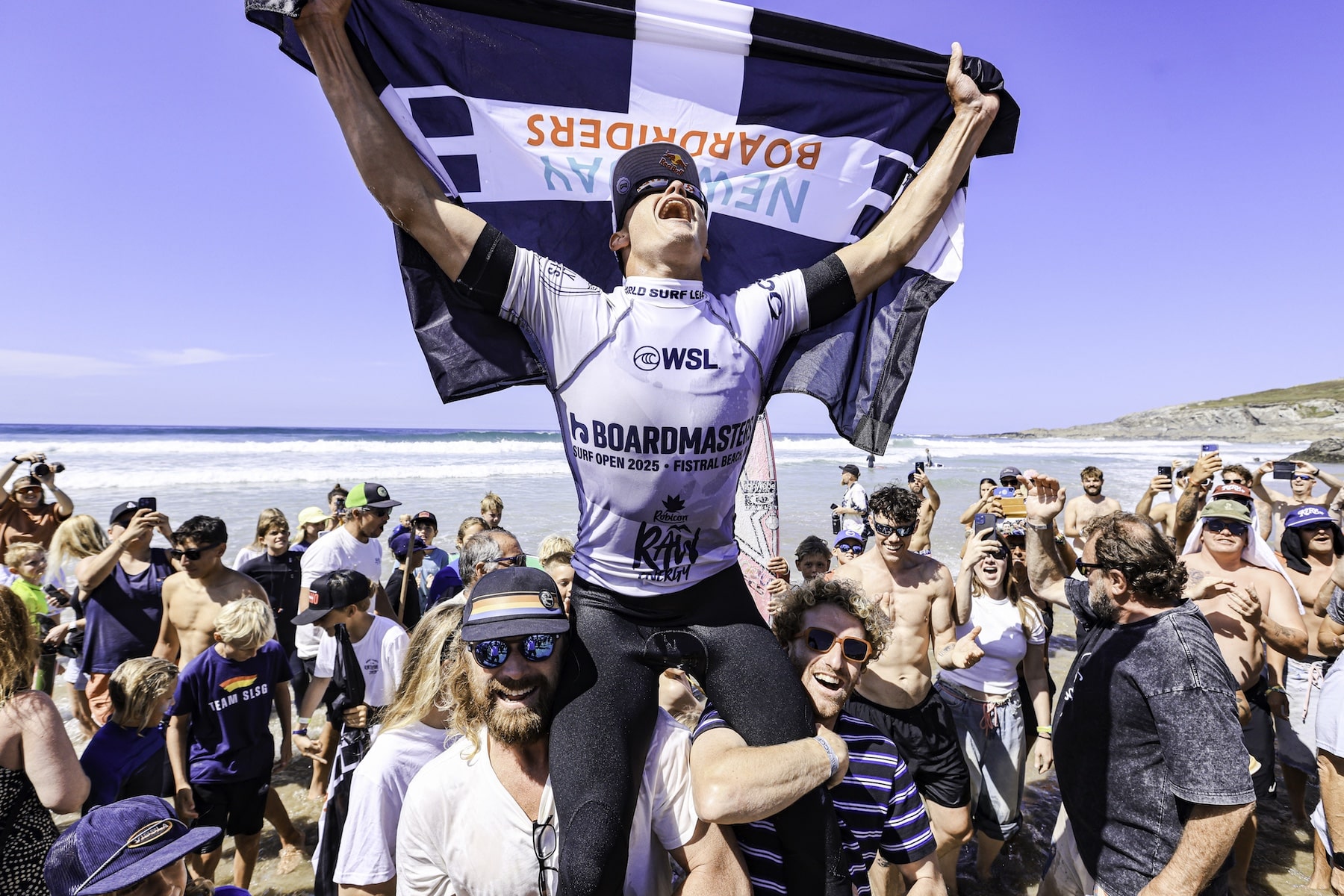
I've got a couple, particularly associated with when I was young, a teenage boy watching my world idol surf on Fistral Beach. I'm a true advocate for British surfers and British surfing, so watching Russ Winter take the home win on home turf at the 2002 Boardmasters against some of the world's best surfers was definitely a highlight for me. It was judged differently then and his competition was extremely tough, and it wasn't regional. Russ is definitely an ambassador for British surfing.
In recent years, the incredibly gifted Lucas Skinner, reigning Boardmasters champ, has been a true pleasure to watch and grow into the force he has become. With the step up to a QS4000 this year, we'll hopefully see Lucas cement his place as a true WCT contender within the next few years.
Everyone will be supporting Lukas. Any other surfers who have entered you think particularly worthy of attention?
With the upgrade of the QS to a 4000 this year, Lukas is always the hometown favourite, but as it's upgraded now, you're going to attract a lot of other surfers, and we do have that. With the addition of some of the WSL Challenger surfers, we have to seriously see them as podium finishers.
The women's field also has some super talented names, including Ariane Ochoa from the Basque Country, an incredible talent who's definitely pushing towards that CT. We also have our very own Alice Barton, who qualified for the Challenger Series this year and is looking to get a great performance here on home soil. I'm sure we'll all be behind Alice to get a great result.
In the men's, the current title holder and junior global sensation Lukas Skinner is, without doubt, one to watch and the favourite for the crowd, an incredible surfer with a very promising future. But others to note include the runner-up last year to Lukas, Spain's Sean Gunning, who's already on the Challenger Series and looking for that holy grail of a CT slot. The points will mean a lot to him. We also have Guilherme Ribeiro from Portugal, sat at 19th on the Challenger Series, and a win will surely put him in a great position for a CT slot. All of the top WQS surfers are in the event, but a note from me is Germany's Zola brothers, Hans and Kai. They're exceptional talents and I'm sure they'll be pushing forward for a slot on the Challenger Series too.
What would your ideal conditions be for final day?
My ideal conditions would obviously be the classic North Beach at Fistral, with a light offshore, a solid four to six foot, and probably a nice 16 second swell period. The addition of 25 degrees with a bluebird sky would of course make the occasion a whole lot better. I'd love to see some of the best surfers surf in perfect North Fistral.