
Photo: Billabong
The Zip Revolution: What’s New at Billabong?
The new Billabong zip system is one of this winter’s big developments in wetsuits. Carve finds out more.
Getting in and out of a winter wetsuit isn’t always the easiest part of a surf, especially when it’s freezing cold and your arms are already knackered. Billabong is looking to change that with two new wetsuit entry systems designed to make life easier, improve flexibility and keep unwanted water out. We caught up with Billabong wetsuit designer Alain Riou to find out what’s new, how the technology works and what difference it’ll actually make in the water.
Alain, what’s different about the new Billabong zip system and what will a surfer actually notice when they’re wearing the suit?
There are two new zip entry systems this season: the Gullwing and the S zip.
Both offer a wide entry which makes it much easier to put on and off. Enough to convince a bigger or less flexible surfer to make the switch from a back zip.
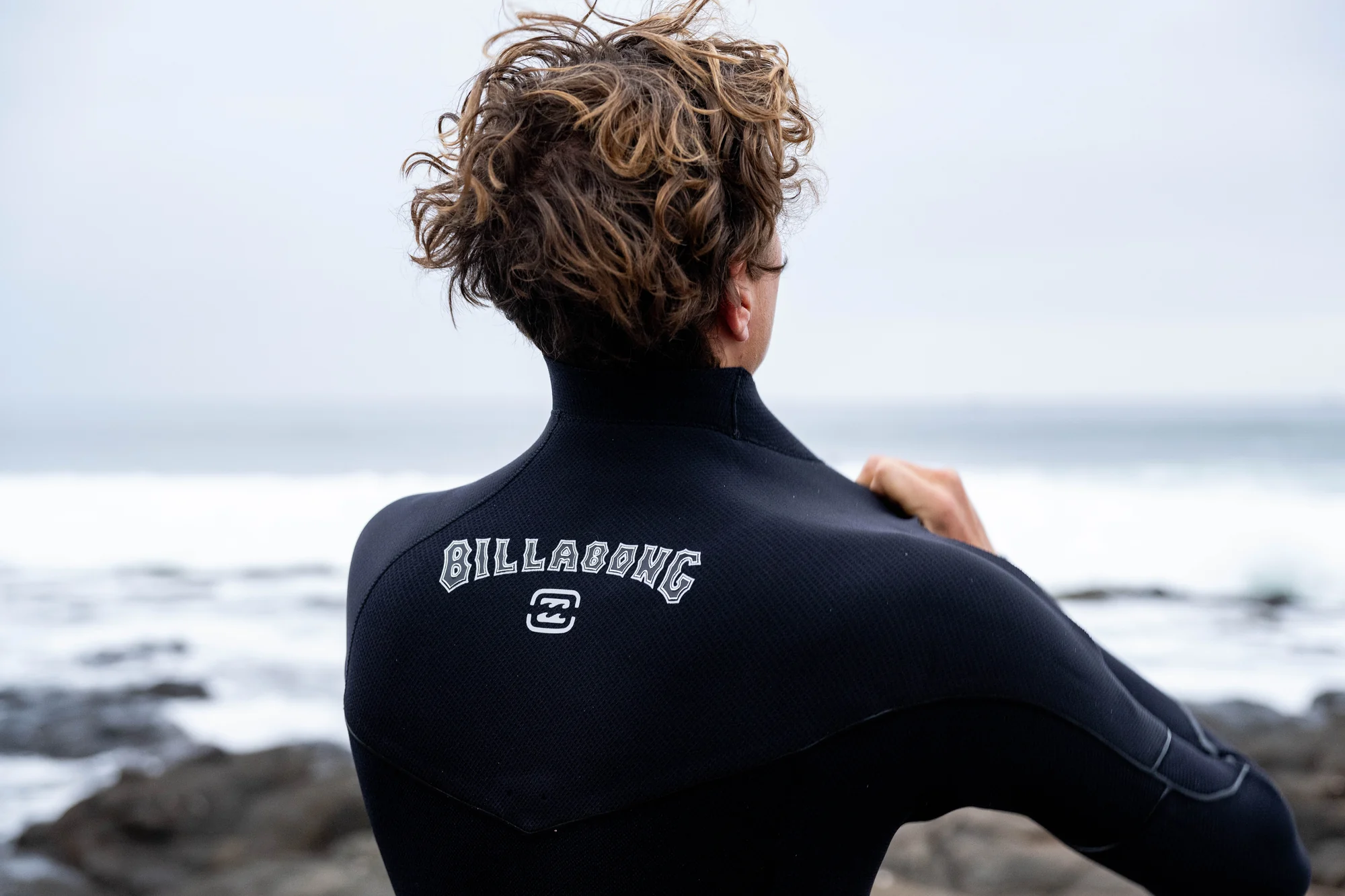
Photo: Billabong
And the Gullwing gives you a fully sealed wetsuit, which puts an end to the flushing you may get duck diving or wiping out from a normal chest zip. The Gullwing also happens to be just in the front so you don’t have to be flexible and reach behind your back for the puller like on a standard U-zip entry. It starts on the front of your shoulder and has this gull-wing shape that gives you more flexibility and range of motion than a long chest zip.
It is unique and makes a big difference to comfort in our Furnace Ultra suits.
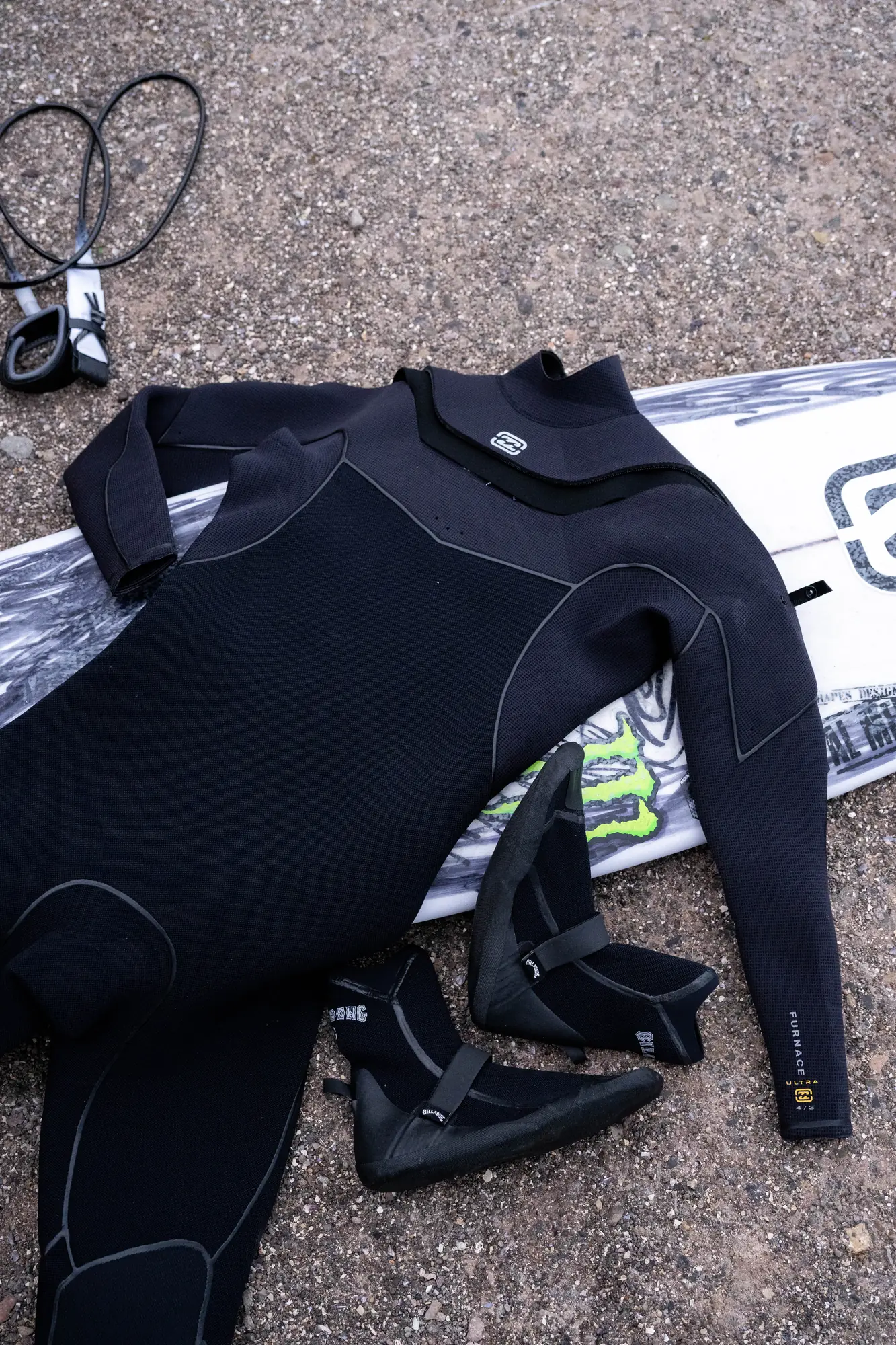
Photo: Billabong
A zip seems like a relatively small component, but how much does it affect the overall performance of a wetsuit — flexibility, flushing, warmth and fit?
Stopping flushing has a huge impact on warmth. A normal chest zip is usually quite tight and a little restrictive on the top part of the body because you’re trying to reduce flushing as much as possible. With the Gullwing we were able to adopt a more generous fit which adds flexibility again (we don’t need to be as compressive) because we’ve fixed the flushing another way.
Our new zipper has flex, and because it is fitted in a curve, it adds to the flex of the panel it is attached to.Alain Riou, Billabong
Zippers have always been straight and quite thick, which allows for zero stretch. Our new zipper has flex, and because it is fitted in a curve, it adds to the flex of the panel it is attached to.

Photo: Billabong
What’s the one part of wetsuit design that surfers generally underestimate or know very little about?
Most surfers think the neoprene, the foam, is what makes a wetsuit flexible or not, when in fact the external jersey and the inside lining are just as important. A good wetsuit needs to have the right sandwich.
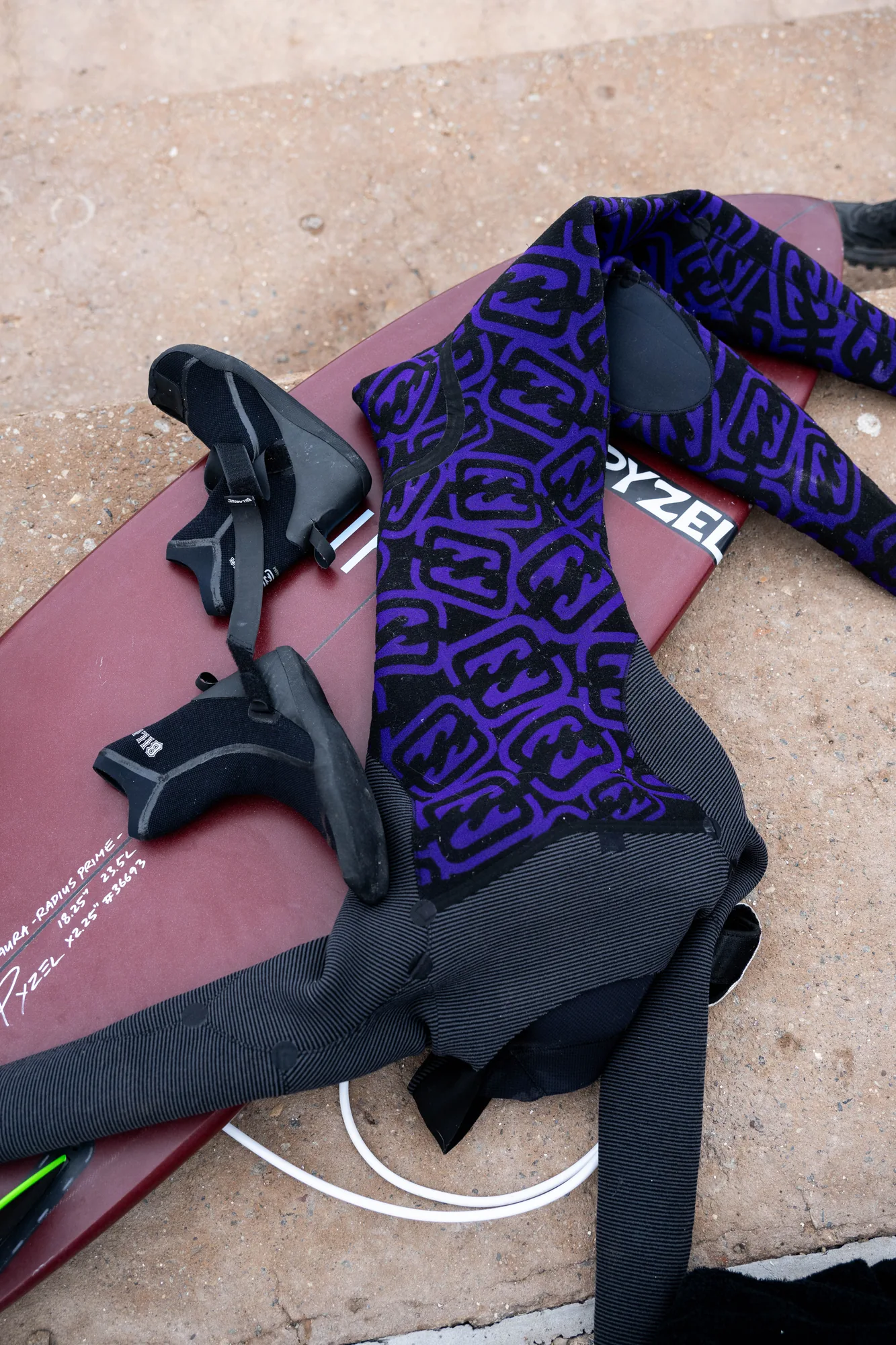
Photo: Billabong
Also, wetsuits are VERY flexible these days and one size can accommodate a lot of surfers, but we need to stress how important it is to get the right size. People are often too lazy, or they just know they’re a medium and don’t try another suit, and go for the first one they put on because it fits OK. Choosing the right size will give you a better experience and will really help your wetsuit last longer.
Wetsuit technology has moved on massively over the last 10–15 years. Where do you think the next big gains are going to come from?
GBS (glued and blind-stitched seams) has been around for a long time, and I think stitchless welded seams will become more durable, more flexible and more waterproof, and hopefully more affordable. It could become the norm soon.
Sustainability-wise, I think we’re not too far from seeing a 100% post-consumer recycled wetsuit jersey and foam, which would be a game changer.