
Words: Dr. Borkenstein
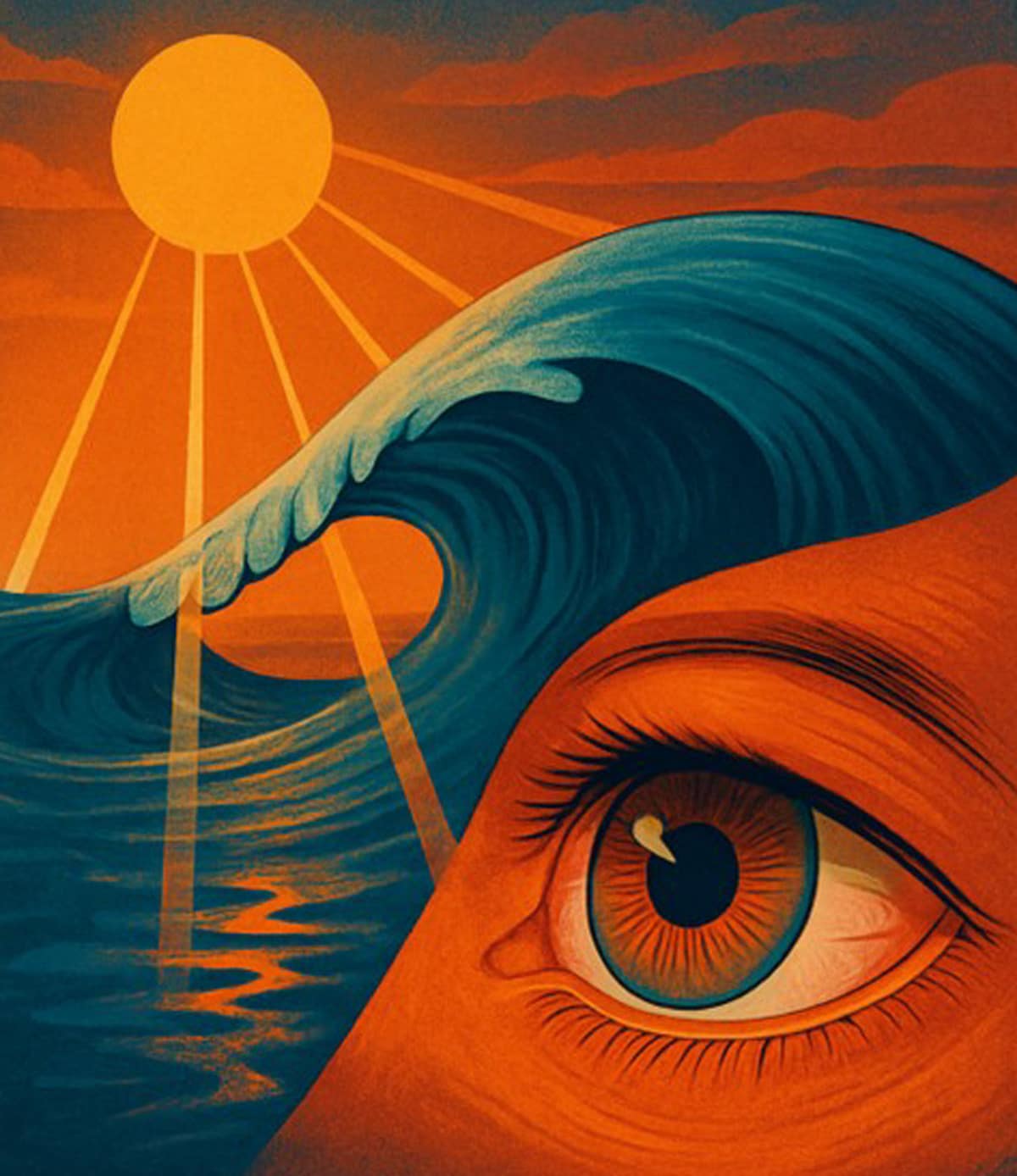
The first sun rays dance on the water. It’s early morning, still quiet, the line-up slowly fills. Conditions are perfect—the kind surfers dream of. But what many surfers don’t know: while waiting for the perfect wave, their eyes are already exposed to extreme conditions. Saltwater, sand, wind—but most of all, invisible radiation. UV light reaches them not only from above but also from below. Reflected by the water surface, the strain on the surfer’s eye multiplies. In technical terms, this is called the UV albedo effect. Among ophthalmologists, it’s called pterygium. Or more simply, "Surfer’s Eye."
Surfers are among the high-risk groups when it comes to UV-related eye damage. They regularly spend extended periods outdoors, usually during times of high sun intensity. The additional UV exposure due to reflection from the water surface significantly increases the risk. Unlike other outdoor sports, surfing often lacks the possibility of protecting the eyes with hats or helmets. Sunglasses are rarely worn either—they are bothersome due to water splashes and fogging, can easily be lost in the waves, or are considered uncomfortable and distracting. Even during beach breaks, eye protection is often neglected. All these factors lead to the eye being particularly unprotected during surfing and exposed to cumulative UV radiation over many years.
Ultraviolet (UV) radiation from the sun represents a significant environmental burden for the human eye. Over the past decades, various studies and research have provided clear evidence of the link between UV exposure and different ocular pathologies. Especially notable are chronic-degenerative changes of the conjunctiva and lens, such as pterygium, pinguecula, and cataract. In addition to direct sunlight, the reflection of UV light from surfaces like water also plays a critical role. Changing recreational habits—such as the growing popularity of water sports like surfing, stand-up paddling, or sailing—as well as global climate changes with altered ozone layer permeability, significantly exacerbate this issue.
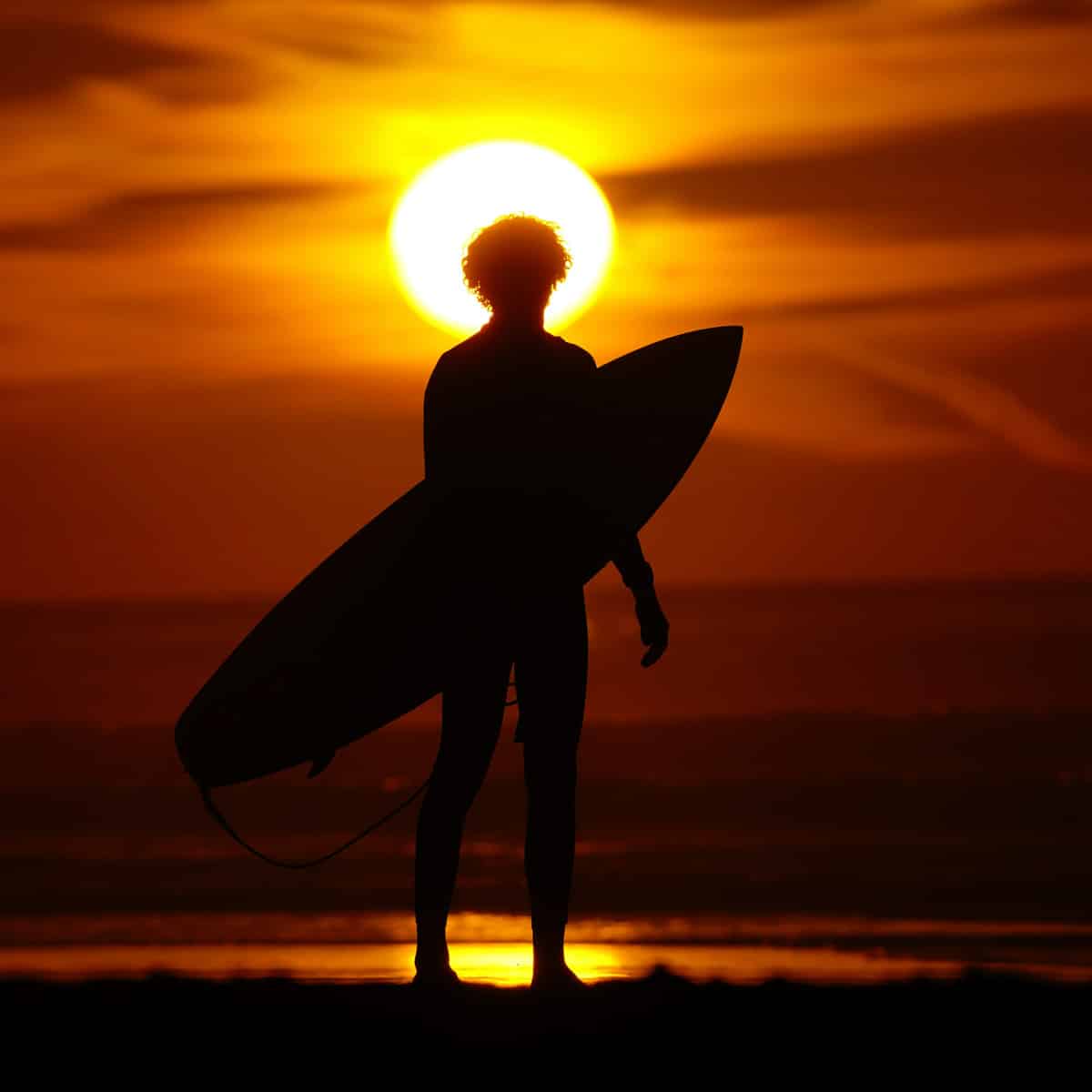
The UV spectrum is divided into three main ranges: UV-A (315–400 nm), UV-B (280–315 nm), and UV-C (<280 nm). While UV-C rays are absorbed by the ozone layer, UV-A and UV-B reach the Earth’s surface in relevant amounts. Both are significant for the human eye: UV-B is mainly absorbed by the cornea, whereas UV-A can penetrate deep into the inner eye.
The intensity of UV radiation depends on several factors: geographic latitude, altitude, time of year and day, as well as current cloud conditions and air pollution. The so-called UV Index, a standardised measure by the World Health Organisation, reflects the biological effect of solar UV radiation on unprotected skin and correlates closely with the eye’s UV burden.
Reflection is an often-underestimated amplifier of UV exposure. Different surfaces reflect UV light to varying degrees. Snow, for example, can reflect up to 80–90% of UV radiation, and sand about 20%. With water surfaces, the angle of incidence plays a major role, so reflection from water can rise from 3–10% at a perpendicular angle up to 50% at a flat angle of the sun. These reflections lead to a significant increase in the effective UV exposure of the eye.
The strength of UV reflection and therefore the eye’s exposure vary greatly with the position of the sun. Between 11:00 a.m. and 3:00 p.m., solar radiation reaches its peak. However, when the sun is low, such as in the morning or late afternoon, sun rays strike water surfaces at a shallow angle, significantly increasing the degree of reflection. The flatter the angle of incidence, the more radiation is reflected rather than penetrating the water.
Geographically, UV exposure increases with decreasing latitude. In equatorial regions, the sun is often nearly perpendicular in the sky, which not only increases the direct UV portion but also enhances the reflection effect on water bodies in the morning and evening hours. Studies show that people in tropical and subtropical regions receive a higher cumulative UV dose, which is reflected in a higher prevalence of chronic-degenerative eye diseases.

Surfer´s Eye
Pterygium is a fibrovascular, benign growth of the conjunctiva, usually starting on the nasal conjunctiva and gradually extending onto the cornea. Studies from Australia, the Mediterranean, and coastal regions of the U.S. and South America show a significantly increased incidence in these zones. Particularly affected are water sports enthusiasts such as surfers, windsurfers, or stand-up paddlers, who face significantly increased risk due to the combination of direct sunlight, reflected UV light from the water surface, and lack of eye protection. In regions along the so-called "pterygium belt"—a geographical zone between the 30th parallel north and south latitude—these sports are especially popular, reflected in a noticeable clustering of pterygium cases among water athletes.
People with light-coloured irises (blue, greenish) appear more susceptible to UV-induced changes under similar exposure. The lower pigment protection leads to increased intraocular light penetration. In the Barbados Eye Study, for instance, dark skin and iris color showed a protective effect. This observation also applies to other UV-associated eye diseases. In the context of the pterygium belt, water athletes with light-coloured irises, such as Caucasians, are disproportionately affected.
In addition to UV radiation, other environmental factors such as wind, dust, and salty air are established co-contributors to pterygium. These stimuli lead to chronic mechanical strain and local irritation of the conjunctiva, especially in the nasal area, promoting chronic inflammatory processes and degenerative remodelling. In earlier decades, pterygium was also referred to as “Sailor’s Eye”—a term that aptly described the influence of maritime environmental conditions even then. Surfers are exposed to all these factors to a high degree: gusty winds, sea spray, sand abrasion, and constant presence in salty air act cumulatively on the anterior eye segments alongside UV exposure.
A pterygium often begins inconspicuously as a small, triangular tissue growth on the conjunctiva, usually on the nasal side. Over time, however, it can lead to various problems: chronic redness, burning, foreign body sensation, and increased light sensitivity, especially in wind and sunlight. As the pterygium grows further onto the cornea, it can directly impair visual acuity. In addition, it can cause corneal curvature through mechanical traction—a so-called astigmatism—that further deteriorates and distorts vision, not always correctable with standard glasses. In advanced cases, the optical visual axis may be affected, leading to permanent visual field restrictions. If the pterygium is surgically removed, there is also a risk of recurrence, especially if appropriate UV prevention is not followed.
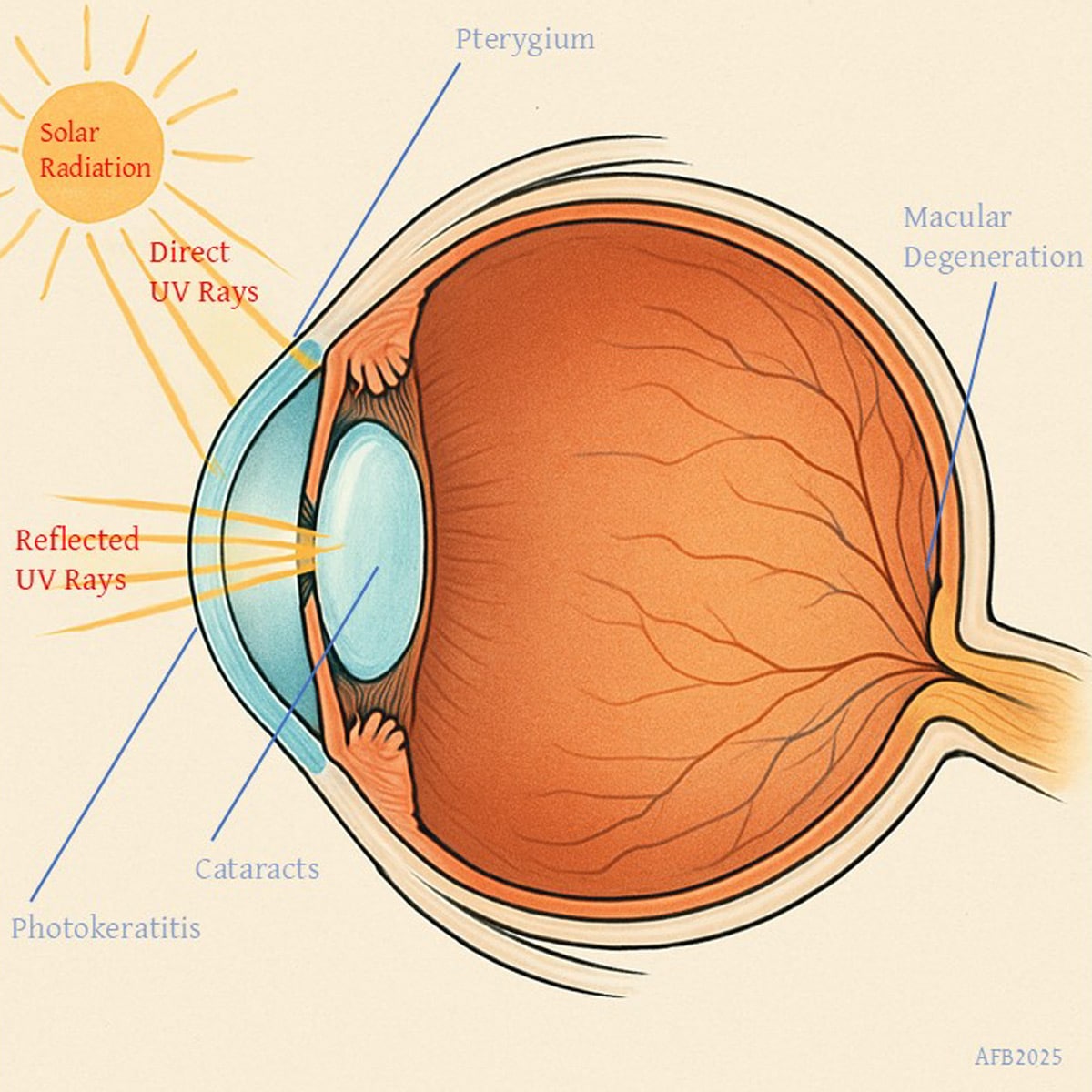
UV exposure of the eye varies greatly with the sun’s position. Studies show that UV-B radiation in the eye increases significantly with a high sun position, especially in the facial area. Between 9:00 a.m. and 3:00 p.m., about 75% of the daily UV dose is absorbed. However, when the sun is low, reflection on water increases significantly—up to 50%—raising effective UV exposure to the eye.
Albedo describes the proportion of incoming light that is reflected by a surface. At a perpendicular sun angle, water’s albedo is only about 3–10%. But at a shallow incidence angle—in the morning or evening—it can rise to up to 50%. This means UV radiation hits the eye not only from above, but is also strongly reflected from the water. Particularly at risk are surfers in low-angle sunlight, often without sunglasses and with direct reflection from both above and below.
As geographic latitude increases, the average sun elevation decreases, reducing the direct UV component, but relatively increasing reflection due to shallow water angles. Altitude increases the UV dose by about 4% per 300 m gain. Clouds, ozone, and air pollution also significantly affect the UV Index.
Since the UV Index, based on horizontal measurements, often underestimates real eye risk, studies recommend year-round eye protection, even at moderate UV Index levels. Especially at low sun positions, reflection-enhanced UV offers independent motivation for protection.
Glasses with UV400 certification block almost 100% of UV-A and UV-B radiation. Polarized lenses are particularly effective over water surfaces: They specifically reduce the horizontally reflected component, thus decreasing glare and total UV exposure.
Caps and hats reduce side reflections by up to 50%, and UV-absorbing contact lenses provide additional protection. Leisure groups like surfers should particularly consider eye protection during beach breaks. They can benefit from targeted education and should use UV alert systems.
Cataract, especially the cortical and subcapsular forms, has been classified by the WHO as a UV-induced pathology. The WHO estimates that up to 20% of all cataracts worldwide are caused by UV exposure. UV-A and UV-B rays penetrate the cornea and aqueous humor directly to the lens, where they can trigger oxidative stress, protein denaturation, and apoptosis. The resulting aggregation of lens proteins leads to clouding.

Epidemiological studies like the “Blue Mountains Eye Study” and the “Beaver Dam Eye Study” have shown a clear correlation between lifelong high sun exposure and increased cataract incidence. Especially affected are people with long-term outdoor activity without adequate UV protection, such as surfers.
While pterygium and cataract are central to chronic UV damage, other ocular structures may also be affected. Photokeratitis is an acute, very painful inflammation of the cornea that occurs after intense short-term UV-B exposure. It is particularly relevant with reflected radiation on snow or water. Typical is a latency period of 6 to 12 hours followed by spontaneous healing within 48 hours.
The role of UV light in age-related macular degeneration (AMD) is still under discussion. Animal models and cell culture studies show potential light-induced damage to retinal pigment epithelial cells from UV and visible light.
Ophthalmia solaris, or direct retinal damage from looking directly at the sun, such as during solar observation without protection, is a rare but dramatic form of UV injury. It primarily affects the fovea centralis of the retina and can lead to permanent scotomas in the visual field.
Studies suggest that iris color influences susceptibility to UV-induced eye damage. People with light irises have less melanin in the iris and cornea and are thus more prone to photochemical damage. Studies show approximately double the risk for uveal melanoma in light-eyed individuals. In chronic changes such as pterygium, dark iris color appears protective. Ethnic differences confirm this: In Singapore, significantly lower incidence rates were found in dark-pigmented populations. Thus, in the “pterygium belt,” especially among light-eyed water athletes—Caucasians—the combined effects of high UV exposure, water reflection, and low iris pigmentation likely lead to increased disease risk.

The combined UV exposure from above and laterally/below—through water reflections—forms the central mechanism behind the frequent development of pterygium in surfers. The increased vulnerability of light-eyed individuals—especially of European descent—is due to reduced melanin protection based on iris color.
The cumulative exposure of the eye to ultraviolet radiation—especially in combination with reflective surfaces like water—constitutes a major risk factor for the development of chronic-degenerative eye diseases. Numerous evidence-based studies clearly show a link between UV exposure and the occurrence of pterygium and cataract. Individuals with intense outdoor activity in equatorial or maritime regions—such as surfers and other water athletes—are particularly at risk. Factors such as geographic location, sun position, time of day, and surface reflections must therefore be considered in risk assessments. Consistent prevention using UV400-certified sunglasses, suitable physical barriers, and behavior-based protection strategies is demonstrably effective, cost-efficient, and medically advisable. Targeted education on these relationships—especially among at-risk groups—can make a crucial contribution to preventing avoidable vision impairments at an early stage.
My message as an eye consultant is simple but serious…
Surfing is cool. Surgery is cool - that´s my opinion. However, surgery on your own eye – nope that´s were fun stops. You ride waves to feel alive—not to end up with red, burning eyes and a fleshy growth called „pterygium“ creeping across your cornea. Trust me - having a surgeon dig into your eyeball? That’s not part of your „surfers paradise“ dream. Protect your vision like you protect your stoke. UV hits harder than you think!
Shield your eyes. Stay sharp. Surf longer.
Andreas F. Borkenstein, MD
Ophthalmologist and Ophthalmic Surgeon