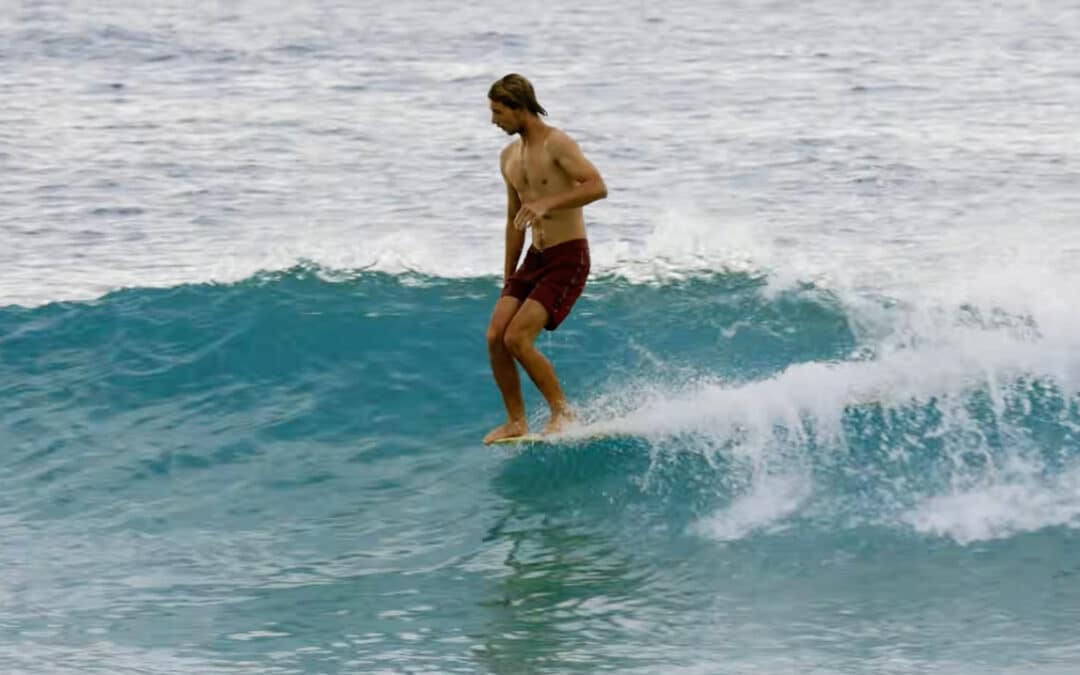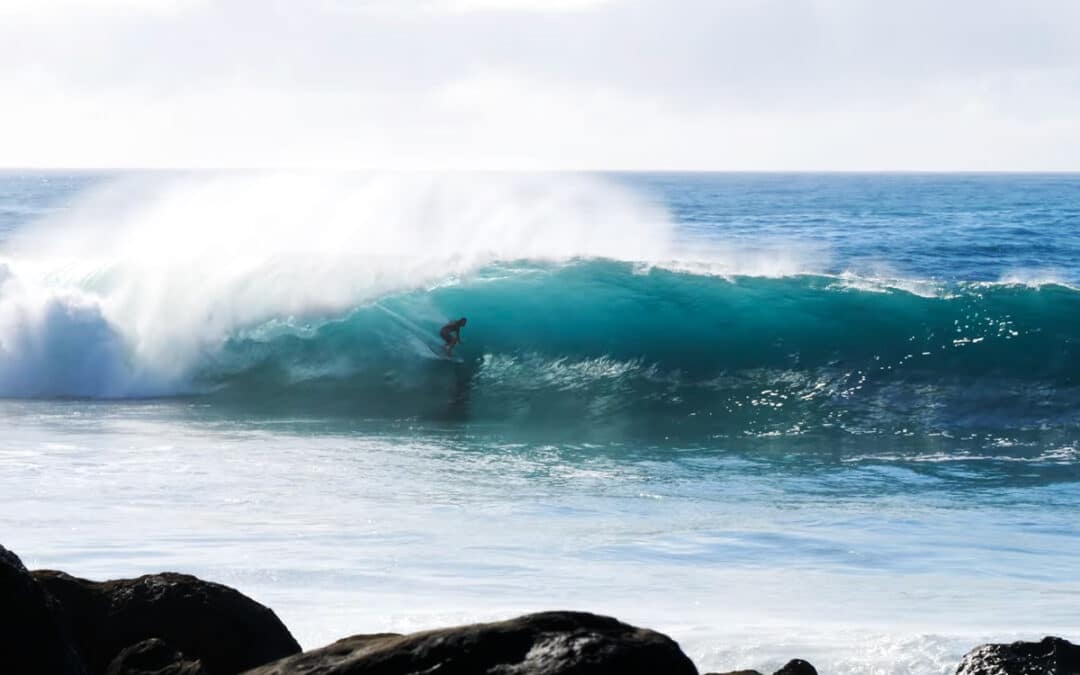
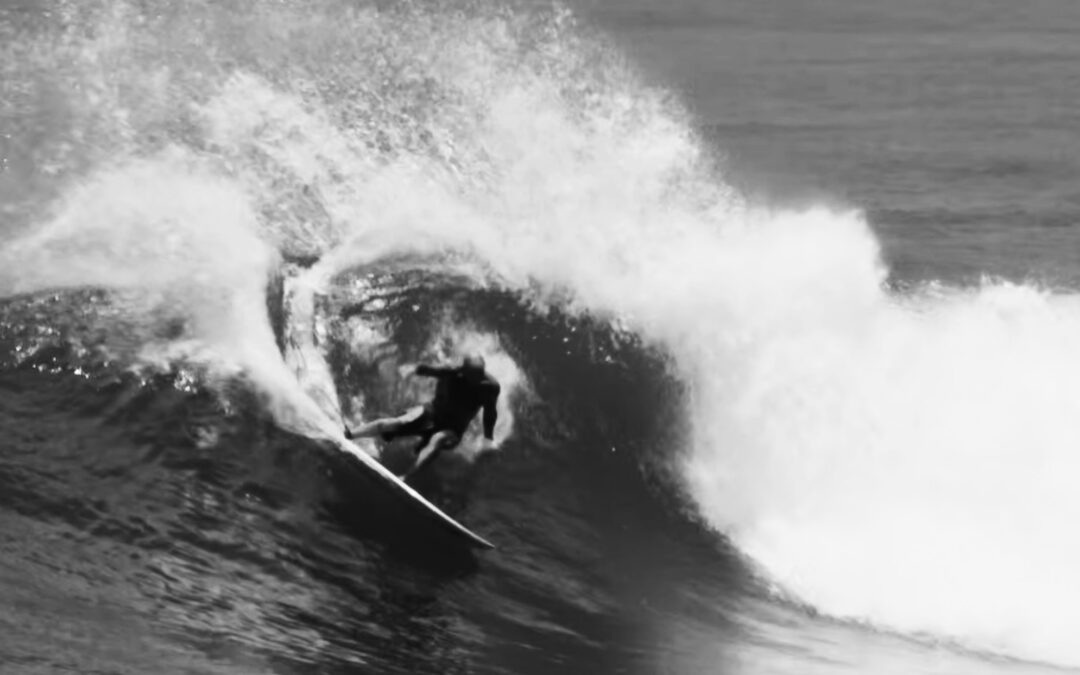
There’s always been something wild about winter in Jeffreys Bay. Every storm that marches up the coast seems to pull a different mood out of the bay, and this latest swell was no exception. After one of the heaviest storms in recent memory ripped through the coastline and nearby farmlands, rivers burst their banks and poured straight into the ocean, turning the lineup into a surreal brown-water playground that looked more like an Amazon river mouth than the perfect walls of J-Bay.
But when the swell arrived, so did the chargers.
The surfers brave enough to paddle out scored some unforgettable waves, pushing aside thoughts of what might’ve been lurking beneath the surface. With floodwaters flushing everything downstream and out to sea, the imagination definitely ran wild. Thankfully, there were no unwanted “boardroom meetings” with the men in grey suits — although a few surfboards certainly paid the price in the heavy conditions.
These are the moments I love filming most. Familiar places suddenly become something completely different. New textures, new moods, new challenges. After spending the last three weeks behind the lens almost nonstop, I could’ve made five completely different edits from this run of swell alone. Every session seemed to tell its own story.
And the craziest part? Winter is only getting started.
The charts are lining up, the cold fronts keep marching through, and it feels like we’re on the edge of one hell of a season here in J-Bay. I’m especially looking forward to the travelling surfers arriving over the next few months — bringing fresh energy and drawing new lines across a wave that has always been a canvas for expression. Surfing at its best is pure instinct: immediate, intuitive, creative. A form of art that exists for only a few seconds before disappearing forever.
We love J-Bay. And while this storm brought real hardship to many people in the community, it also reminded us how resilient this town is. We rebuild, we recover, and when the next swell arrives, we paddle back out together.
Surfer and adventurer Torren Martyn and his best friend and film maker Ishka Folkwell attempt to circumnavigate Tasmania in two 18ft sailing kayaks on a quest to surf remote waves. What starts as a novel idea to accomplish a sailing feat soon evolves into a rare opportunity to connect on a deeper level with the entire coastline of Tasmania over a few months of slow travel. The film portrays the uniquely diverse landscape, wildlife and ocean energy of this rugged island coast while connecting with people that share their love for this land in the Great Southern Ocean.
Carve had a quick word with director Ishka Folkwell about the film;
Ishka, tell us a bit about yourself and how you ended up on this surf adventure with Torren?
Torren and I went to school together and over the years created a strong friendship. I was in the early stages of picking up a camera and started shooting Torren surfing and making little edits. Naturally, over time this changed and evolved into creating longer films with more story and purpose. About 10 years ago needessentials reached out to us and we have been collaborating ever since.
How challenging was it filming in such unpredictable conditions from kayaks and remote coastlines?
Very much so, some of the scariest moments weren’t captured at all, given that sometimes you have to react quickly and don’t have time (or hands) to get the cameras going.
The film feels very immersive and atmospheric rather than high-action. Was that intentional from the beginning?
Yes, I personally much prefer slower paced films that have room to breathe. I think this one in particular suits that style, given that the nature of sailing is very slow, it also gives you time to consider what’s being said by the remarkable people who speak in the film and hopefully gives the viewer a sense of immersion into the experience.
What do you hope surfers take away from the film?
I hope surfers (and people in general) can walk away from the film with a deeper appreciation for this incredible world we live in, while also being aware that much of it is fragile and that our everyday decisions can, and do make a difference.
I also hope it helps people slow down a bit in their own lives, slow down and enjoy the people around them and the place they call home.
The third and final film in director Seth Hughes' and surfer Mike Lay's trilogy has arrived. Following Cynevin and Hireth, Gwynnik completes a body of work that has quietly become one of the most thoughtful series in contemporary surf filmmaking.
The title — Cornish for "little fair one" — is a nod to the arrival of Mike's young children, and the new rhythm they've brought to life in West Penwith. It's a film shaped by fatherhood, by rootedness, and by a shifting relationship with the sea.
Filmed across two years in Cornwall and Brittany, Gwynnik finds Mike closer to home than ever before. After years surfing across the globe, his connection to the ocean has evolved — less about the relentless pursuit of perfect waves, more about the quieter, holistic experience of simply being in the water.
Don't expect pumping surf. Most of the waves here would barely raise an eyebrow on a traditional surf film reel, and that's entirely the point. Gwynnik makes a compelling case that beauty isn't reserved for swell events and offshore perfection — it lives in the everyday, in the ordinary rhythm of the sea, in the kind of sessions most of us actually have.
As a Finisterre Ambassador, Mike has always embodied a connection to place and purpose that goes beyond performance surfing. Gwynnik is perhaps the fullest expression of that yet — a film that's as much about life on land as it is about life in the water.
Finally the World Tour gets a performance left hander.
Words: Joel Gray Photos: WSL
Amongst the goofy-footed fraternity, it’s an often-grumbled fact that the elite World Tour has been missing a true performance left for many years. Finally, they have one with the Corona Cero New Zealand Pro.
This represents a chance to balance out the hi-fi action of the Snapper and El Salvador events, along with the open-face right-handers of Margaret River and Bells Beach. Sure, they’ve got Pipe, Cloudbreak and Teahupoʻo, but those barrel-focused reef breaks still tend to favour the regular footers due to the advent of full-body tube-stall techniques.
The multiple-manoeuvre walls of Manu Bay at Raglan will provide a super exciting canvas for spectators and competitors alike. After the packed beaches, boardshorts and bikinis of the Gold Coast, it’s back to full suits and chilly morning coffees. There’s a real element of the unknown as to how the World Tour’s established top dogs and bottom feeders will fare on this new addition to the tour.
Carve’s five to watch — men and women.
Gabriel Medina
There's no doubt that the returning Medina has been the onform surfer over recent events. It’s like he’s accessed a new level of calm maturity and the depth of flow to his surfing, his read on individual waves is unmatched.
Rio Waida
If he can adjust to the morning chill and the full wetsuits then this could be a great opportunity for Rio to shine. Growing up predominantly surfing with his back against the wall on the long lefts of the Bucket Rio’s back hand is his forte and not something we’ve seen much of to date.
Griffin Collapinto
One of the few regular footers able to put down real variety and throw tail without sacrificing flow. At his home break, Trestles his backhand is as good as his forehand and his performance in last years final 5 at Coudbreak was only bettered by goofy footer Yago.
Italo Ferreira
When judges and spectators alike are open minded to the possibilities of goofy footed surfing at this new canvas, we can fully expect Italo to be the electric cat amongst the pigeons. Expect a big wave count and a wide variety of attempts.
Ramzi Boukhaim
The rocking Moroccan is in real need of a big result after three shockers so far — largely due to too many falls. Despite being known for his backhand attack, Ramzi has a tight forehand carve that stands out and could suit the Kiwi walls well. While most eyes are on the right-handers on tour, don’t be surprised if Ramzi puts up huge numbers here.
Erin Brooks
It’s safe to say Erin Brooks will be super excited to surf on her forehand. From what we’ve seen so far at Cloudbreak and other peeling lefts, her relentless critical attack stands at a level above all others. If she can overcome the pressure she’s under for a good result (following three throwaways), then Erin’s performances should make her the clear favourite.
Caity Simmers
Too good not to be a pick at every event. The only thing that sometimes gets Caity, due to her size, is looking overpowered by certain conditions such as Margaret River and Bells. That shouldn’t be the case at Raglan, and expect a high-fi approach akin to Griffin Colapinto — something we likely won’t see from many, if any, of the other regular-footed women.
Nadia Erostarbe
Proud Basque (aren’t they all?), Nadia had a breakthrough performance and result on her backhand at Snapper. But let’s not forget she’s more than used to jamming things on the forehand, as she has more experience than most at Mundaka. Add in the comfort that comes from growing up in wetsuits, and this really could be a great end to the Australasian leg for the powerful goofy-footer.
Carissa Moore
It’s been the return that so many wanted to see. An invested and powerful return from Carissa Moore, who looks as comp-savvy and skillset-heavy as she ever did. As ever, she will have done her homework, lined up the right local support crew, and will likely go deep into the event.
Steph Gilmore
Take away Steph’s fairytale Snapper win and it’s been an awkward return to Tour life for Steph. There’s a chance that the recent win gives her the belief and motivation to click into ultra mode for a full title run. There’s also the chance that it was a home-break anomaly and that her first two events of the year showed genuine competitive and skill-level rust. Add to that the fact that Steph is actually pretty weak on her backhand, and it’s not a radical thing to suggest that it would be a surprise if she makes it through her first heat.
Dylan Graves has built a cult following by hunting down the planet’s strangest surf spots in his YouTube series Weird Waves — but could his latest episode be his weirdest yet? Known for chasing everything from industrial river waves to sketchy novelty breaks hidden in plain sight, Graves thrives in the kind of surf missions that sound completely ridiculous on paper. With his laid-back humour and curiosity for surfing’s oddball subcultures, each episode feels less like a polished travel show and more like an unpredictable scavenger hunt for waves nobody else would think to ride.
Hit play to see what is possibly the weirdest yet, as Dylan and Anthony Walsh tap into a sketchy Australia tidal rapid with monster hold downs.
David Attenborough has given a voice not only to the oceans but to all life on Earth, revealing the fragile beauty and interconnectedness of every species with unmatched passion and clarity. Can we take a moment to wish Sir David Attenborough a very happy 100th birthday, and honour his legacy by striving to keep our oceans and planet free from pollution, protecting every animal and safeguarding the future of the natural world we all share.
The greatest way we can honour David Attenborough’s legacy is by standing together to protect our planet, preserve our oceans, and safeguard the future of all wildlife for generations to come.