
A Film by Jordy Liackman and Cooper Puttergill.
Two surfers. Four countries. A borrowed camera and a $500 budget. That’s the backbone of Lost in Central, a new surf film documenting three months on the road across Central America in search of waves — and whatever came with them.
Following on from their previous project African Surfari, the filmmakers flew straight from South Africa to Mexico with little more than a loose plan and the determination to make something better than the last film. What followed was a raw, unpredictable journey through Mexico, Guatemala and Nicaragua — built on long days waiting for waves, chaotic travel, and a crew that slowly formed out of strangers met along the way.
Below, the filmmakers explain the story behind Lost in Central in their own words.
Lost in Central came from three months on the road through Central America chasing waves with no crew, no real budget and no safety net. After finishing African Surfari in South Africa, we flew straight to Mexico knowing we had set ourselves a serious task. We had no structure, no roadmap and no filter. Just a vision to make something better than the last one and figure it out as we went.
From day one it was raw. Everything was filmed between the two of us. One surfing, one filming. Then straight back to the beach to swap. Hour after hour. Some days the waves were only good for a short window which meant sitting on the sand all day just to bank a couple of clips. After pouring most of our money into South Africa and that edit, we arrived in Mexico low on funds.
Our film budget was five hundred dollars thanks to Mambo. We had a borrowed camera and a tripod. That was it.
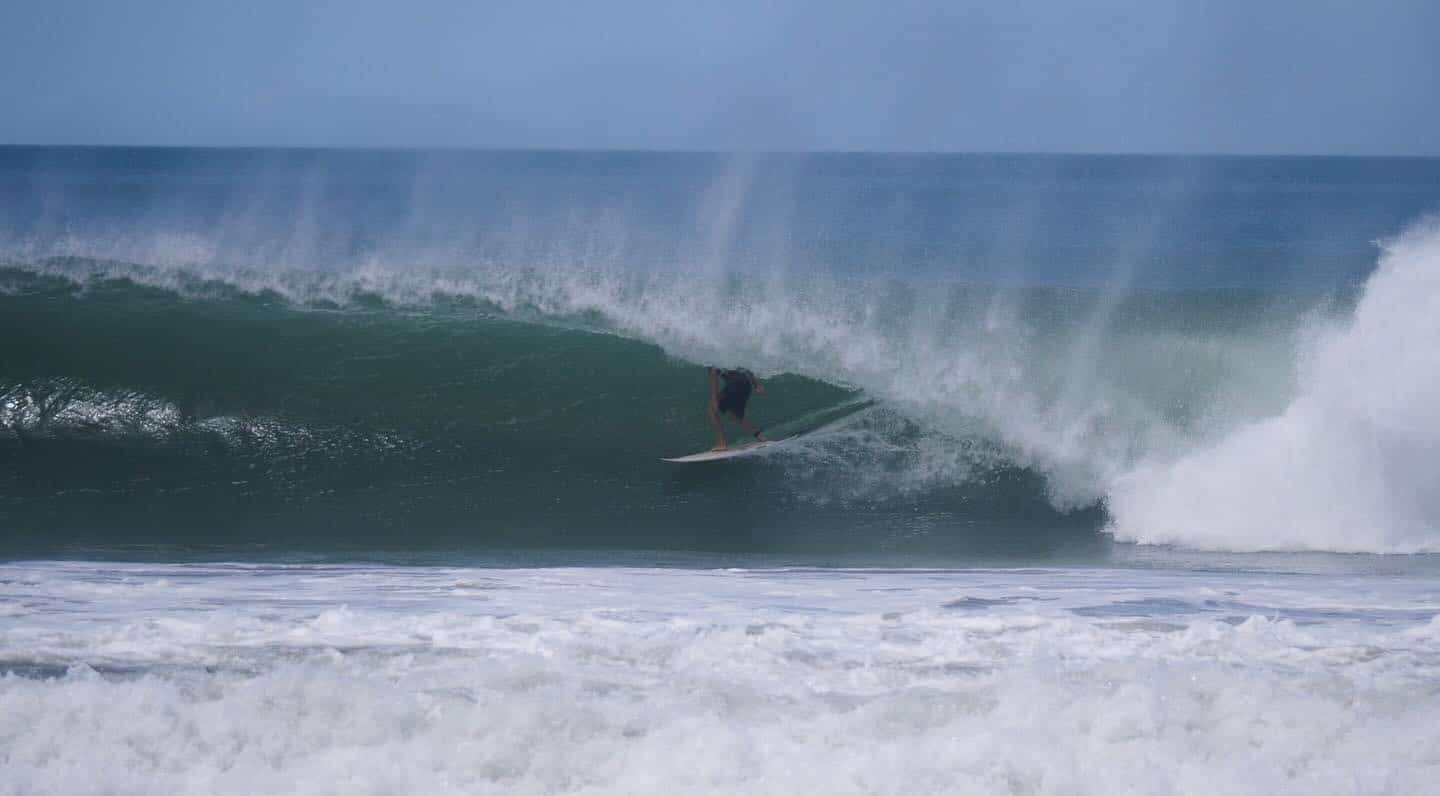
There were days we walked off the beach with nothing. Long days in the sun grinding for a single turn or barrel. But the grind became the story. The people we met along the way made this film possible. Through fun waves and cheap Coronas we built a crew without meaning to. Locals, travellers and complete strangers would see us filming and offer to take shifts behind the lens.
We would spend half an hour teaching someone how to zoom, how to frame a wave and how to pick us out in a crowded lineup. The next minute they were locked in, filming for hours.
Josh Hartge and Josh Knight put in serious hours. Some days our only way of saying thanks was shouting them a five dollar dinner from a local tuck shop. It was not much, but it was what we had.
By the end there were days where ten of us would be posted up under palm trees. Boards everywhere, someone surfing, someone filming, someone laughing in the sand. It felt like a travelling crew that formed out of nothing. Without those people Lost in Central does not exist.
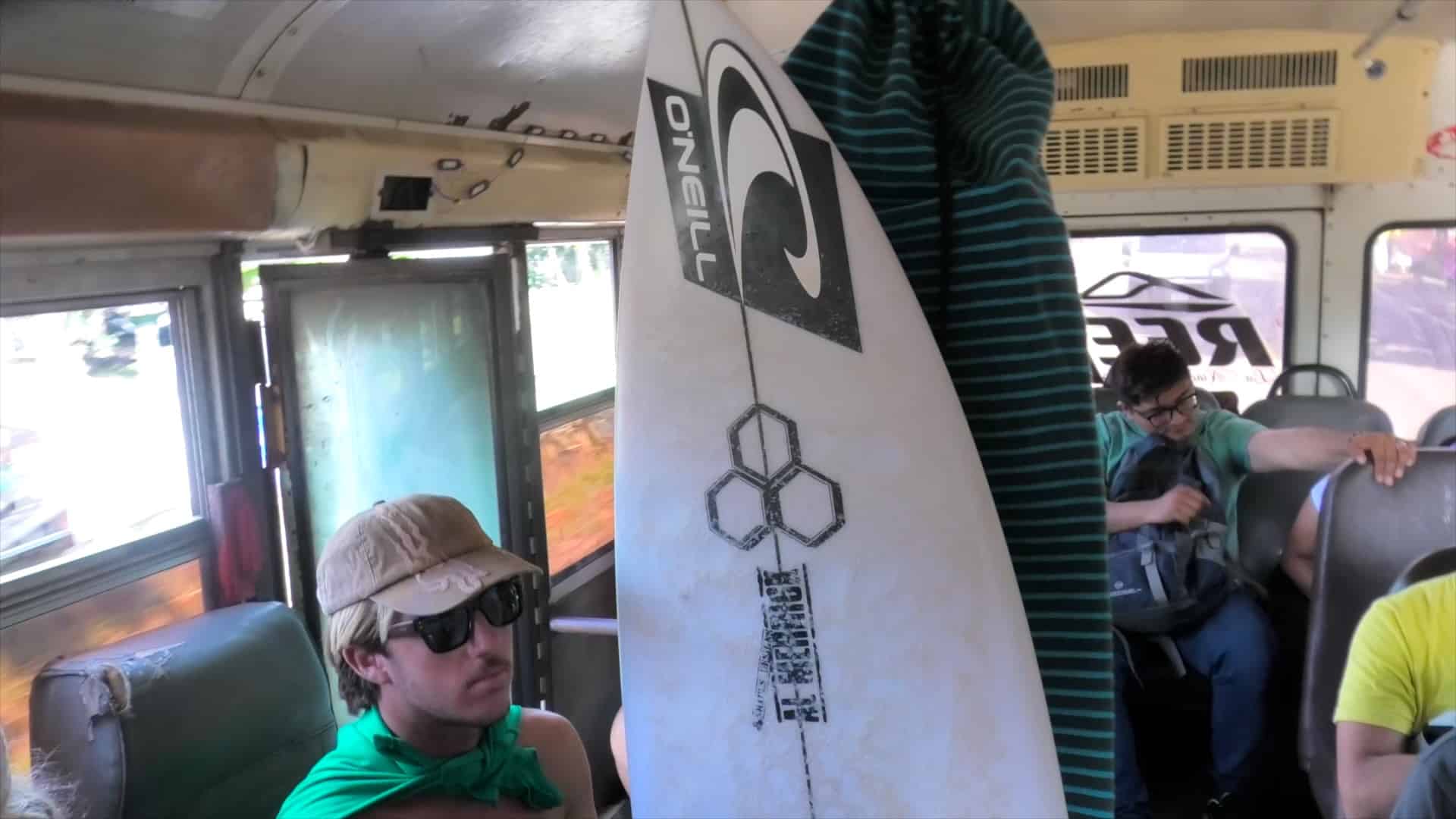
The travel was a grind in itself. Chicken buses that were meant to take four hours turned into fourteen. Boards tied to taxi roofs with skimp rope. Border crossings where we had no idea if we were going to get through. Money exchanges that went wrong. Taxi drivers trying to double the fare in the middle of nowhere.
It was chaos. It was uncomfortable. It was real. And it made every wave feel earned.
In Guatemala we ditched the boards and climbed Acatenango, one of the most active volcanoes in the world. It had been high on the bucket list. We reached basecamp and watched smoke roll from the crater. That night the talk around camp was that the summit might be too dangerous the next morning.
At three in the morning we woke to howling wind and freezing conditions. The guides were sceptical. We said if there was any chance we were going.
Headtorches on, barely able to see a few steps ahead, legs cramping, struggling to breathe. Full survival mode. After hours of pushing we made it to the top.
No lava. No sunrise. No view at all.
Just fog and wind.
It was not what we imagined. But it hit harder than any view could have. Not every mission comes with a reward. Sometimes showing up is the point.
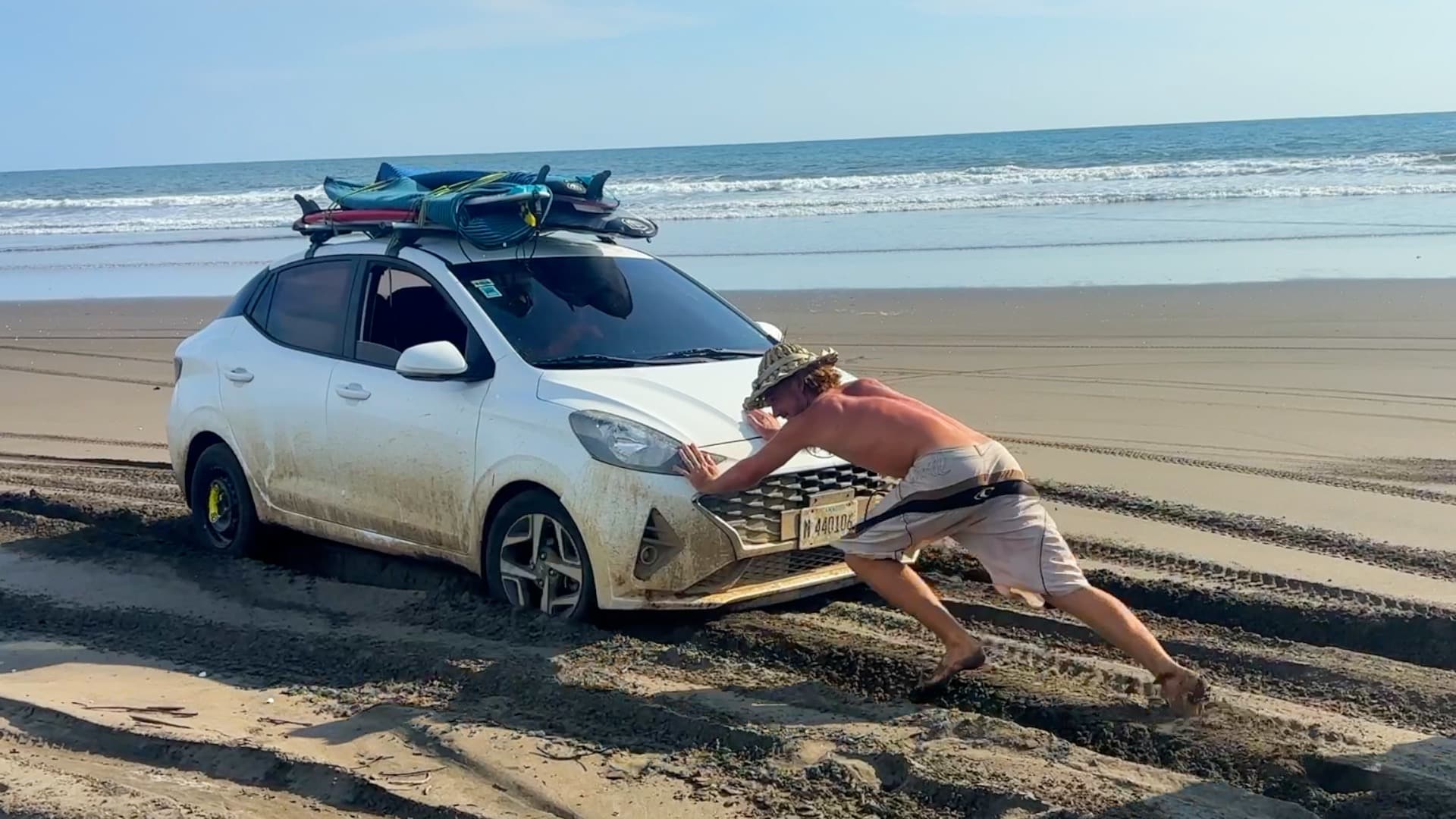
By the time we reached Nicaragua we were over being limited by public transport. We found a tiny cheap two wheel drive car. It was small, battered and swayed in the wind with fifteen boards strapped to the roof. We drove it everywhere.
Every checkpoint we were pulled by police trying to pin us for something. We blew a tyre in the middle of nowhere. The key barely worked. The battery was shot. Most days we would lock ourselves out, break back in and set off a siren that would not stop screaming until we smashed the unlock button enough times for it to calm down.
It became known as the car that would not shut up.
At The Boom we had two options. Walk through a mosquito infested track or drive ten minutes along soft sand in a two wheel drive. We drove it.
Our theory was that zero point six metres on the tide was the magic number. If we hit the beach before that, the sand was hard enough to make it. To get off we had to wait seven hours for the tide to come back.
We got bogged more times than we can count. One day we buried it so deep the chassis was resting on sand. We had snapped boards under the tires for traction and tried for three hours in the midday heat.
Eventually four of the lads rode down on their motos and helped lift the car out. It was chaos and it was hilarious.
That little car became part of the story.
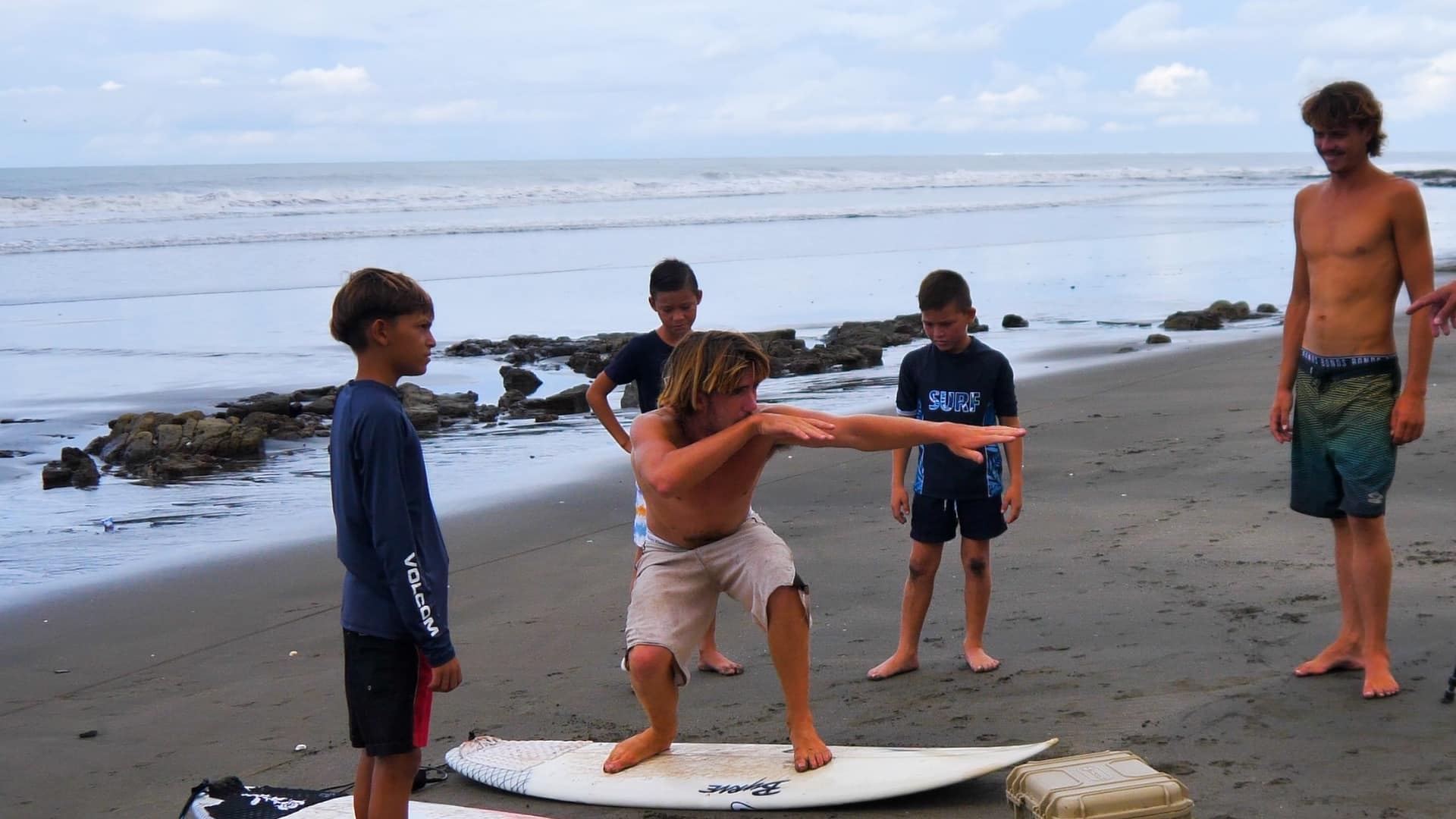
Then there was the part that changed the tone completely. We were scoring world class waves in places where many locals did not have the access or money to surf. Kids lined the roads but none were in the water. It sat heavy with us.
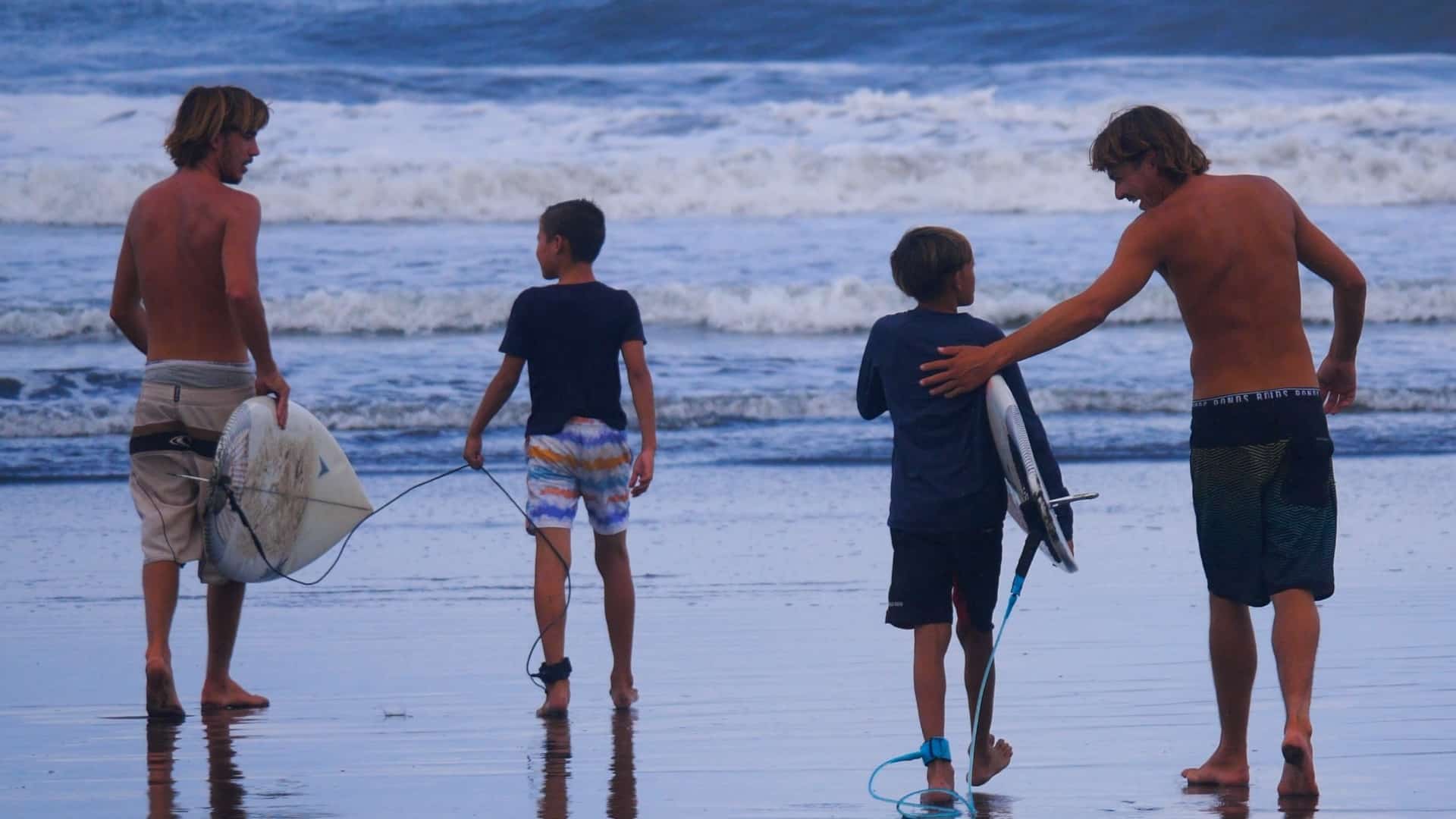
So in Nicaragua we went into a local village with a board and met a group of kids frothing to try it. With almost no shared language we walked down to the ocean together and paddled out. Hand signals, wipeouts, smiles and pure stoke.
For a moment nothing else mattered.
We finished the trip by gifting them the board. It felt like the right way to close the loop.
Lost in Central is not polished. It is not backed by a big crew. It is two twenty two year olds filming each other across four countries, grinding through chaos, relying on strangers, swapping shifts in and out of the water and figuring it out as we went.
It is world class waves mixed with border stress, volcano missions with no payoff and a screaming hire car that refused to die.
It was messy.
It was underfunded.
It was hard.
But it was real.
And that is why it matters.